Construction experts resume testimony in trial over Kocani 'Puls' nightclub fire
Building experts tell the court that safety systems, materials and procedures at the Puls nightclub failed; prosecution evidence is expected to conclude.
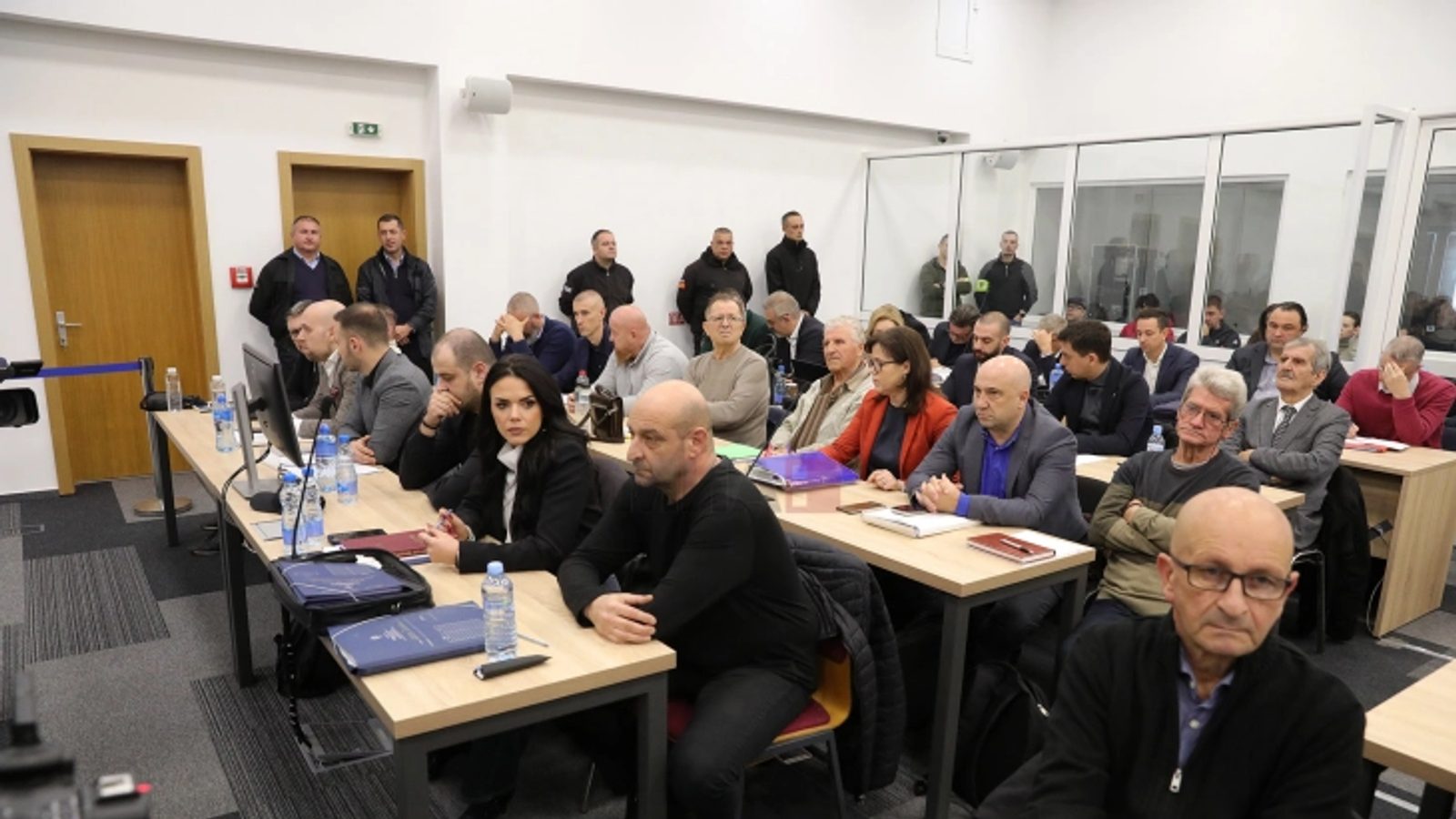
The trial over the deadly March 16, 2025 fire at the Puls nightclub in Kocani continued today in the courtroom in Idrizovo with the presentation of the building experts' report and questioning of the specialists who produced it.
Expert team says safety systems and procedures failed
At the previous hearing, court expert and professor at the Faculty of Civil Engineering at Ss. Cyril and Methodius University (UKIM), Goran Markovski, who was dean of the faculty when the engineering report was prepared, told the court that the structural assessment "unequivocally showed that at Puls the system — that is, institutions and individuals — completely did not function and neither standards, nor regulations, nor procedures were respected."
Markovski said the team from the Faculty of Civil Engineering regretfully found that "zero measures" had been taken for fire protection in the part of the building containing the nightclub. He added there were zero compliant evacuation exits, while the floor area implied a capacity of 363 guests even though on the night in question there were more than 600 visitors.
Summarising the effect of those deficiencies, Markovski told the court: "The building had nowhere to breathe. All the heat was being retained inside. No measure had been taken that would have eased the risk or the effects of a fire. On the contrary, some measures only multiplied the temperature and made it unbearable inside."
Concerning the materials recovered for testing, Markovski said one sample was polystyrene, which at best can be classified as normally combustible and emits toxic smoke and flaming droplets. "The second submitted material is tervol or glass wool and belongs to Class A2 non-combustible materials and is completely stable up to 800 degrees Celsius, it does not burn and does not emit droplets. From the change of colour it can be concluded that the temperature in the club reached at least 800 degrees Celsius. As proof of this we also found large portions of the steel structure warped and deformed as a consequence of such high temperatures, and we came across melted glass bottles which are a result of extremely high temperatures," Markovski said.
When prosecutor Darko Jakimovski asked questions, Markovski said that causal chains were numerous and that, unfortunately, they did not find evidence that steps had been taken to reduce the consequences — relating to material choice, inspections, commissioning of licensed contractors for conversion and professional supervision, or proper documentation.
With the experts' testimony, the prosecution's presentation of evidence is expected to conclude. The trial is overseen by Judge Dijana Gruevska-Ilievska and the indictment is represented by a team of 15 public prosecutors.
The fire at the Puls nightclub in Kocani on March 16, 2025, during a performance by the band DNK, killed 63 people and injured over 200 — one of the worst tragedies in the country's recent history.
Photo: press material from the event