Saint Nikita and end‑of‑September household traditions
The Macedonian Orthodox Church marks the 4th‑century martyr’s feast, while families finish autumn preparations.
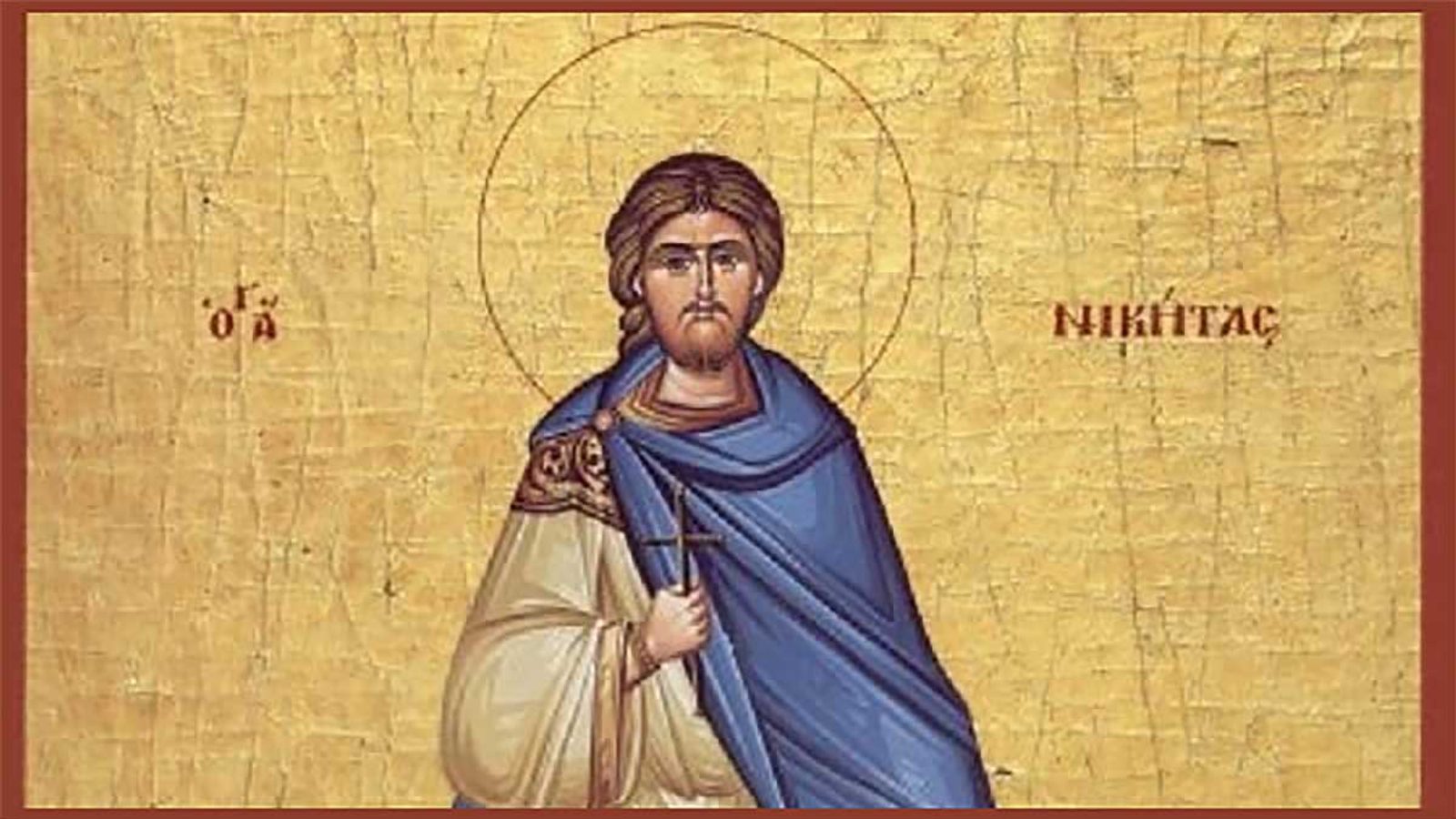
The Macedonian Orthodox Church marks today the feast of Saint Nikita, a fourth‑century great martyr remembered for his unwavering faith and the miracle associated with his death.
Nikita was a Goth and a disciple of Bishop Theophil of the Goths. When the Gothic chieftain Athanaric launched a severe persecution of Christians, Nikita openly opposed the violence and the suppression of believers. He endured harsh tortures but remained firm in his faith. According to tradition, he kept an icon of the Virgin Mary with the Christ carrying a cross hidden beneath his garments — an image said to have appeared to him in a vision and to have given him comfort.
Eventually Nikita was condemned and thrown into the fire in 372. Church tradition holds that, although he died in the flames, his body was miraculously preserved and not harmed by the fire. His friend Marian transported his relics to the city of Mopsuestia in Cilicia, where a church was later erected in his honour.
Other commemorations on the same day
Alongside Saint Nikita, the church calendar remembers several other martyrs. The martyrs Teodot, Askliad and Maxim, described as Thracians, suffered for Christ near Philippopolis in the village of Saltis between 305 and 311 and are recorded among the saints.
Porfirij, a native of Mimos who worked as an actor, is also commemorated. Serving in the presence of the emperor Julian the Apostate, he once mocked the Christian rite of baptism by plunging himself into water and pronouncing: "In the name of the Father, and of the Son, and of the Holy Spirit!" When he emerged he cried out: "Now I am a Christian!" The mockery stopped; Porfirij abandoned his ridicule and ultimately suffered martyrdom by beheading in 361.
Visarion II, Archbishop of Larissa, lived in the first half of the sixteenth century. Born in the village of Velika Pila in Thessaly to devout parents, he devoted himself early to monastic life. Under the guidance of Metropolitan Mark of Larissa he rose from reader to deacon, then priest and finally bishop. Known for care of the poor and for healings, he founded the monastery "Christ the Saviour" in the Larissa eparchy, commonly called Dusik. He reposed at just over fifty years of age, around 1541 or 1550, and was buried in the church of Saint Nicholas near the Dusik monastery.
In popular tradition the end of September is the period when households complete major autumn tasks: preserving summer produce, storing vegetables and fruit, and finishing preparations for the cold months ahead so the family is ready for winter.
Photo: press material from the event