UKLO in Bitola starts procedure for European diploma without nostrification
University in Bitola aims to issue a joint European diploma recognised in participating countries, bypassing later nostrification.
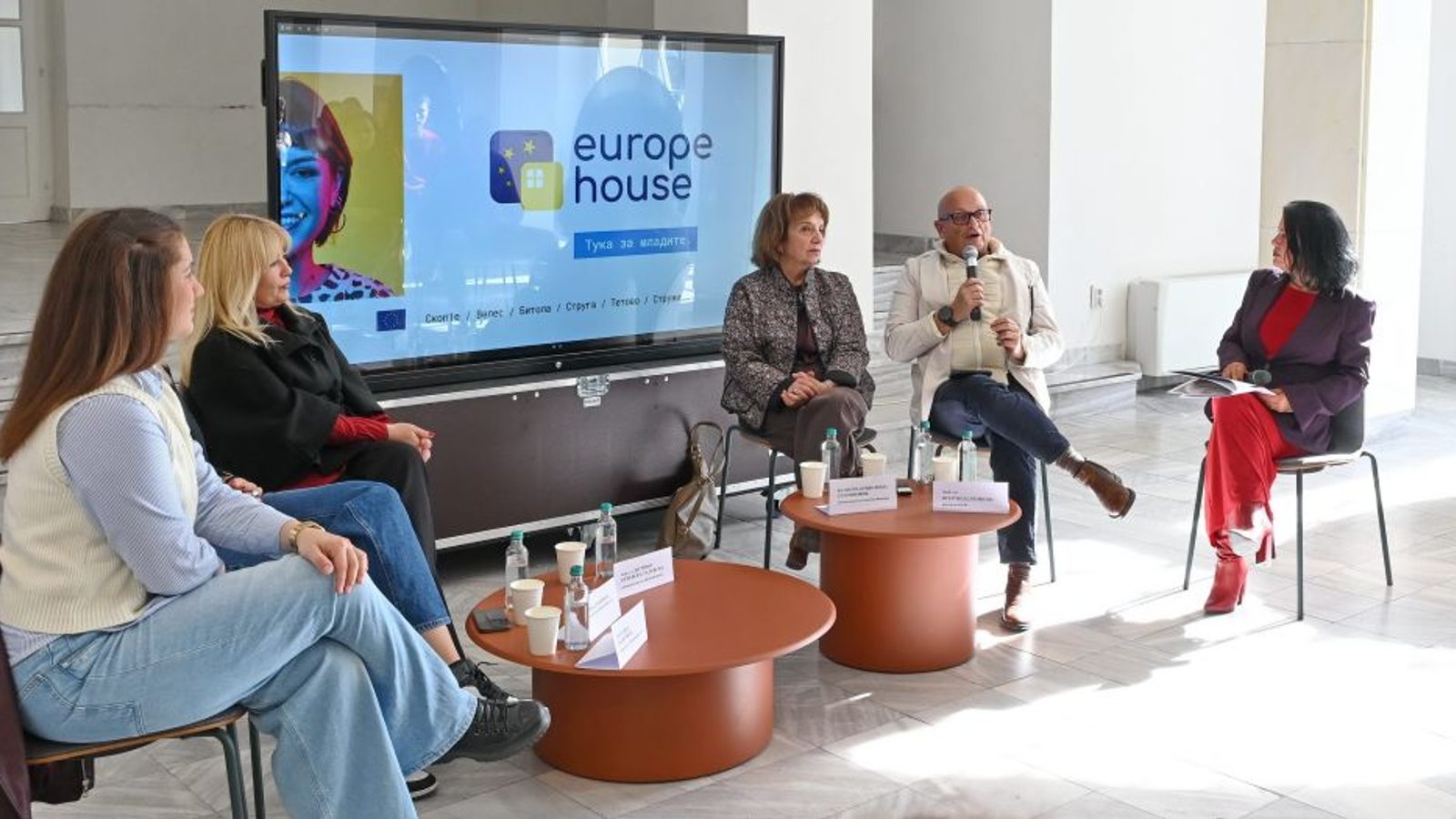
St. Clement of Ohrid University in Bitola (UKLO) has launched a formal procedure to issue a European diploma that would be accepted in participating countries without the need for later nostrification, the university's rector, Prof. Dr. Igor Nedelkovski, announced on a panel about academic cooperation and public interest.
Joint diploma, single recognition
Nedelkovski said the move builds on UKLO's membership in the European university alliance COLORS and clarified that the planned document is not a double degree. "It is not about a double diploma, where each institution issues its own document, but about a joint diploma signed by two rectors, with equal validity in the countries that recognize it," he explained.
He noted that the European Commission announced in April 2025 that it intends to start a process for establishing a European diploma, and that UKLO is among the first three universities in the COLORS alliance to take steps in this direction. Nedelkovski added that in December 2025 UKLO signed a protocol for a joint diploma for a study programme at the Faculty of Economics in Prilep with universities in Ferrara, Italy, and Ventspils, Latvia, and that the next step is accreditation of the joint programme and then application for a European diploma. "It is expected that the European Commission will begin accepting the first applications in 2029," he said.
Students and faculty at the panel described concrete benefits from the COLORS partnership, including mobility, credit recognition and mentoring. "I am convinced that UKLO students will receive a European diploma before North Macedonia becomes an EU member. Even now students have a European education. They travel abroad, attend modules and courses, can also take exams abroad, and those exams are later recognized as if they had been taken at our university. But the diplomas are later nostrified. The European diploma we have initiated means issuing a diploma for which nostrification will not be required," Nedelkovski said.
Student Ivona Sterjovska, from the Faculty of Law in Bitola, said international programmes changed how she approaches practical work and public expression: "There we not only learned how to work practically, but also how to express our positions without them being discriminated against or misunderstood. In Osijek, Croatia, I learned not only how diplomacy functions, but also how to articulate views through speech." Another participant highlighted UKLO's digital tools for coordinating activities and mentors, noting a dashboard and a Google chat for direct communication that records and evaluates student initiatives.
UKLO became a full member of the COLORS alliance in 2024, which comprises universities from nine countries: North Macedonia, Germany, France, Italy, Poland, Spain, Sweden, Croatia and Latvia. The partnership has delivered more than 200 activities so far — exchanges, summer schools, international programmes, joint projects, hackathons, workshops and competitions — and has contributed to rising enrolment at the Bitola university. According to UKLO figures, first-year enrolments rose by 12% in 2024 versus the previous year, and in 2026 they increased by 11% in first-cycle studies and by 35% in master's and specialist studies.
Project organisers say the COLORS project runs through 2028 and aims for durable cooperation beyond its official duration. "Sustainability is very important, and COLORS is valuable because after five, six or seven years partnerships should not only remain, but be upgraded," said Kaliopa Krivashija-Stilinovic, honorary consul of France in North Macedonia and former head of the sector for teaching, science and international cooperation at UKLO.
Photo: SDK.MK)