Artificial intelligence in law: 100 scholars from 15 countries gather in Štip
About 100 researchers from 15 countries discussed how artificial intelligence affects criminal investigations, legal interpretation and education.
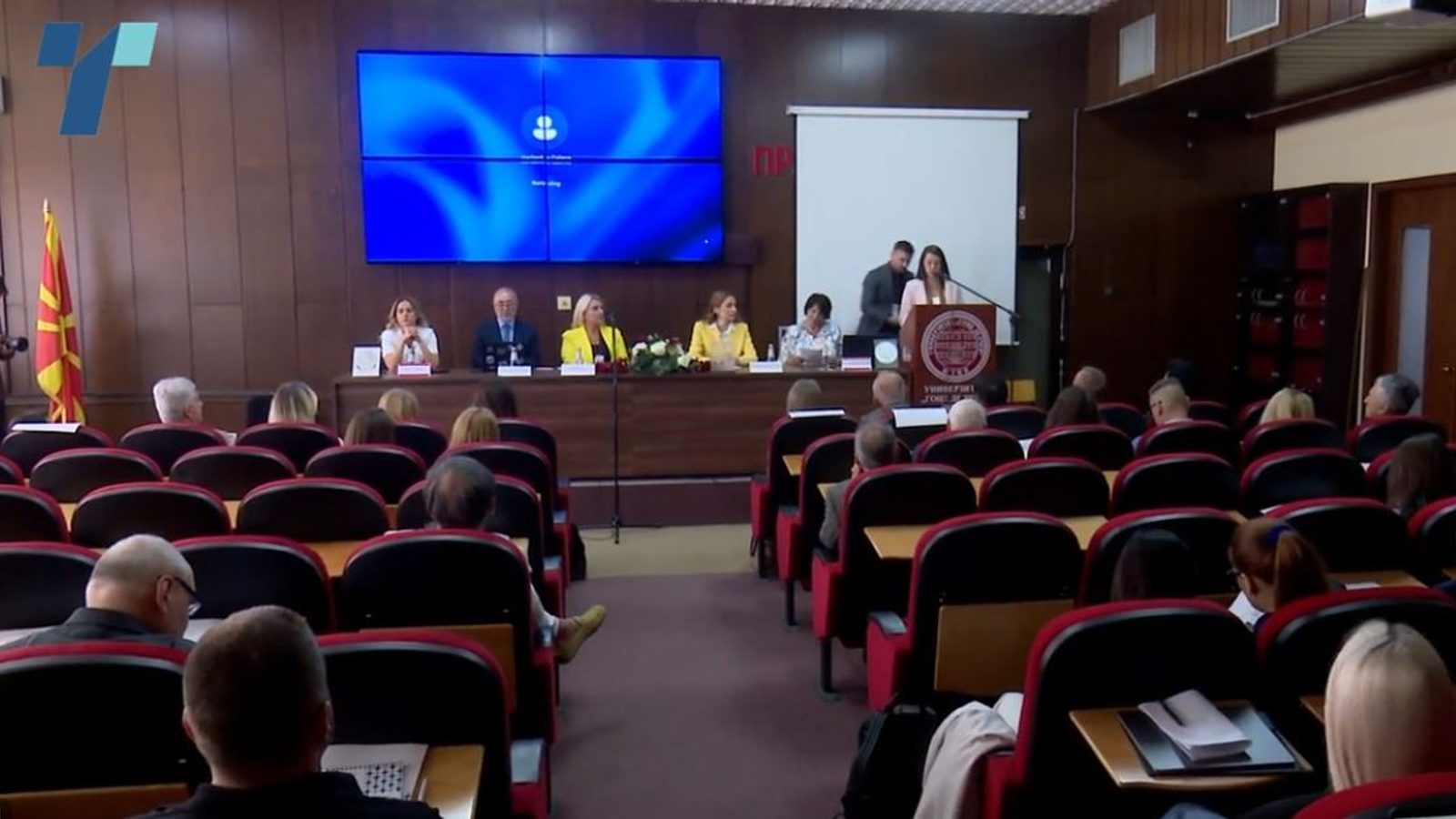
The thirteenth International Scientific Conference at the Faculty of Law in Štip gathered about 100 scholars from 15 countries to discuss how social change and artificial intelligence are reshaping law, media and politics.
Debate on limits and roles
University professor from the United States Casey Chu warned that artificial intelligence can influence criminal investigations but should not replace human judgment. "Artificial intelligence can guide a criminal investigation, but we do not want it to make decisions on behalf of a human — about who will be suspected and how the entire criminal procedure will be conducted," he said.
Croatian university professor Helga Špadina emphasized that legal interpretation remains a fundamentally human task. "This is a very complex process in which you must interpret a legal norm in a way that tests how effective it is and you must place it in the context of the other legal norms in the system, and artificial intelligence cannot do that," Špadina said.
Speakers also debated the impact of AI on education, with several participants arguing that rapid technological change increases the importance of teachers who can verify information and apply critical analysis rather than rely solely on automated tools.
The conference in Štip focused on questions at the intersection of technology and the rule of law, bringing together legal scholars to compare approaches and to examine practical and ethical limits for AI use in investigations and judicial processes.
Viktoria Jovanova
Photo: press material from the event