Landfill fires and smoke spark blockades and petitions across North Macedonia
Fires at dumpsites, dense smoke and petitions have mobilised communities from Skopje to Kumanovo, while inspectors report fines and stepped-up controls.
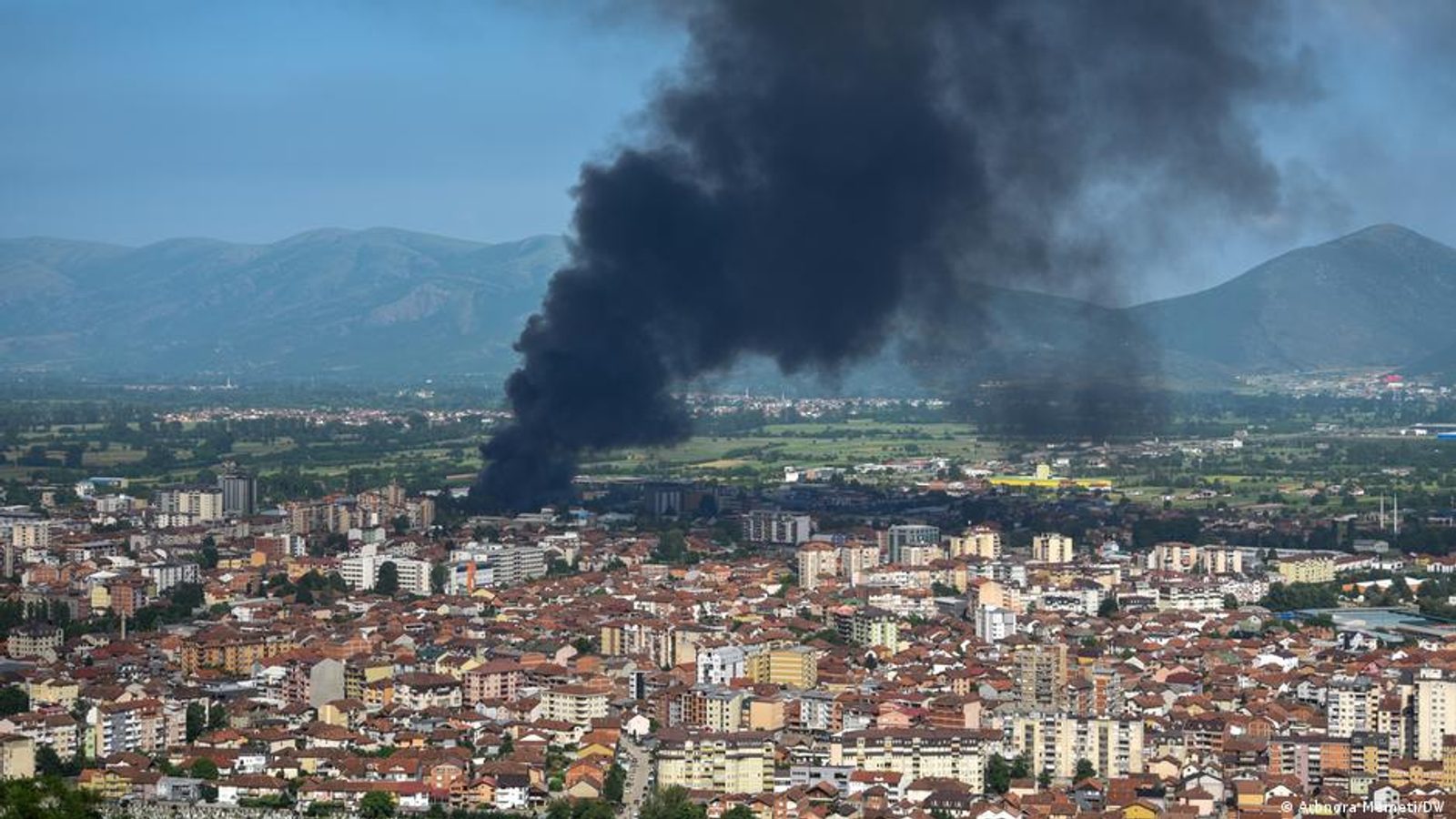
Air pollution linked to wildfires, burning landfill waste and industrial emissions has reignited public protest across North Macedonia, with activists, local communities and citizens demanding urgent measures to protect health and air quality. The wave of outrage comes amid fresh fires at multiple dumpsites and mounting reports of dense smoke over towns and cities.
In Skopje an independent eco-coalition called Green Humane City warned that residents are enduring constant poisoning from smoke. "They poisoned us. Wherever we turn, something burns every day and nobody is responsible," the group said, accusing authorities of reacting only after crises occur.
Residents of Kumanovo say pollution has reached a peak and have announced a planned blockade of the Krasta landfill after repeated fires across the municipality. Local community leaders asked why environmental inspection services at municipal and central level fail to stop the repeated burning and demanded accountability.
"The promises made by the officials from the Municipality of Kumanovo and the public utility 'Chistota i zelenilo' Kumanovo were not fulfilled within the given deadline, so after consulting our fellow citizens, we made a unanimous decision that the 'Krasta' landfill will be blocked," the Pchinja local community posted on social media.
Regional reactions and health evidence
Civilians in Prilep also raised alarm after a fire at the municipal landfill run by JKP Komunalec, describing "poisonous air from the evaporation of burned hazardous waste materials: textiles, plastic and packaging." In the Ohrid–Struga region civic initiative "Zbogum Bukovo" launched a petition, saying the environmental crisis affects health, education and economic prospects.
The concern is backed by international analyses cited by activists: a European Environment Agency analysis reportedly places North Macedonia among the highest for relative health burden from PM2.5 across 40 countries, and a UNICEF 2026 report is cited stating that 99.9 percent of children in the country are exposed to harmful air pollution. An OECD study cited by citizens estimates that each 1 μg/m³ rise in PM2.5 corresponds to an average 0.55 percent drop in labor productivity.
Ivana Ginovska, director of the State Inspectorate for Environment, emphasised that strengthening the inspectorate and its field presence was a priority. She noted that in 2025 the inspectorate carried out 1,702 inspections, issued 530 decisions, initiated fines worth €1.46 million, and started seven criminal and 32 misdemeanor proceedings. For 2026, up to October 5, fines in the total amount of €1,040,900 have been initiated, compared with €894,000 in 2023 and €617,900 in 2022.
"At the same time, inter-institutional cooperation with the Ministry of Internal Affairs, the Ministry of Agriculture, Forestry and Water Management, National Forests and other institutions is being strengthened, because environmental protection cannot be the task of a single institution," Ginovska said, noting enhanced air quality controls and the implementation of measures foreseen in the Clean Air Plan 2024–2030.
Activists and local leaders say the combination of stronger enforcement on the ground, investment in surveillance and secure fencing of illegal dumps, faster criminal investigations of arson, and implementation of the national clean-air measures are needed to prevent repeated episodes of hazardous smoke and protect public health.
Photo: press material from the event