European Dialogues concludes four-day conference to strengthen youth dialogue in the Western Balkans
The "European Dialogues" conference closed after four days of public debates and concrete proposals across five thematic tracks to deepen youth engagement in the Western Balkans.
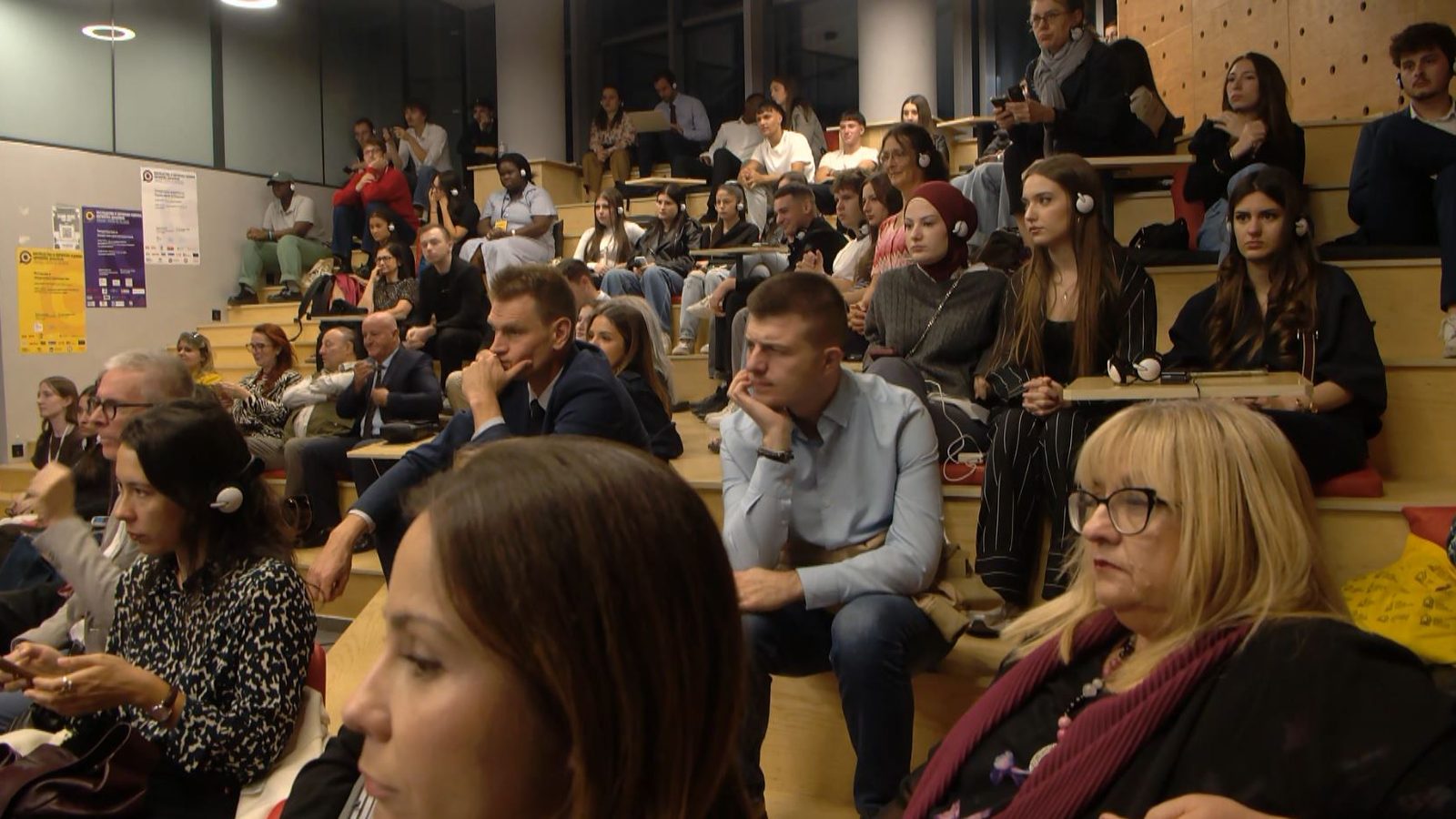
The four-day international conference "European Dialogues", held as part of the "Shared Horizons" programme, concluded with a public discussion that produced concrete proposals aimed at strengthening dialogue among young people across the Western Balkans in the context of European Union enlargement.
Five thematic tracks and public proposals
Discussions at the conference were organised around five thematic tracks: European values, Social Europe, Ecological Europe, Economic Europe and Cultural Europe. Participants presented concrete proposals under each heading and debated how non-institutional projects can bring European policies closer to young people in the region.
Kristof le Rigole, ambassador of France to North Macedonia, pointed to the political significance of hosting the event in the region. "I think it is very important that this edition takes place in the Balkans, a region that is at a crucial crossroads in Europe's history and a place where we, the French, have sought to reinvest significant resources in recent years," he said.
Monika Zajkova, a member of parliament and president of the Liberal Democratic Party, stressed the need to provide young people with tangible opportunities now rather than only preparing them for a distant European future. "I believe the strongest European project or dialogue we can lead is to create a space in which we give generations the assurance that no border determines the limits of their opportunities, their innovations, their chances for work and entrepreneurship. And here's one last message: it is time to stop preparing young people only for the European future or to speak about European values and heritage, and begin to give them a European present," she said.
Andra Ibrahimi urged participants to move from frustration to participation. "We must not be apathetic. If things move weakly or slowly, the easiest thing is to say I will stop too. You cannot tell institutions to change if you do not change yourselves. Society must open space for young people to participate," she said.
Organisers say the programme aims to keep building channels for youth exchange and civic participation across borders. The conference wrapped up with a set of recommendations intended for civil-society networks, youth organisations and regional partners to carry forward the proposals into concrete projects.
Photo: press material from the event