11,000 pensioners trapped in Alta Bank – Filipche: Mickoski and Slaveski let in Vučić’s bank
Branches in Bitola closed, the Serbian owner detained and desperate pensioners at the counters. Filipche asks who checked the origin of the money that came in with the bank of “Vučić’s friends” and announced an interpellation against Governor Slaveski.
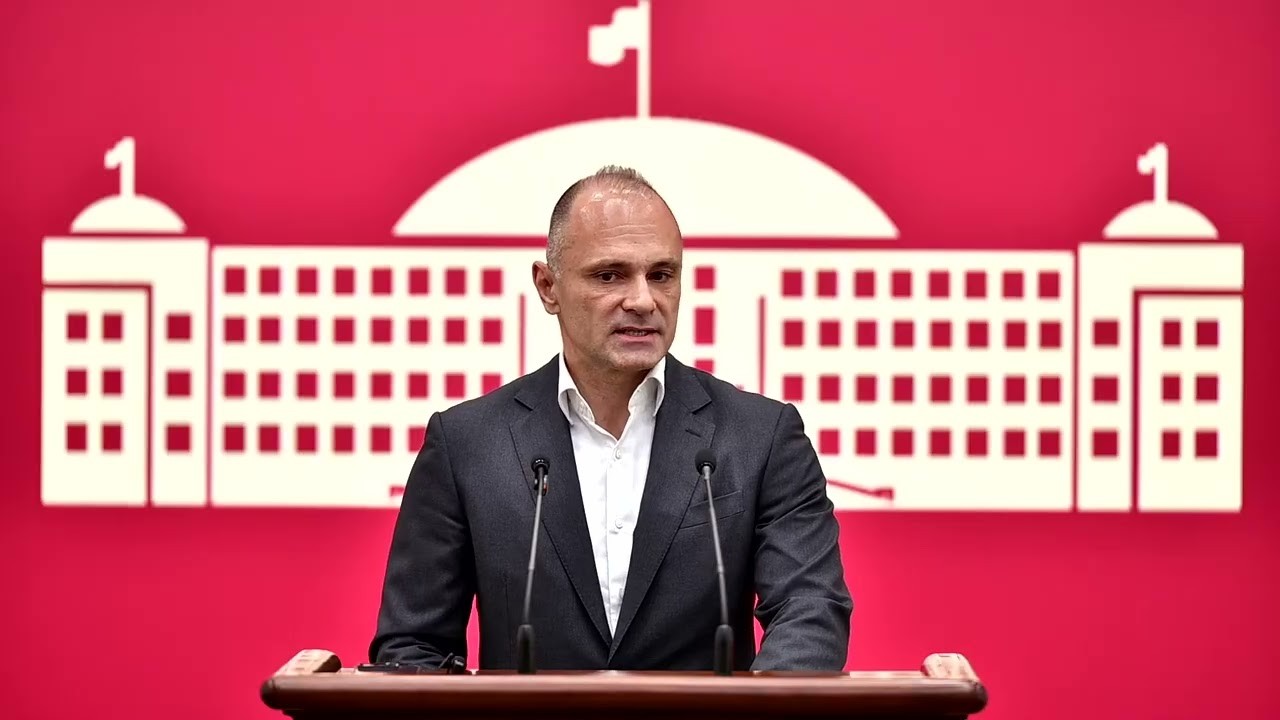
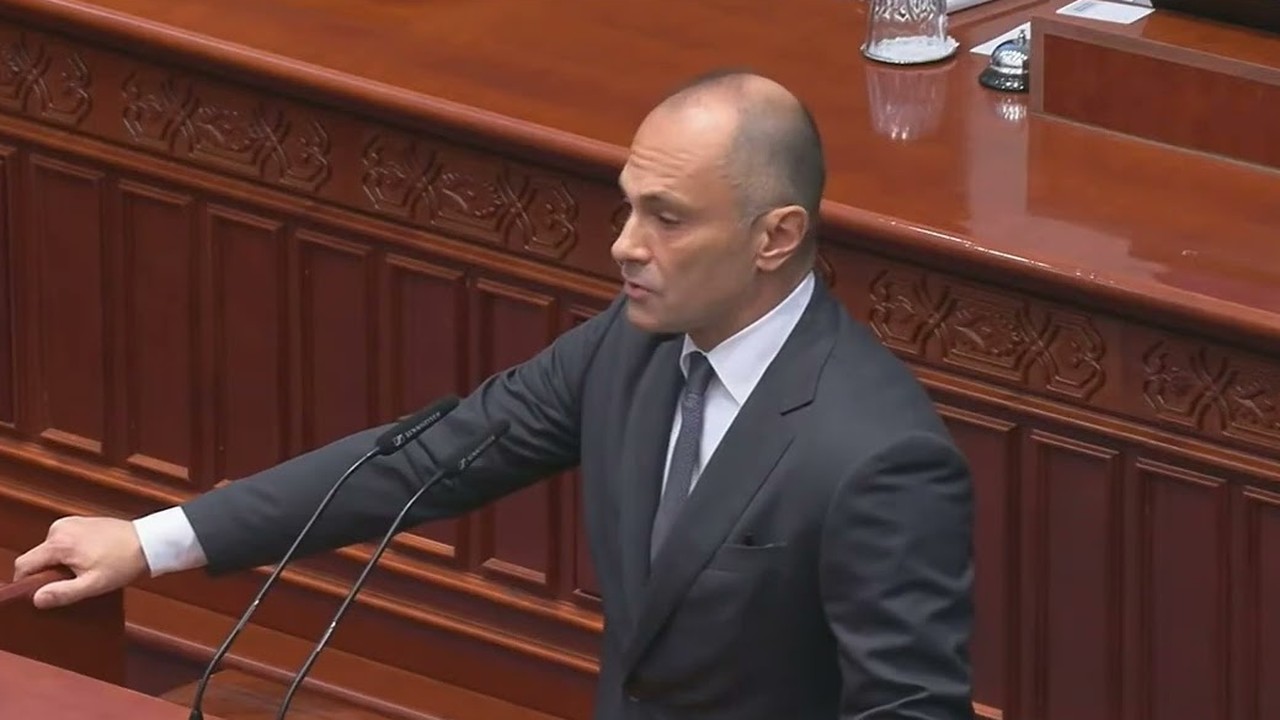
“Eleven thousand pensioners receive their pensions through Alta Bank.” With this sentence SDSM President Venko Filipche on Monday showed from Parliament the real price of the Alta Bank affair – it is being paid by the most vulnerable. As he spoke, people had been standing since early morning in front of the closed branches in Bitola, crying and pleading to reach their money. Most of them were pensioners.
“Today the branches are not working, and people’s ATM cards are not working either. How will citizens withdraw their money? How will pensioners get to their pensions? How will families get by? How will workers get by?” Filipche asked. “The livelihoods of these citizens of ours are under threat.”
Residents of Bitola described the same picture to SDK. “How will we live on 10,000 denars? The cards no longer go through in the shops. In Bitola many families live on pensions. This is ruin for the city,” said Stevo Nikolovski. Biljana Stranoevska does not know how she will move her father-in-law’s pension: “My father-in-law is immobile. How am I supposed to take him to another bank now to open a current account and move his pension there?”
The bank that came from Belgrade
Alta Bank Bitola is not an ordinary local bank. It is the former Stopanska Banka Bitola, which Serbia’s Alta Bank bought in October 2025; after the National Bank approved the full takeover, it has carried the new owner’s name since 12 December 2025. The majority owner, Alta Bank Belgrade, belongs to businessman Davor Macura, who according to Serbian and foreign media is close to Aleksandar Vučić’s Serbian Progressive Party (SNS).
The fall was as swift as Vučić’s political defeat. On 25 October the SNS lost the parliamentary election in Serbia. On 27 October Serbia’s organized crime prosecutors asked the National Bank of Serbia for data on all of Alta Bank’s foreign transactions in the previous month. During the night of 30 to 31 October the central bank in Belgrade revoked its operating licence, and on Monday Macura, according to Serbian media, was detained on suspicion of abuse of office and unauthorized removal of money from the bank’s vault.
Russian money and the warning from Frankfurt
According to the Financial Times, the European Central Bank was already scrutinizing the Alta group in 2024 over money-laundering concerns, and its officials doubted whether the bank could verify the legitimate origin of its deposits. That same year, as the portal AML Intelligence reported, the ECB raised concerns about the attempt by Macura’s company Alta Pay to take over Austria’s Addiko Bank, precisely because of the risk of money laundering.
The same newspaper writes that after Russia’s invasion of Ukraine in 2022 Alta Bank became one of the few banks opening accounts for Russians and a key channel for transfers by Russian citizens and companies, while its deposits grew more than fivefold. According to Financial Times sources, after the election Macura tried to leave for Moscow. The newspaper titled its story “Serbia shuts down bank favoured by Russians,” and at the press conference Filipche held up a printed Financial Times article.
“For almost a year now we have been pointing to the problem that existed then and has now erupted with Alta Bank,” Filipche said. “We pointed out that it is a bank that grew out of a very small savings house, that these are people close to Aleksandar Vučić, his friends, that there was information in the media from Serbia that this is money from criminal, corrupt deals, from drug trafficking, money looted from citizens.” Earlier he had been even sharper: “As early as last December we told citizens that this is Vučić’s money laundry. Until yesterday the National Bank did not lift a finger.”
Who checked the origin of the money?
Filipche demanded that Prime Minister Hristijan Mickoski and Governor Trajko Slaveski say whether the origin of the money had been checked at all before Alta Bank’s capital entered Stopanska Banka Bitola. “Is there confirmation of the origin of the money? Next question, were there transactions after the end of the elections in Serbia?” he asked. He also asked the Prime Minister and the Interior Minister to answer whether Davor Macura had stayed in Macedonia in recent days.
He is particularly concerned that, in his words, while citizens’ funds are blocked, companies are allowed to make transactions: “Is money being transferred, and what kind of money is being transferred from one legal entity to another? If they do not answer these questions, we demand that the prosecution get involved as soon as possible and investigate all these questions.” The National Bank’s decision does indeed limit individuals to 10,000 denars a week through payment cards, while internal payments between the bank’s clients, both companies and individuals, remain unlimited.
Filipche did not mince his words. “This government of ours in Macedonia, led by Hristijan Mickoski, is a government of plunderers and criminals. This is just one more piece of evidence. Unfortunately, now directly at the expense of citizens, who will feel it in their pockets,” he said. He claimed that Mickoski, “the organized criminal group” and the Governor “will help plunder between one hundred and fifty and one hundred and eighty million euros from citizens,” explaining that, according to SDSM’s analyses, this is the value of Alta Bank’s total capital.
Pensions locked, instalments due on time
On Sunday the National Bank placed Alta Bank Bitola under administration. Management was temporarily taken over by three persons appointed by the National Bank, and the measure can last for a maximum of three months. Governor Slaveski said that borrowers must continue to pay their instalments regularly.
“Why does the Governor say that even though they cannot withdraw their money, they are obliged to repay their loans? What a height of impudence. With what money are people supposed to repay loans?” Filipche asked. He also warned of a wider risk: “We fear that this will also have a domino effect on other banks, because other citizens who do not have an account at Alta Bank have been calling us since this morning and telling us that they are checking their deposits.”
The government: a “panic factory”
The ruling VMRO-DPMNE responded with insults. The party claims that SDSM and Filipche are “once again activating the panic factory,” and it called the opposition leader an “anti-Macedonian.” According to VMRO-DPMNE, the banking system is “stable and safe” and under the direct supervision of the National Bank, and “the situation with the banking system and the banks in the neighbourhood has nothing to do with the banking system in Macedonia.”
Governor Slaveski maintains that Alta Bank Bitola “is highly capitalized, liquid and has a loan portfolio of solid quality,” that the measure is temporary and that there are interested buyers for the shares. He appealed to participants in the public debate “to refrain from statements that may cause unnecessary concern.” Prime Minister Mickoski, for his part, said as early as the interview broadcast on 29 October that he does not know “whether everything is in order,” but that there are controls by the National Bank.
But if everything is in order, pensioners have a simple question: why did the branches not serve customers at all on Monday? The bank itself announced it. Liquidity on paper is little comfort to someone who cannot collect their pension.
The region reacts, Skopje gets defensive
While Skopje assures the public that there is no problem, the neighbours are reacting. On 1 November the Central Bank of Montenegro revoked the payment-services authorization of Alta Pay Group in Podgorica, and the ruling Europe Now movement (PES) is seeking a parliamentary hearing on possible hybrid foreign influence. In Serbia the case is being investigated by the organized crime prosecutors. In Macedonia, for now, it is the opposition that is publicly calling for the prosecution to step in.
Filipche announced that the SDSM parliamentary group will launch an initiative for a supervisory hearing in Parliament and will file an interpellation against Governor Slaveski, “who left families, pensioners and young people without their funds.” Earlier he asked how much money Vučić had moved into Macedonia and whether it stayed here or went on to Moscow.
The questions that will not go away
Filipche warned almost a year ago. Back then the government stayed silent; today it responds with insults. But 11,000 pensioners and thousands of savers are not asking for insults, they are asking for answers: who checked the origin of the money with which the bank arrived, what happened with the transactions after the election in Serbia, and how Macedonia of all places became the market where Alta managed to buy a bank – at a time when, according to the Financial Times, the European Central Bank already doubted the origin of its deposits.
Sources: SDSM (the press conference), SDSM (11,000 pensioners), SDSM (the questions about Macura), SDK (Filipche’s statement), SDK (Bitola), SDK (the closed branches), SDK (the Financial Times and the ECB), Financial Times, AML Intelligence (the ECB and Addiko Bank), Deutsche Welle (the National Bank’s measures), TIME.mk (VMRO-DPMNE’s reaction), GRID.mk (Mickoski’s statement), Euronews Serbia (Macura’s detention), Libertas (the purchase of Stopanska Banka Bitola).
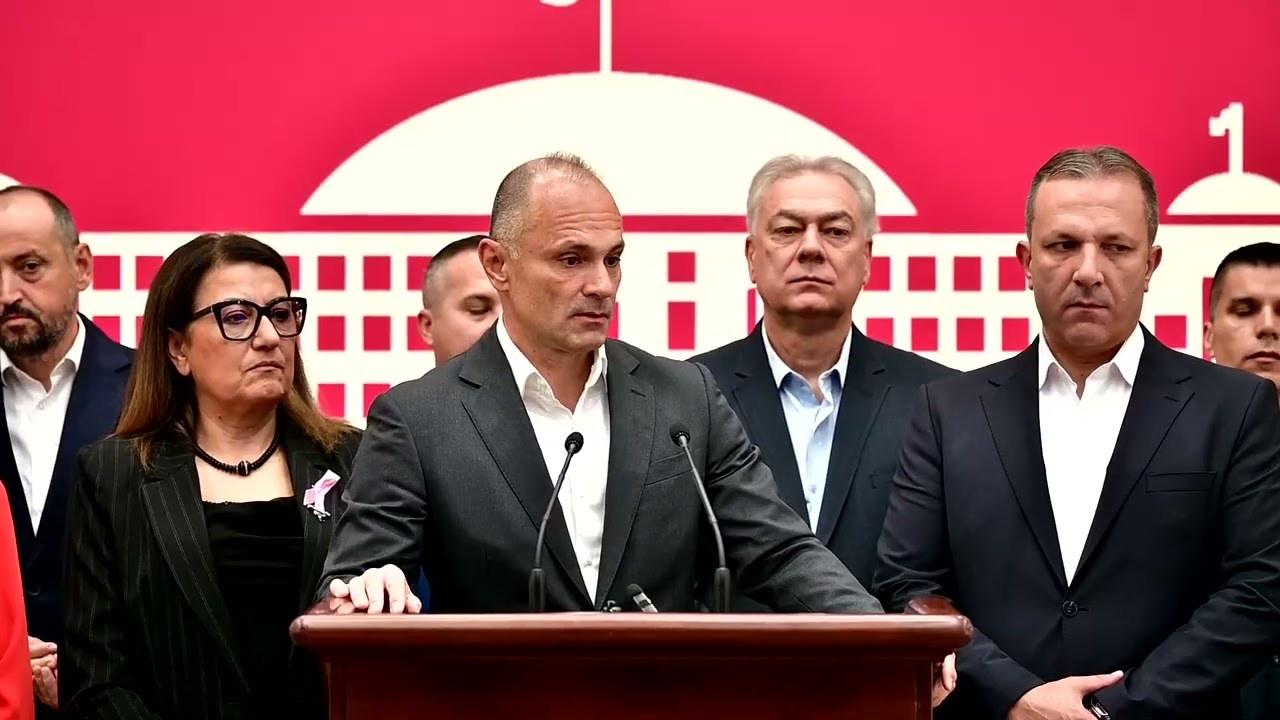
Photo: frame from the SDSM video of the press conference, 2 November 2026