Bulgarian ambassador: I would be surprised if authorities did not know about Iva Mihailova’s departure
Radukov voiced suspicions about coordination, while Macedonian institutions say border systems show no recorded exit or legal entry into Bulgaria.
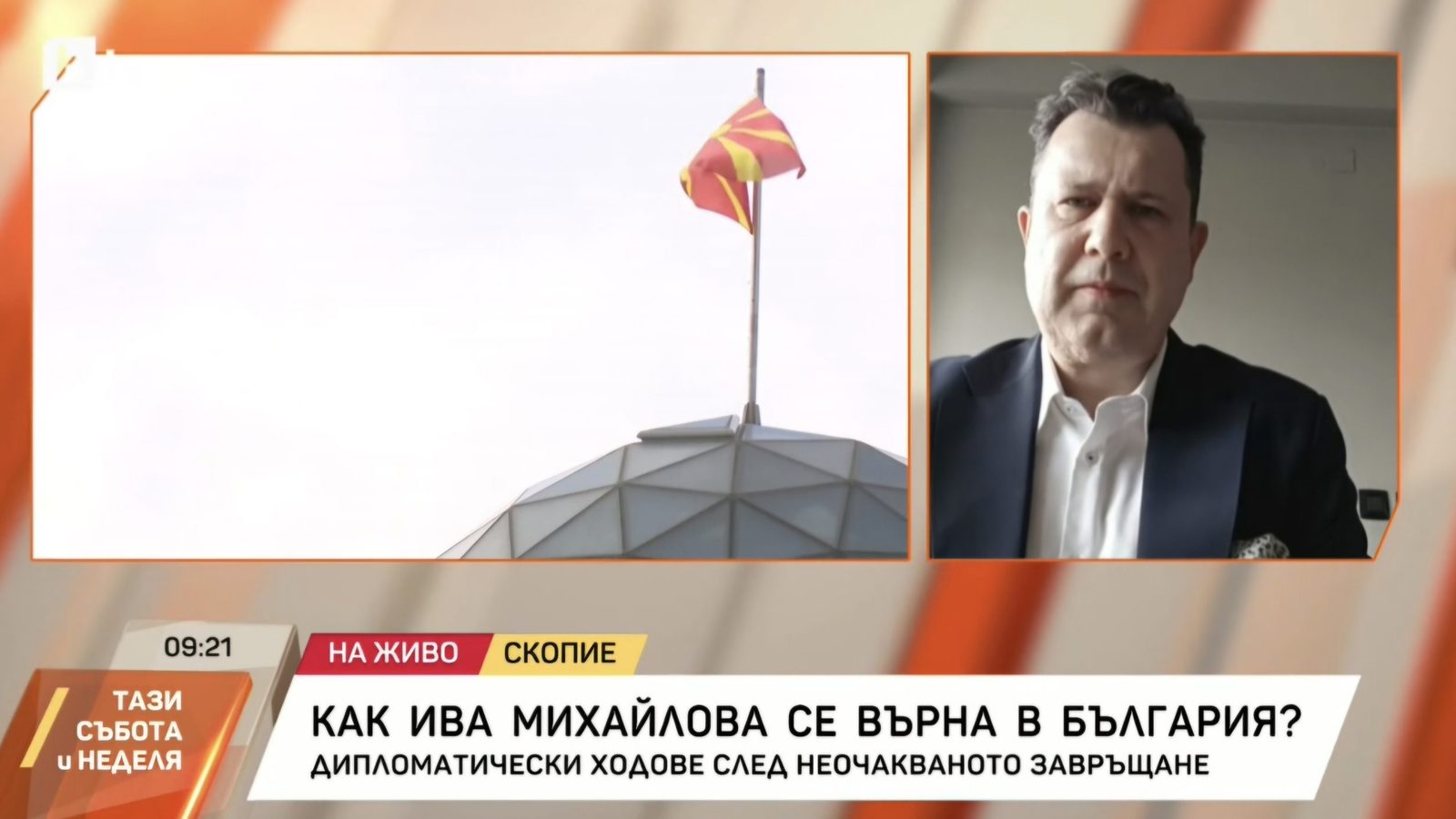
Bulgarian ambassador to Skopje Zhelyazko Radukov said he would be surprised if North Macedonian authorities were not aware that Iva Mihailova left the country, though he stopped short of claiming direct knowledge. Radukov outlined reasons for his suspicion, describing measures that, he said, had been imposed on Mihailova before her departure.
Ambassador's doubts and the picture he painted
“I cannot assert that, but I would be extremely surprised if it was not coordinated,” Radukov told reporters, explaining that Mihailova had been on a stop-list, had her passports seized and had been under police supervision. He said there had been a patrol in front of her home, that plainclothes officers followed her when she left, and that she had reported drones hovering over the house.
At the same time Radukov denied that he or the Bulgarian state knew in advance about her departure: the embassy, he said, learned about it from the media. He added that the embassy had been expecting the judicial process to continue and had been exploring options for treatment with involvement from Bulgarian doctors.
Radukov said legal assistance and funds for expert assessments had been provided. He also said he did not support Mihailova's departure, though he understood her desperate condition, and reiterated concerns that she may have been treated differently because of her Bulgarian nationality. He questioned why the debate over her crossing the border had eclipsed the question of why she had not been allowed to receive treatment abroad.
North Macedonian authorities have given a different account. The Interior Ministry reported there is no recorded exit for Mihailova in the border-control system. Checks through the joint contact centre and with Bulgarian border police also reportedly found no record of a legal entry into Bulgaria.
The Basic Public Prosecutor's Office said that on October 9, 2025 both Mihailova’s Macedonian and Bulgarian passports were seized, and several restrictions were imposed: a ban on crossing the state border with a national ID card, a prohibition on leaving Kočani and an obligation to report to an official. Prosecutors said the flight risk was a key reason they repeatedly opposed returning her travel documents. After it was established she had not reported to police and was not at her registered address, the Kočani prosecutor on October 13 requested detention; an international warrant was later issued.
The episode sparked a diplomatic protest: North Macedonia’s Ministry of Foreign Affairs summoned Radukov and described the reception of Mihailova in Sofia, including talk of a high-level welcome, as a provocation and an undermining of neighbourly relations. Officials insisted that “Nationality or possession of another citizenship must not serve as a basis for protection from responsibility before the competent institutions.”
Prime Minister Hristijan Mickoski rejected claims that Mihailova and her lawyer crossed at an official border checkpoint, saying that the lawyer’s last recorded entry into the country was on September 28, 2025 and that the circumstances of her departure are under investigation. He announced he would raise the matter with NATO and EU partners after the probe and said evidence would be shared with allies when appropriate. Opposition party SDSM called for the resignation of Interior Minister Panche Toshkovski and accountability for anyone who may have enabled the escape.
Mihailova faces a criminal case over a traffic accident on October 7, 2025 on the Kočani–Štip road in which one person died and several were injured. The indictment alleges she drove into the oncoming lane; her defence disputes that claim. Her guilt has not been established by a final court verdict.
Photo: press material from the event