Bulgarian minister: It is atypical to have mediators in talks between Skopje and Sofia
The Bulgarian minister said Sofia acts on the 2022 consensus and wants North Macedonia to abandon an anti‑Bulgarian political narrative.
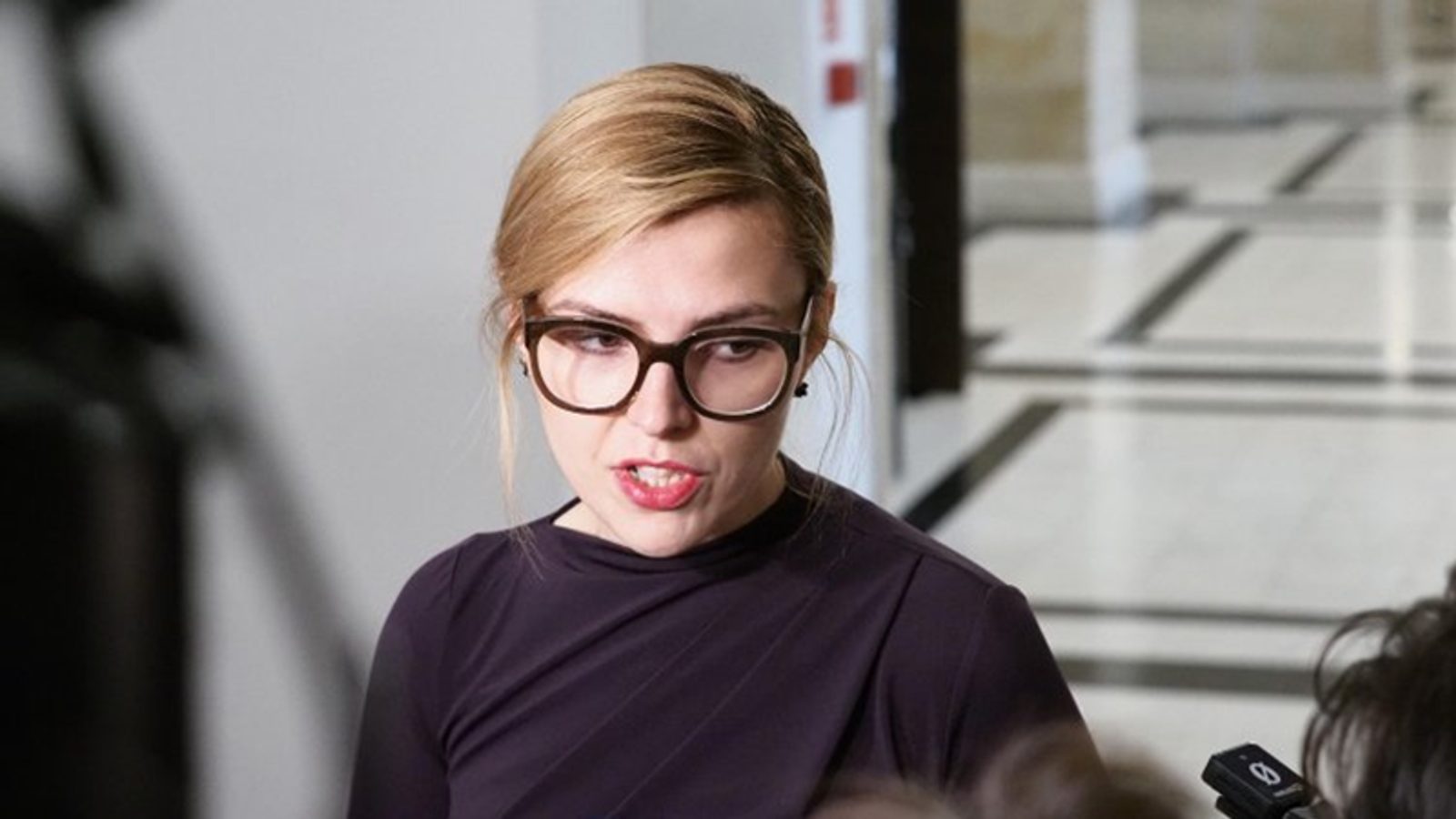
Bulgarian Foreign Minister Velislava Petrova-Chamova said it is "atypical" for a mediator to take part in talks between an EU member state and a candidate country when the issues in question were adopted and approved at the European level.
Petrova-Chamova reiterates Sofia's conditions
Speaking in response to a parliamentary question, Petrova-Chamova underlined that Sofia follows the 2022 consensus and subsequent Bulgarian parliamentary decisions when conducting the dialogue with North Macedonia. She said it is important for North Macedonia to show readiness to abandon what Bulgaria sees as an anti-Bulgarian political narrative.
"In the dialogue with the Republic of North Macedonia, the government and the Ministry of Foreign Affairs (of Bulgaria, ed.) are guided by the 2022 consensus and the subsequent decisions of the Bulgarian parliament, which clearly show what the Bulgarian position is," she said.
On the question of third-party involvement, Petrova-Chamova was explicit: "It is atypical for there to be a mediator between an EU member state and a candidate country for membership for agreements that are not of a bilateral character, but have been adopted and approved at the European level." She added that the bilateral talks will remain difficult until Skopje changes its political narrative.
Former Bulgarian foreign minister Georgi Georgiev, who raised the issue in parliament, told Petrova-Chamova that he had offered her a collegial admonition about expecting political logic from Skopje. He said, "Friendly advice among colleagues. You look for political logic in their actions, and there is none. Several times we tried to find a basis for their actions and rhetoric. There is absolutely no logic in their behaviour."
In Skopje, Prime Minister Hristijan Mickoski has repeatedly argued that talks with Sofia should take place in the presence of EU or NATO representatives so arguments can be heard objectively. On 29 September he said that reforms North Macedonia delivers should form the basis for assessing progress toward EU membership and that Brussels representatives at talks would give those debates substance.
Foreign Minister Timcho Mucunski told reporters the current dialogue with Sofia has the support of EU institutions and member states, and that North Macedonia remains committed to its stated, principled positions. The exchange follows comments by European Commissioner for Enlargement Marta Kos on 4 November, who said the conditions for unlocking accession negotiations remain clear and include adoption of the 2022 constitutional changes regarding minorities.
Swiss Foreign Minister Ignazio Cassis, during an official visit to Skopje, said the OSCE can contribute to the country’s EU integration path by monitoring rule-of-law developments and facilitating relations with neighbouring states.
Photo: Arhiva