"Is This a Coup d'État?" — Filipche Drops a Bombshell in Parliament Over the Blocked European Path
The head of the National Council for European Integration raised a question that shook the session: the deliberate halting of the country's EU path may amount to an attack on the state itself.
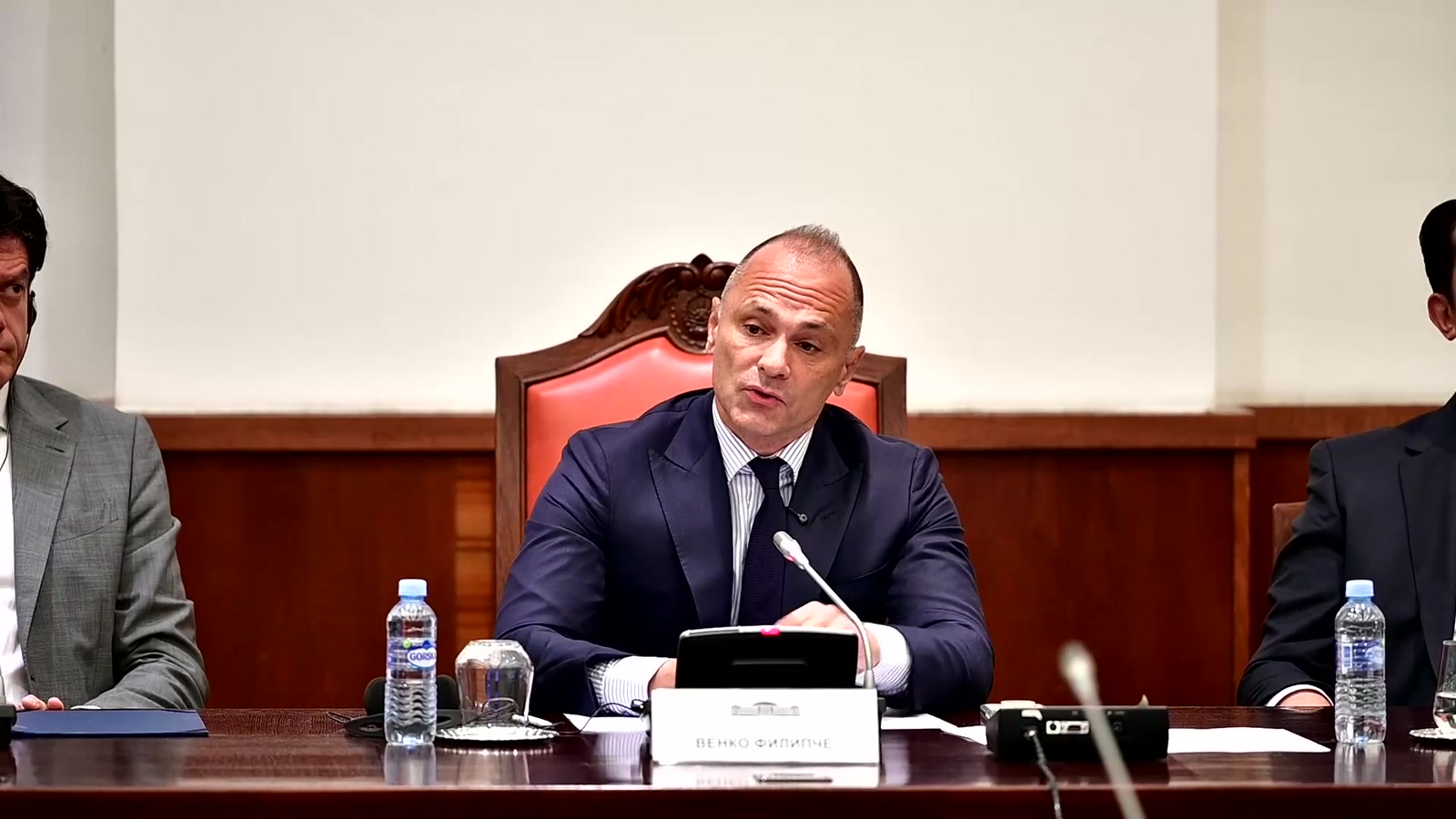
The session of the National Council for European Integration turned into a political explosion after the Council's president, Venko Filipche, posed the question few in the room expected to hear out loud: does the deliberate halting of the country's European path constitute a form of coup d'état?
"The question arises whether the deliberate stopping of the European path is not a form of coup d'état? When it is known what needs to be done, when not a single chapter has been opened," Filipche declared before the attendees, who included the European Union's ambassador, Michalis Rokas.
Framing the EU integration deadlock as a "coup d'état" is one of the sharpest accusations aimed at the ruling majority in recent months. Filipche's message was unambiguous — in his view, the standstill is not the product of external circumstances but of a conscious political decision by those in power.
He reminded the session that the country is the only one in the region without a single negotiating chapter opened, even though the roadmap for the next steps has long been known. "It is obvious that we are not moving forward. We are the only country that has not opened a negotiating chapter," he underlined.
According to Filipche, responsibility for the deadlock cannot be shifted onto past governments or international factors. When everyone knows what must be done and it is not being done, only one explanation remains — a lack of political will at the very top.
The statement instantly raised the political temperature, and the question he left hanging in the air — who benefits from the country standing still — is set to shape the political debate in the days ahead.