Sewage Polluted the Sea at Four Beaches in Montenegro — Bathing Ban Introduced
Žukotrlica 02 and 03 in Bar, as well as Slovenska Beach 01 and Pržno in Budva, temporarily closed after analyses showed presence of sewage.
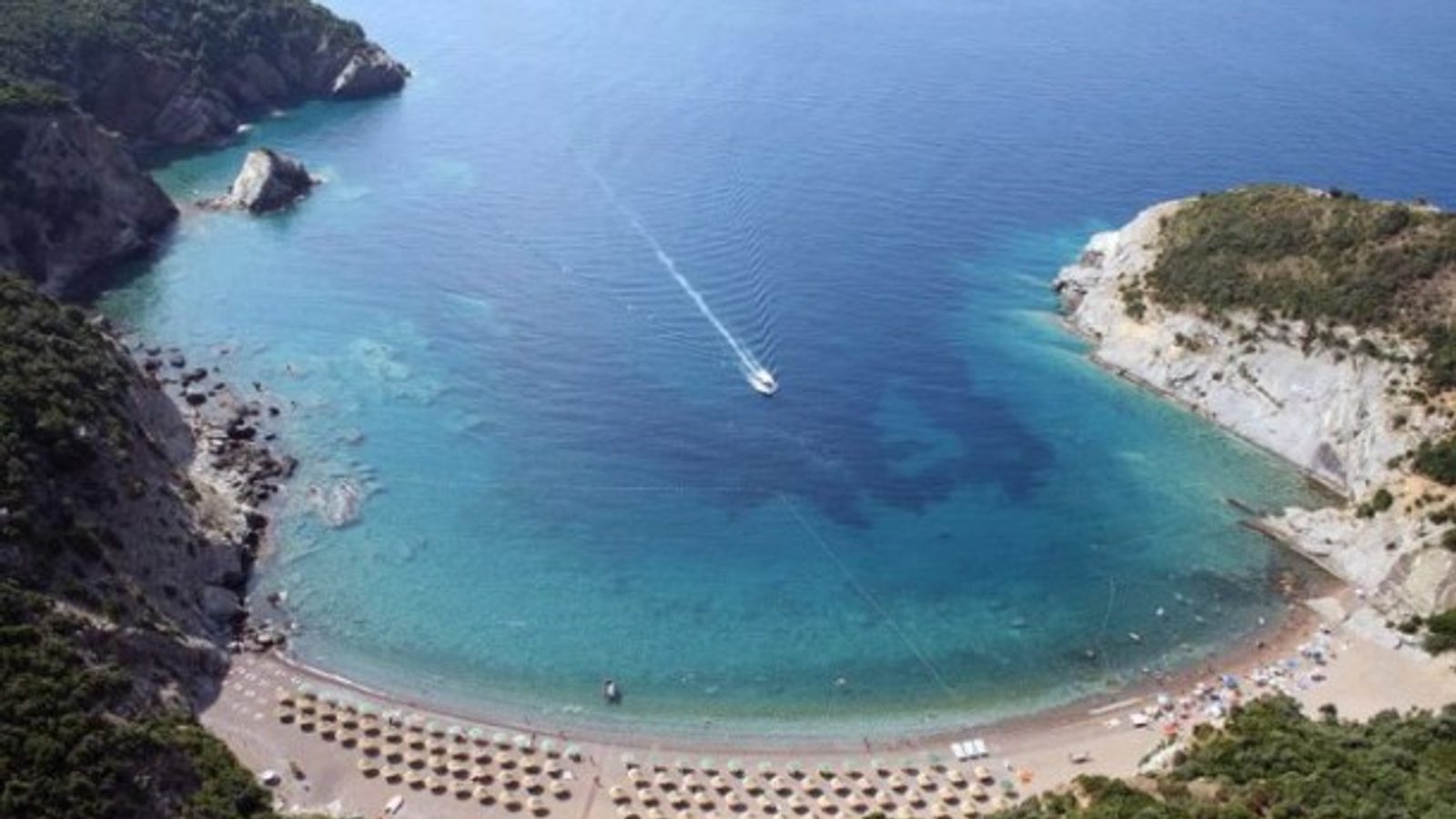
Authorities in Montenegro temporarily closed four beaches and hoisted red flags due to the discharge of sewage into the seawater, after which a ban on swimming was introduced. The affected beaches are Žukotrlica 02 and Žukotrlica 03 in Bar, as well as Slovenska Beach 01 and Pržno in Budva.
Visitors last week reported that sewage was flowing into the sea at at least two locations in Bar. From the drains under the former restaurants "BB" and "Amphora" a cloudy, brown liquid was coming out accompanied by an unpleasant smell that spread along the coast, including near the beaches with sunbeds.
Analyses by the Institute of Marine Biology, conducted from 20 to 23 July at a total of 114 locations, showed that at 78.9 percent of the sites the seawater quality was rated as excellent.
Local results painted a different picture: in Bar the water was of excellent quality at 13 locations, while at Žukotrlica 02 and Žukotrlica 03 the quality was rated poor. In Budva, excellent quality was determined at 27 locations, good at two, satisfactory at three, while Slovenska Beach 01 and Pržno were rated poor.
New measurements and next steps
The Public Enterprise for Management of the Maritime Domain announced that during repeat tests carried out on Tuesday they found an improvement in water quality at the Žukotrlica 02 and Žukotrlica 03 locations in Bar. As the enterprise stated: "At the locations Žukotrlica 02 and Žukotrlica 03 in Bar, the water quality ranges from good to satisfactory, which means that the water at these locations is once again safe for swimmers."
The ban on swimming at Pržno beach in Budva remains in force because the water is still polluted. "The Institute of Marine Biology continues with extraordinary sampling at the Pržno location, and the public will be promptly informed about the new results," the Institute announced.
The authorities say intensive sampling and monitoring will continue, and coastal visitors will be informed of any changes. The case highlights the vulnerability of popular beaches to wastewater discharges and the challenge of preserving seawater quality during the tourist season.
Photo: Archive of