Filipche seeks €600 net minimum wage: two salaries don't cover union basket
SDSM demands a €600 net minimum wage and subsidies for contributions; the union basket reached 69,432 denars, while the Government points to social dialogue.
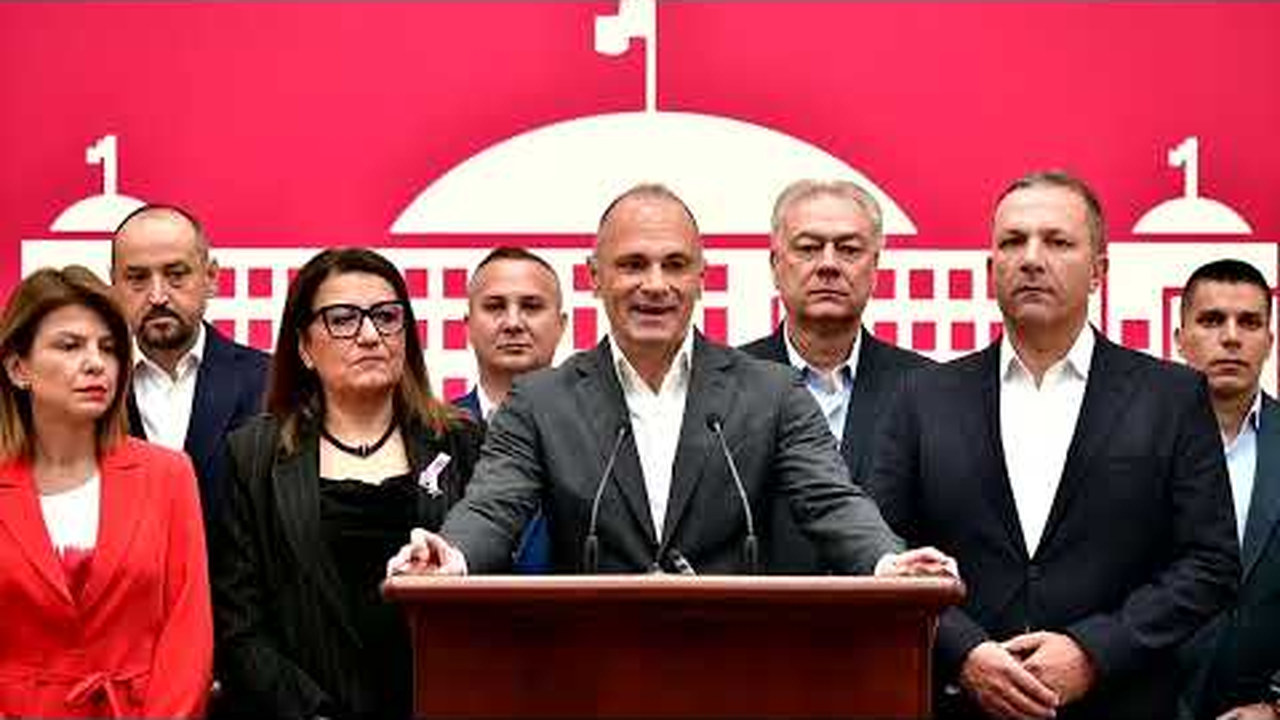
Opposition leader Venko Filipche called for a €600 net minimum wage and state subsidies for social contributions, urging MPs to support the draft law — a pledge put forward at a press conference in the Assembly on 1 October 2026, at a time when two minimum wages still do not cover the union cost basket for a four-member family.
What exactly Filipche and SDSM propose
At the press conference Filipche asked for support for a law that would set the net minimum wage at €600 and for the state to subsidize employers' social contributions in the private sector. According to the SDSM statement, the goal is for workers on the minimum wage to have higher net take-home pay. Additionally, Filipche announced cuts to budget expenditures on official travel, furniture and vehicles as sources of funding. These are proposals — there is no adopted law, nor an approved budget rebalance structure that secures the required funds.
SDSM claims that subsidizing contributions would help private employers, but at the time of publication no publicly presented independently audited calculation of the cost and scope of the subsidies has been released. For an earlier version of the bill, SDSM in January cited financial implications of 7.5 billion denars. That party estimate does not independently establish the cost of subsidizing contributions under the current proposal. Without concrete parameters — number of beneficiaries, amount per employee, duration and fiscal offsets — it remains open whether the proposed cuts would be sufficient.
The facts about wages and costs
According to WageIndicator, the statutory minimum wage in the period March–October 2026 amounts to 26,046 denars net and 38,507 denars gross. Two such net salaries equal 52,092 denars — below the September model union basket of 69,432 denars for a four-member family calculated by the union. In a variant with monthly rent, according to a report by Deutsche Welle, the required costs reach 84,807 denars. These baskets are model calculations by the union, not a universal description of every household, but they serve as a public barometer of the burden of food, utilities and rent.
If the minimum wage reaches €600 net, the question is not only economic but fiscal: who covers the tax-contribution gap? Any subsidy for contributions has a budgetary cost, and that cost rises with the coverage and duration.
What the Mickoski government says
Prime Minister Hristijan Mickoski previously stated that wage increases should result from social dialogue between workers and employers, with the Government acting as a facilitator rather than the sole payer. According to that position, the agreement between workers and employers should precede political determination of the amount; the demand for direct state subsidies raises a separate budgetary question.
That is a substantive position on the method — not on the final amount. But in the statements reviewed for this text no concrete alternative government proposal with figures, deadlines and funding sources was provided. Social dialogue does not automatically pay bills; it requires a clear mechanism, indexation and timelines.
Bookkeeping: where will the money come from and when?
Filipche proposes cuts to official travel, furniture and vehicles. Exactly how much would be saved from those budget lines in 2026? What would be the annual cost of subsidizing contributions for all employees on the minimum wage in the private sector? Is the subsidy temporary or permanent? Will it apply only to new hires or also to existing employees? Without these answers, the public cannot assess whether the measure is financially sustainable or a political declaration with insufficient coverage.
On the other hand, if the Government truly believes the path is through social dialogue, why has no concrete model been presented so far: an indexation formula, a timeline, sectoral thresholds, possible tax reliefs and an assessment of inflationary effects? And is there an estimate of the risk that, without active budgetary support, some microenterprises will respond with layoffs or by informalizing work?
One thing is clear: households pressured by bills and rent do not have time for another round of political quarrels. The political offer of €600 net with subsidized contributions is a claim of a rapid effect on living standards. The Government’s skepticism is a warning about long-term fiscal balance. Between these poles, numbers, deadlines and accountability are needed — on paper and in the Budget.
Until then, citizens hear a promise and a principle. Next are arithmetic and implementation.
Sources and context: SDSM (press conference); SDSM (earlier bill); WageIndicator (minimum wage); Deutsche Welle (union basket); SDK (prime minister’s statement).
Photo: frame from the SDSM press conference