Delčev died for Macedonia, Gruevski fled from justice: Delčev’s VMRO is not Mickoski’s VMRO-DPMNE
Commentary: 133 years after its founding in Thessaloniki, the party that carries the name claims continuity. Its deeds tell a very different story.
Commentary
Exactly 133 years ago, on 23 October 1893, six young men in Thessaloniki – Dame Gruev, Dr Hristo Tatarčev, Petar Pop Arsov, Ivan Hadži Nikolov, Hristo Batandžiev and Andon Dimitrov – founded an organisation that had no state, no money and no protectors. It had only an idea: a free, autonomous Macedonia. Later Goce Delčev, Gjorče Petrov, Pere Tošev and Jane Sandanski joined it and turned it into a movement that shook the Balkans.
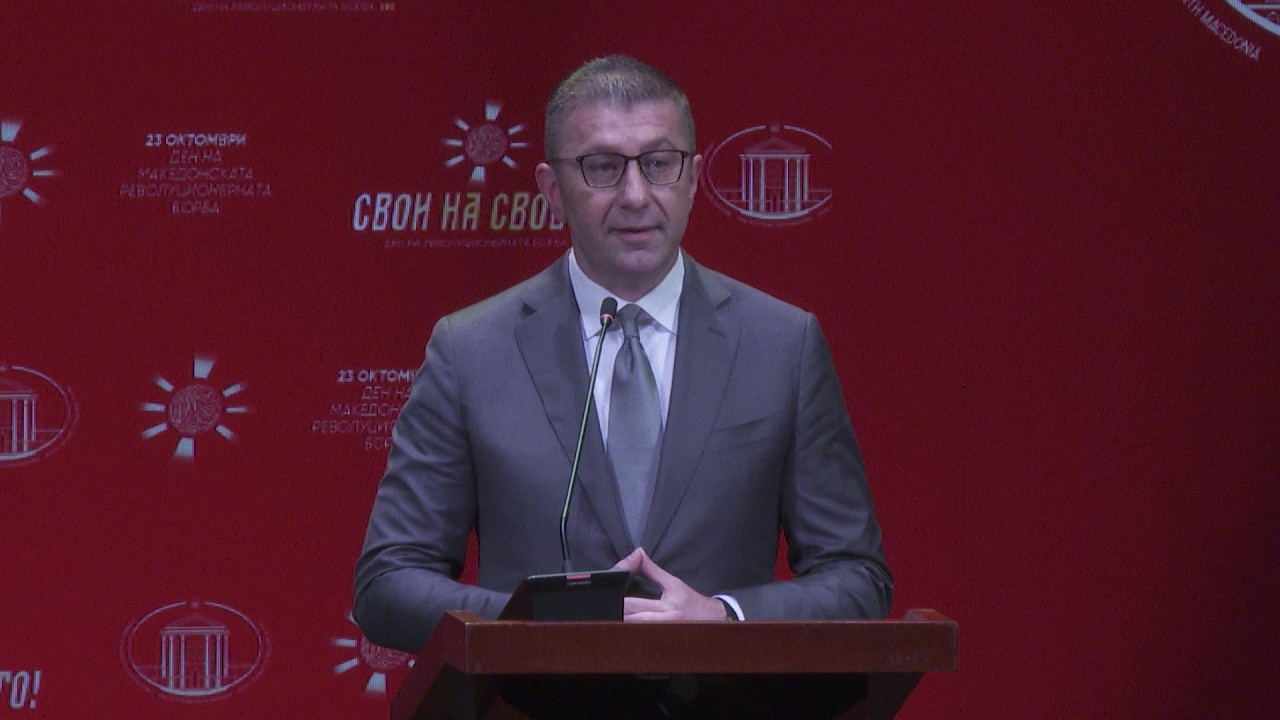
Today, at the Macedonian National Theatre, under the slogan “Svoi na svoeto!” (“Our own in our own land!”), Prime Minister and VMRO-DPMNE leader Hristijan Mickoski spoke in grand words about “the defiance of Uzunov, the dedication of Gruev, the wisdom of Tatarčev, the courage of Pitu, the greatness of Goce”. He said the homeland was created “through wails and cries, through constant sacrifice, not through applause and freedoms handed out as gifts”. And he asked: “What are we doing with the freedom they fought for?”
That is the real question. Which is exactly why the answer must be honest – even when it hurts the party that carries the VMRO name.
“Continuity” or a brand?
In June, at the party’s 36th anniversary in Strumica, Mickoski said that continuity with the historical VMRO “is not some abstract notion or something imaginary”, but an ideology “deeply embedded in the programme documents”. In the same speech he added: “In today’s vocabulary, VMRO is the biggest Macedonian political brand.”
A brand. That word says more than every ceremonial academy. The revolutionaries of 1893 took an oath and knew that prison, exile and the gallows awaited them. Today’s party, by its own admission, has a brand. And a brand, unlike an oath, does not demand sacrifice – it demands a market.
Sacrifice versus flight
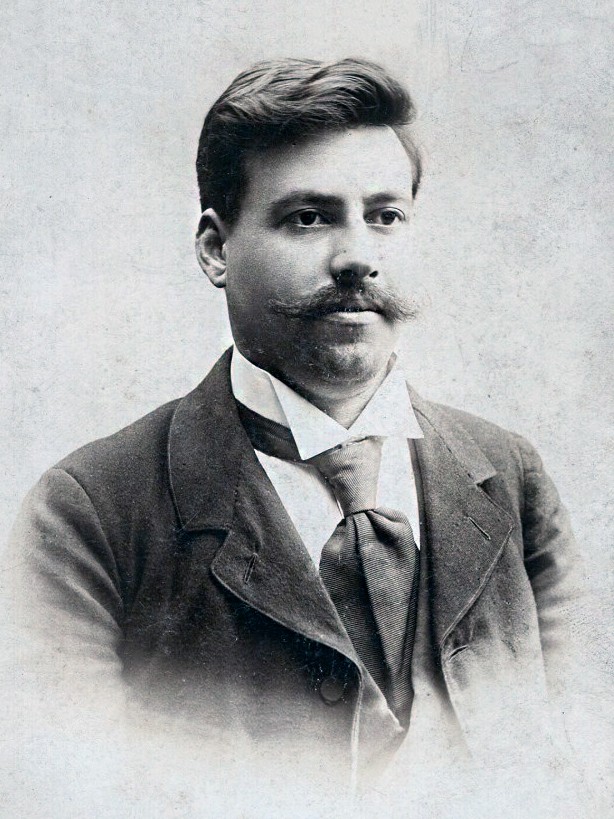
Goce Delčev was killed on 4 May 1903 in the village of Banitsa, aged 31. The founders, as Mickoski himself said, “had no state behind them, had no institutions to protect them”. Prisons and exile awaited them – and they did not run from them.
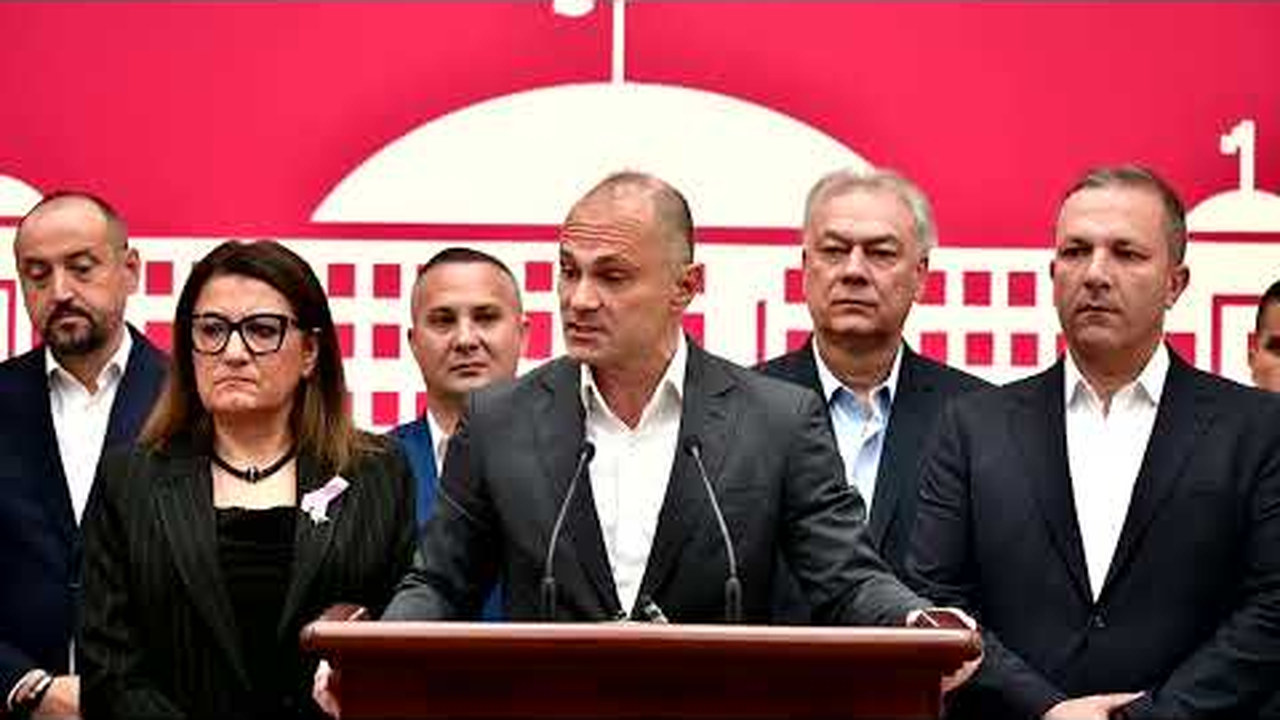
The party that invokes them today was led for a whole decade by Nikola Gruevski. He has a final conviction and a two-year prison sentence in the “Tank” case – for accepting a reward for unlawful influence in the purchase of an armoured Mercedes worth about 600,000 euros. Instead of going to prison, in November 2018 he fled to Budapest, where Viktor Orbán’s government granted him asylum. He was later convicted in other cases as well, including for money laundering.
This week former Hungarian MP Ákos Hadházy published new photographs of Gruevski in an elite restaurant in central Budapest. Delčev died in Banitsa. Gruevski sits in Budapest’s elite restaurants. That is not continuity – it is a reversal.
After Péter Magyar’s election victory in April, when he called Gruevski “a wanted criminal”, Mickoski said Gruevski would be sent to serve his sentence if he appeared in Macedonia, and the Ministry of Justice announced in May that it was collecting documents from the courts. Five months later, according to Nezavisen, there is no new extradition request. The portal VSquare, citing sources in the Hungarian government, reported that Gruevski holds Hungarian citizenship, which would make extradition almost impossible. Mickoski himself, according to European Western Balkans, served as an adviser in Gruevski’s government.
Independence versus foreign patrons
The historical organisation fought a hard battle against the Supremists, who wanted to control it from outside. Its strength, as Mickoski also said in June, came from the Macedonian people – not from foreign courts.
Today’s VMRO-DPMNE found its patron in Budapest. In July 2024 Mickoski and Orbán agreed a 500-million-euro loan at 3.25 percent interest over 15 years, half of it earmarked for municipalities. Since the summer, Magyar’s new Hungarian government has been investigating the two loans to Macedonia through the state-owned Eximbank, worth 988 million euros in total, and estimates the cost of interest compensation to the Hungarian budget at more than 247 million euros. Mickoski maintains that the terms are extremely favourable. But the same Orbán who granted the loan also gave Gruevski shelter.
The opposition goes further. This year SDSM accused the government of running bot networks modelled on Serbia’s SNS, of hiring the Israeli agency Black Cube and of using the Pegasus spyware. These are SDSM’s accusations, not established facts; the Interior Ministry rejected the spyware claims as “untrue and unfounded”. But it is sad that such questions are being asked at all about a party that invokes Goce.
The Kruševo Manifesto versus the “soft tissue”
In August 1903 the Kruševo Republic addressed its Muslim neighbours – Turks, Albanians and Torbeši: “We, your eternal neighbours, friends and acquaintances… regardless of faith, nationality, sex and convictions”. And it told them: “your property, your life, your faith and your honour are as dear to us as our own”. That was a politics of coexistence, written with a rifle in hand but without hatred in the heart.
Today, at the academy celebrating that legacy, the Prime Minister placed the opposition in the same sentence as Bulgaria and said of it: “And the people know that they are the soft tissue of our homeland.” Instead of “eternal neighbours” – an enemy within.
The governing coalition also includes Minister Ivan Stoilković’s Democratic Party of Serbs. After the death of Ratko Mladić, a laudatory text about the general convicted of genocide appeared on that party’s Facebook page. It was never publicly established that Stoilković wrote it personally, but Fokus reported at the time that VMRO-DPMNE was silent. Today Mickoski warned citizens not to give in to “hyperbolised ethnic topics”. Fine. But coexistence is not defended with warnings alone – it also needs a clear line against the glorification of war criminals, even when it comes from one’s own coalition partners.
Revolutionary justice versus “justice by telephone”
Delčev’s organisation built, as historians note, “a state within the state”: people took their disputes to revolutionary courts instead of Ottoman ones. Justice was a matter of honour.
Today Macedonia is going backwards. In the World Justice Project’s new 2026 Rule of Law Index, the country fell from 64th to 65th place out of 143, deteriorating precisely on corruption in government and on parliamentary and judicial checks on the executive. It ranks 71st on absence of corruption, and on regulatory enforcement it fell six places to 95th. “The future is built with independent institutions, not with justice by telephone,” SDSM said today.
“Bones of the past” and bones on the table
Speaking about the dispute with Bulgaria, Mickoski said today: “My task as Prime Minister is not to deal with bones that belong to the past, but to secure a future that belongs to our children.” We agree: history must not be a bone to gnaw on. But then it must not be a brand for collecting votes every 23 October and every 17 June either.
And the children’s future is now counted in denars. According to the model of the Federation of Trade Unions of Macedonia (SSM), the minimum union consumer basket for a four-member household stood at 69,432 denars in September, while the net minimum wage is 26,046 denars. Not even two minimum wages cover it. The Kruševo Manifesto spoke of people who were “slaves of the rich and the powerful”. One hundred and twenty-three years later, “the only bones left will be the bones on the dinner table”, SDSM said.
What the government says
VMRO-DPMNE will say it is being attacked unfairly. In its message for 23 October the party called for building the state “with honesty, knowledge, work and responsibility”. In June Mickoski said he had inherited major problems, that he has no “magic wand” and that small but steady steps are being taken. The government maintains that the Hungarian loan comes on extremely favourable terms and says the extradition procedure for Gruevski is continuing. Today the Prime Minister promised: “Our obligation is to explain, to listen, to admit when something needs to be fixed, and to fix it.”
Fine. Let him start by admitting.
The name is not inherited
Goce Delčev is credited with the words: “I understand the world solely as a field for cultural competition among peoples.” That is Delčev’s VMRO: sacrifice without personal gain, coexistence without hatred, independence without foreign patrons and justice before which all are equal.
Today’s VMRO-DPMNE offers a brand instead of an oath, a fugitive in Budapest instead of a martyr in Banitsa, loans from Orbán instead of independence and “soft tissue” instead of “eternal neighbours”. “Our own in our own land,” says the slogan. But the homeland does not belong to a party. The VMRO name is not inherited through a party statute and is not bought with ceremonial academies. It is earned with deeds – just as, according to Mickoski himself, the founders “confirmed their words with direct deeds, and most often with their own lives”.
One hundred and thirty-three years later, the deeds of those who carry that name tell a very different story.
This is a commentary. The facts and quotations are based on: Nezavisen (Mickoski’s speech, 23 October 2026); Večer (Mickoski’s speech); Denesen (Strumica speech, June 2026); Wikipedia in Macedonian (MRO); Wikipedia in Macedonian (Kruševo Manifesto); Transparency International (“Tank” case); Euronews (Gruevski’s convictions); European Western Balkans (extradition); Nezavisen (Gruevski in Budapest); Portfolio (Hungarian loan); BIRN (loan, 2024); European Western Balkans (loan investigation); Sloboden Pečat (Interior Ministry); Fokus (Mladić); Nezavisen (WJP Index); Nezavisen (SDSM reaction); SSM (union basket).
Photo: Kanal 5 (cover, frame from the broadcast of the academy); Wikimedia Commons, public domain (Goce Delčev)