India and North Macedonia build new bridges: From Mother Teresa’s legacy to a $500M economic goal
Presidents Siljanovska‑Davkova and Murmu agree on expanded trade, AI training and UN reform
Economic momentum leads the agenda
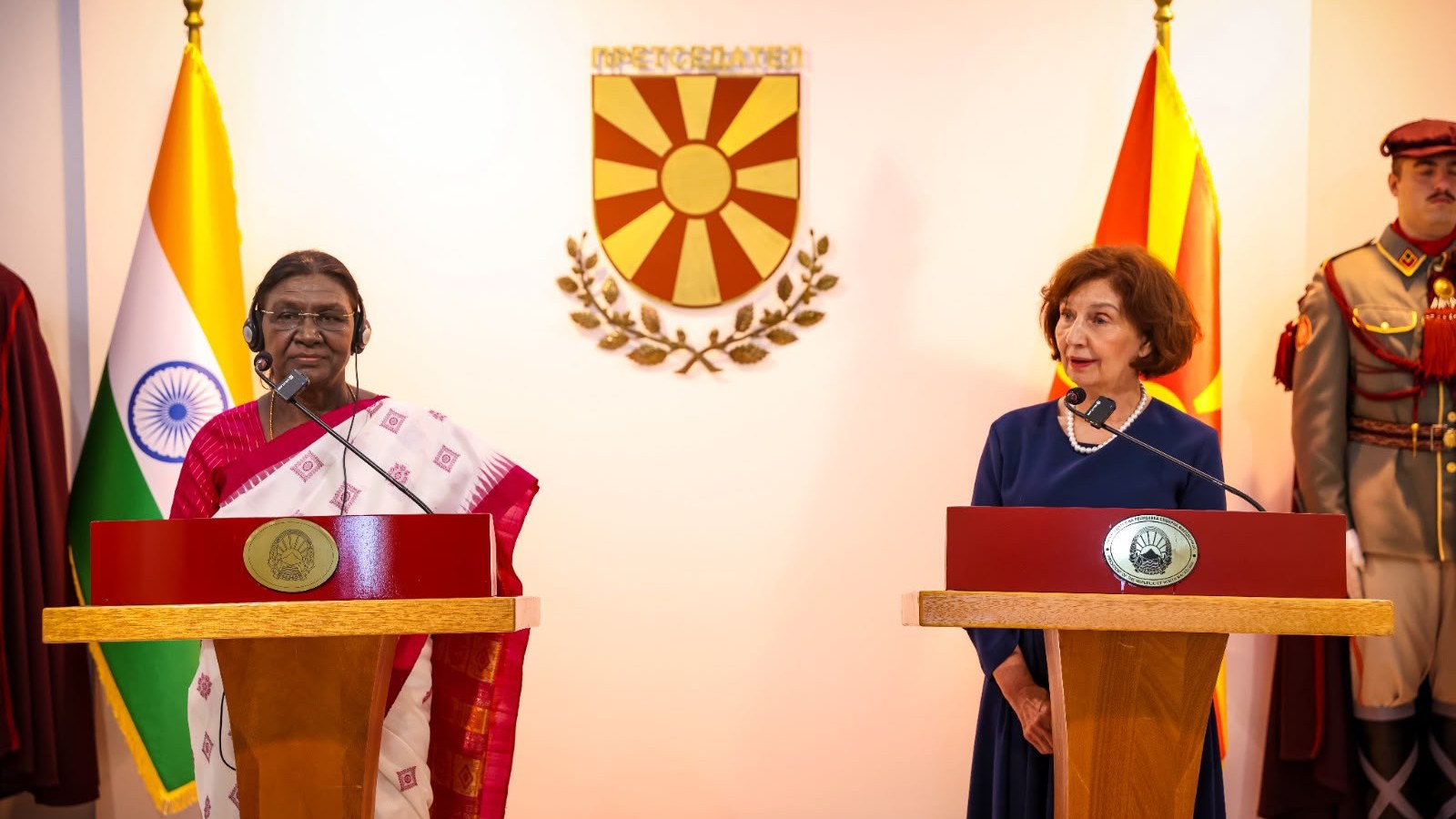
During a landmark meeting in Skopje, North Macedonia’s President Gordana Siljanovska‑Davkova and India’s President Droupadi Murmu set economic cooperation at the forefront of a new bilateral chapter. Both leaders outlined concrete ambitions to expand trade from the present level of roughly $133 million toward substantially higher targets, with Siljanovska‑Davkova citing a long‑term aim of $500 million.
Discussions covered a broad portfolio: artificial intelligence and digital transformation, university research links, tourism, hospitality, pharmaceuticals, agriculture, food processing and audio‑visual production. New Delhi offered specialized AI training opportunities for Macedonian participants, while Skopje promoted its competitive workforce, political stability, developed transport corridors and facilitated access to the European market as incentives for Indian investors.
From historical ties to strategic partnership
The presidents emphasised that the relationship predates this first-ever state‑level visit and pointed to shared history through the Non‑Aligned Movement and the legacy of Mother Teresa—born in Skopje and honoured in India with awards including the Bharat Ratna. Murmu announced a symbolic gift: a bust of Mahatma Gandhi to be unveiled during the visit.
Both leaders welcomed a stepped‑up rhythm of political dialogue following recent ministerial exchanges and agreed that contacts between governments, parliaments and institutions should become more frequent and better structured.
Global responsibilities and institutional reform
Against a backdrop of shifting geopolitics, Siljanovska‑Davkova warned that the international order faces heightened uncertainty and that international law and multilateral institutions must be strengthened rather than sidelined. She and Murmu called for reform of the United Nations, including a more representative Security Council and a stronger role for the General Assembly.
Speaking directly to President Murmu, Siljanovska‑Davkova praised her leadership as an example that "the highest offices are earned by character, not privilege," calling it an inspiration for women and youth worldwide. The visit closed with mutual invitations for future exchanges and an agreement to pursue several ongoing agreements now under negotiation.