Exhausted juvenile vultures take to Crete’s beaches and roads as drought hits
NGO ANIMA says exhausted juvenile vultures are turning up across Crete during drought conditions; the organisation has admitted dozens and asks citizens to give water and report sightings.
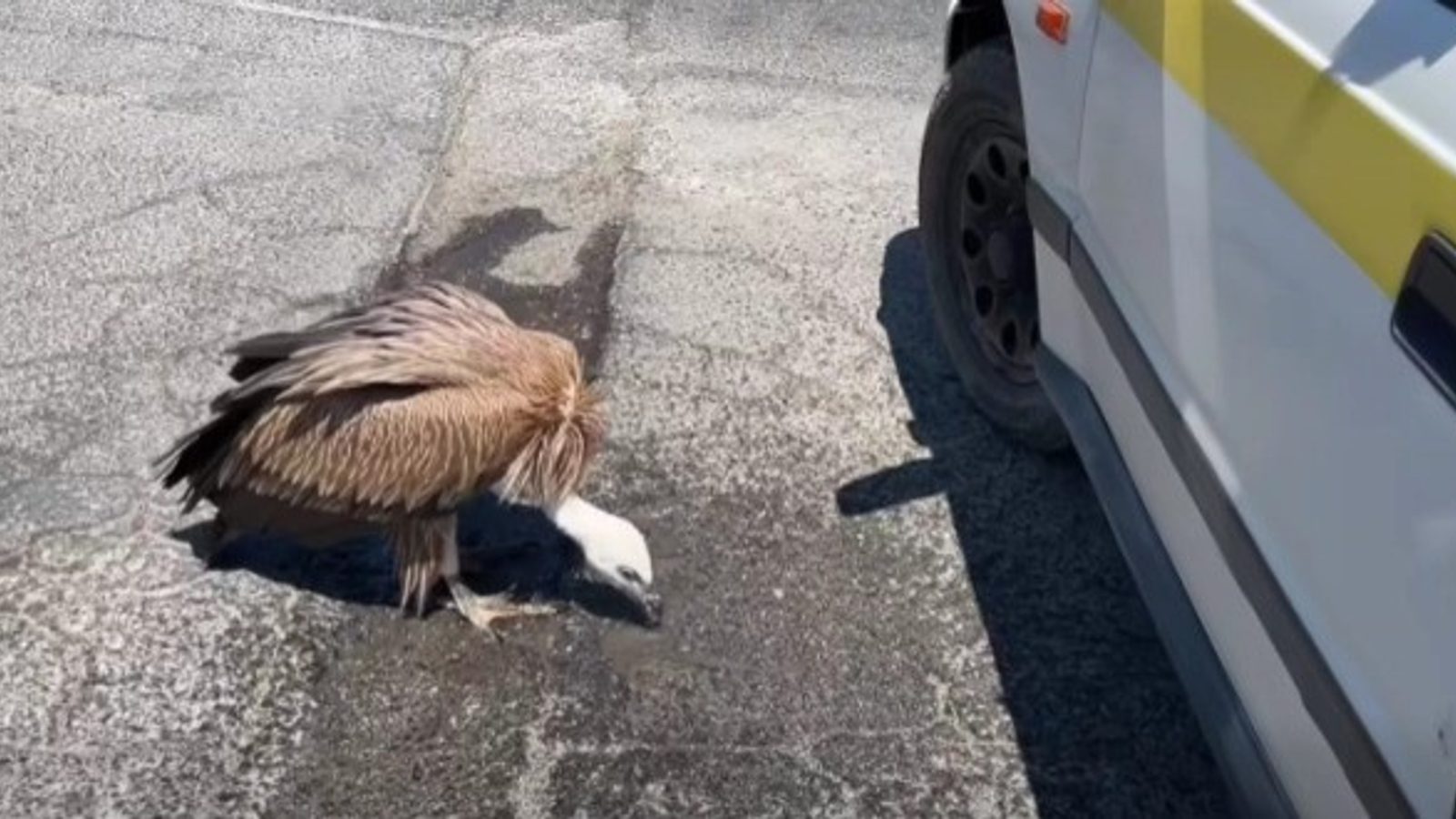
On the Greek island of Crete exhausted young vultures have been appearing in populated places — on beaches, sunbeds, cars, highways and even on the wing of a parked plane at an airport — causing a surge of videos on social media and local rescues, animal welfare workers say.
Maria Ganoti, president of the Athens-based wildlife protection and care NGO ANIMA, told reporters that the phenomenon has become typical during summers with prolonged drought and high temperatures, and that the organisation receives many of the found birds at its facilities in Athens when they need treatment.
Ganoti said ANIMA has taken in 30 vultures since the end of July, and that five arrived at the centre just yesterday — a number she described as significant. "The vultures on Crete are in very good condition with a stable population, so there are many young birds. The problem is that the young vultures are inexperienced. Often they are inexperienced in flying, they get caught in air currents and end up in the sea, from where people pull them out. Or they fail to find the sources of water and food that the adults know, so they dehydrate and become exhausted and are found, for example, on streets, immobile, and cars stop and people ask: 'What is this?'. What these young vultures need above all is to be given a dish of water. That is the most important thing," she explained.
She added that citizens who find exhausted birds should notify the local forest service or the Natural History Museum, which will take the animal and transfer it to rehabilitation centres. "Most of those that arrive with us we put on intensive fluid therapy, i.e. we immediately give them an infusion, sometimes for several days until they recover. Then, after six to eight months we return them to Crete," Ganoti said.
Social networks in Greece have been flooded with clips and photos captioned with phrases such as "Vulture on a sunbed on the beach", "You are driving and a vulture lands on your car's hood and rides with you", and "An unexpected guest on the beach." One striking episode saw a vulture land on the rear wing of a parked plane at Heraklion airport; firefighter Antonis Petrakis posted photos after crews intervened to rescue the bird.
In another recent case, driver Tanasis Gounaris encountered a vulture on Crete's busiest highway near Rethymno, stopped with other motorists and helped move the bird to safety. "A wonderful wild creature, obviously exhausted, while cars were passing by at high speed. I stopped immediately. Together with other people who were at the scene, we briefly halted traffic and, with great caution, we managed to move it off the carriageway before the worst happened. I only had a little water and some cat food. I gave it water and a little food, mainly to keep it in a safe spot and prevent it from going back onto the road. And we stayed there with it, trying to protect it from passing cars," Gounaris wrote on Facebook, posting video and saying he contacted ANIMA and followed instructions until the Rethymno forest service took over the animal.
Ganoti cautioned people not to try to grab the birds because of their sharp beaks and stressed that trained personnel should handle them. She reiterated that the increase in sightings is linked to repeated droughty summers, noting that each summer with prolonged heat the phenomenon becomes more frequent.
Photo: press material from the event