Emigration is emptying schools in North Macedonia — pupil numbers falling faster than births
Official figures and expert analysis show emigration — not only falling births — is emptying schools; 16 rural branch schools will close this year.
Emigration is accelerating the decline of school-age children in North Macedonia: official figures show that the drop in pupils outpaces the fall in births.
Many children born abroad are citizens — but they are not in the schools here
Statistics compiled by experts point to a widening gap between the number of children born in a given year and the number who later enrol in first grade. "About 2,000 more children were born six years ago than were enrolled in first grade last year," analysts say, a discrepancy largely explained by families who left the country before their children started school.
Births in the country have fallen steadily, but the decrease in enrolled pupils is steeper. Former director of the State Statistical Office Doncho Gerasimovski stresses that natality alone does not explain the trend: many Macedonian children are born abroad. He notes that roughly 7,000 live births in recent years involved children born outside the country who nonetheless hold Macedonian citizenship; "If they lived in the country, their number would be 24-25 thousand annually," Gerasimovski says.
Historical comparisons underline the problem. In 2012 there were 23,568 live births; when that cohort reached school age, 22,130 pupils registered in first grade in the 2018/2019 school year — some 1,400 fewer. The gap has grown: 19,845 children were born in 2019, while in September 2025 first-grade enrolment was lower by 1,924 compared with that birth cohort.
Emigration continues to erode class sizes even during a single school year. For example, 20,932 children began first grade in 2022; by the following September the second-grade roll counted 241 fewer pupils. In other cohorts the drop was 62 children; in 2024 there were 19,452 first-graders and by 1 September the next school year there were 19,152 second-graders — a loss of 300 pupils within one year.
Minister of Education and Science Vesna Janevska recently warned that in September the country will see about 3,000 fewer first-graders than the previous year — roughly 15,000 new pupils nationwide. Given that more than 19,000 children were born six years ago, she pointed out that about 4,000 of them apparently emigrated with their families before starting school.
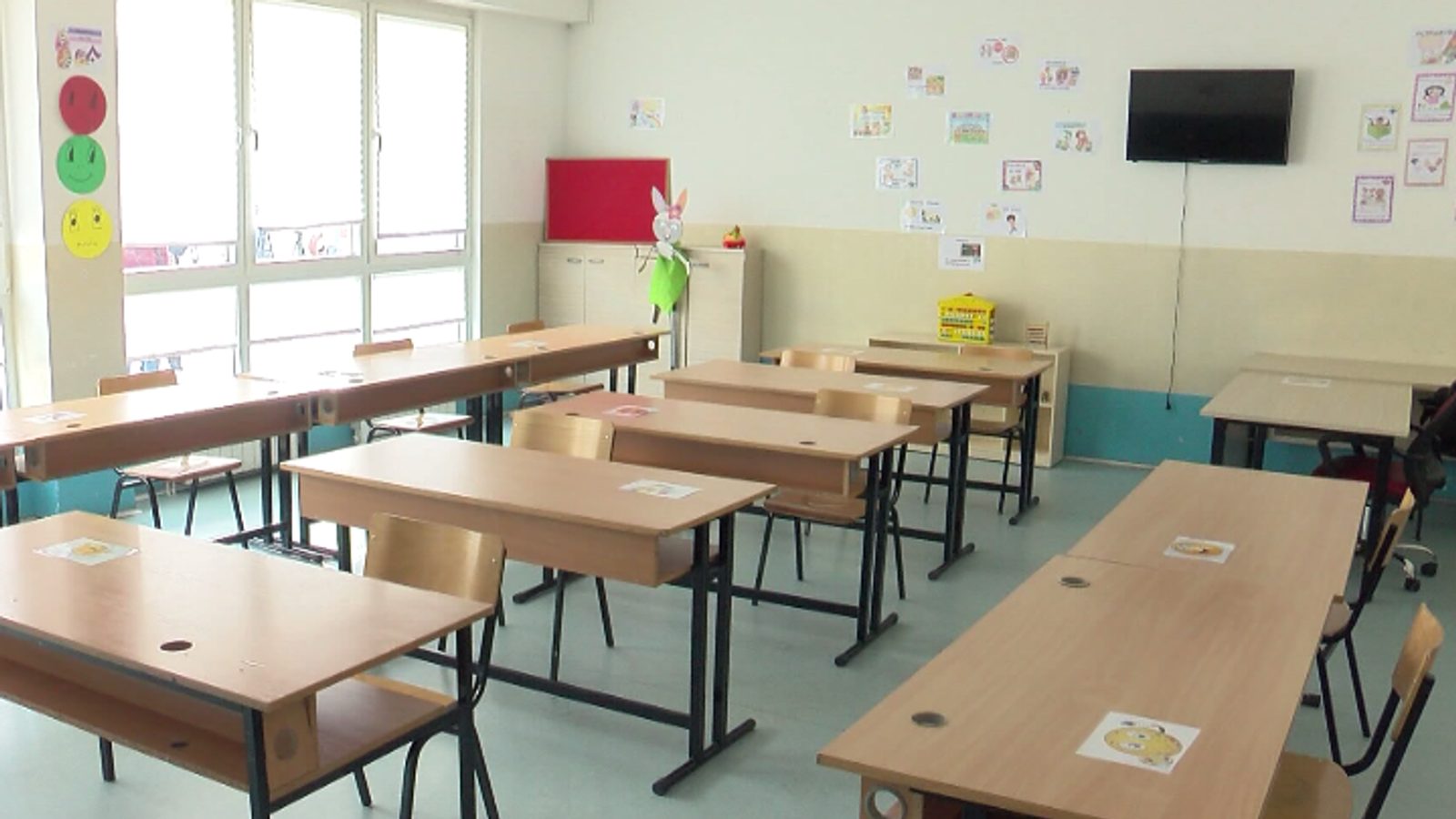
The shrinking pupil population has concrete consequences for the school network. Every year a number of rural branch schools close; this year 16 such schools will be shut. The Education Ministry says first bells will not ring this autumn at the branch schools in Selce (Bogovinje municipality), Džepin, Nerezi, Bogojci and Poum (Struga area), Uzem, Dobrovnica and Duračka Reka (Prilep area), Kurija (Negotino area), Porodin, Dihovo and Kanino (Bitola area), and in the Delčevo-area villages of Dzvegor, Gabrovo, Virče and Stamer.
The government ministry in charge of social policy, demography and youth says demography is a strategic priority and is preparing a Strategy for demographic resilience with an Action Plan to mitigate negative trends through systemic, long-term measures.
Photo: press material from the event