Janevska: Badenter should not be used to block higher-education laws
Minister says three ministry bills are being stalled by an Albanian opposition bloc invoking the Badenter principle and urges lawmakers to prioritise technical reforms for universities.
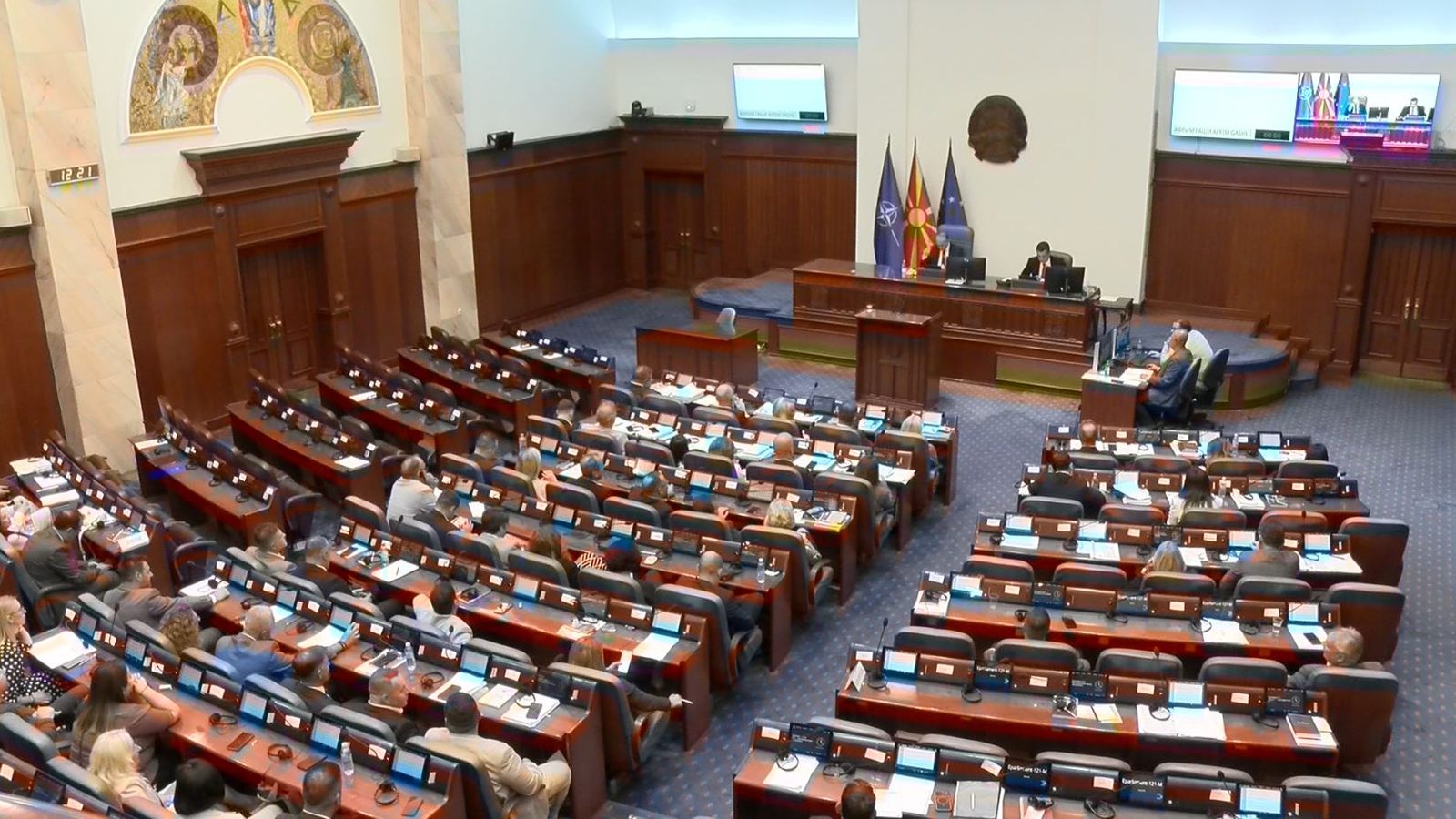
Education Minister Vesna Janevska warned that using the Badenter rule as a political instrument against education would be inappropriate, as three ministry-drafted laws on higher education, research activity and quality assurance remain in parliamentary procedure but are being stalled by an Albanian opposition bloc insisting on the Badenter principle for their approval.
Janevska raised the issue at a press conference on 6 August, presented alongside the State Matura results, and urged lawmakers to separate political disputes from legislation she described as technical measures to strengthen universities and teaching staff.
Academics, procedure and the content of the draft law
The minister said the draft Higher Education Law went through a long and transparent process in which the ministry working group accepted many remarks from the academic community, though she acknowledged a minority would remain dissatisfied. She argued the majority of academics accepted the law as it stands.
Janevska also said: "Their adoption is blocked through the instrument called Badenter. It is generally known that it was abused in the past and that the Government wants to make a better law for fair representation, which I personally, I repeat many times, fully support, yes, the rights of minorities in the country must be protected." She added that the three laws do not touch those questions but address merit-based elements: organisation of higher education, the quality of professors and more practical work during studies.
The minister warned the delay has real consequences for students and the labour market. "Every lost day is a lost day for young people in this country," she said, pointing to the need for well‑prepared graduates within "5–10 years" who can serve sectors such as the economy, agriculture, higher education and healthcare. Janevska said she expects another parliamentary public debate and is confident lawmakers can find solutions quickly.
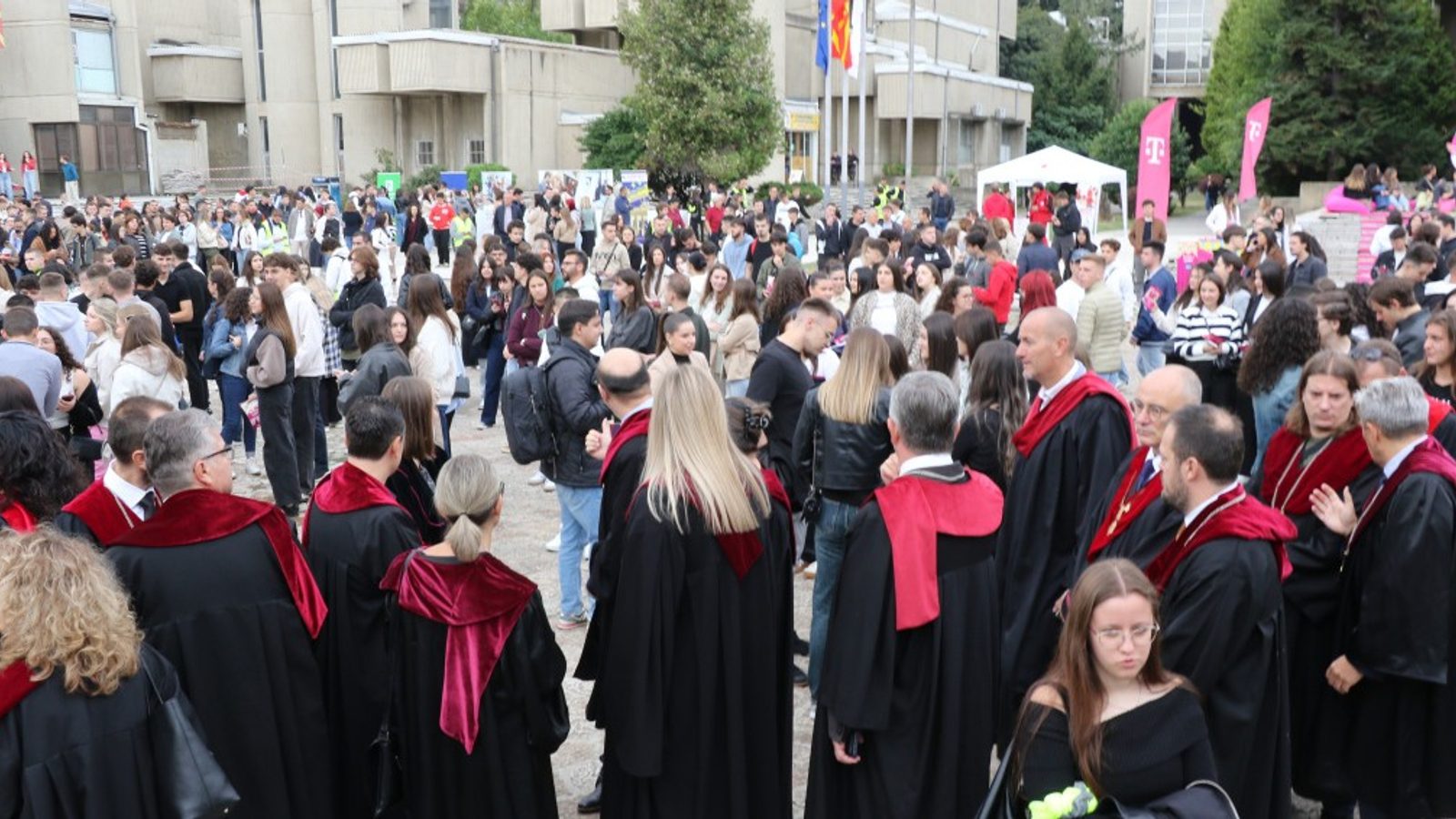
Janevska also told reporters that admission quotas at all universities have been reduced by about 2,000 places this year, with cuts mainly in fields like business administration, public administration, law and some economics programmes because those degrees show higher unemployment. Technical fields — informatics, mechanical and civil engineering — remain almost unchanged and show employability rates she estimated at "98–99 percent." She further noted that tests for 226 pupils were annulled for cheating and for essays produced with artificial intelligence, and that the average score on the State Matura was 3.66.
Separately, in the Assembly Hristijan Mickoski stated: "I am directly involved in the law on higher education as I am also a professor," according to his remarks there.
Photo: K. Popov