Cardiovascular diseases top cause of death in North Macedonia; minister backs pharmacy checks
Minister Sasho Klekovski and the Institute of Public Health marked World Heart Day with free screenings and proposed adding simple blood pressure and glucose checks, aiming to lower high premature mortality.
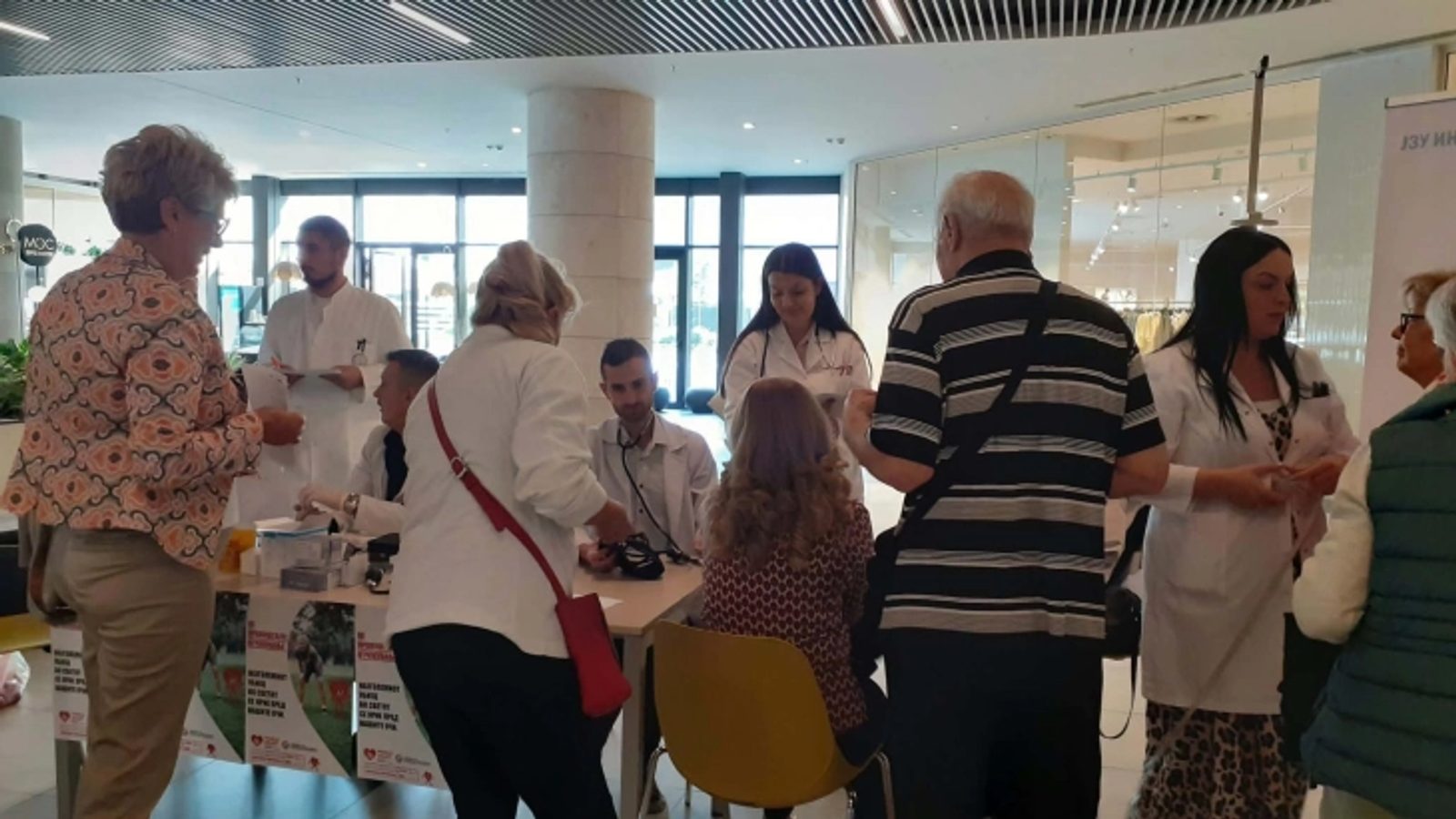
Cardiovascular diseases are the leading cause of death in North Macedonia: last year 6,888 people died of conditions of the cardiovascular system, accounting for 34 percent of all mortality, the director of the Institute of Public Health, Marija Andonovska, said at today's World Heart Day screening event.
The Institute of Public Health organised free preventive check-ups to raise awareness about heart disease and its risk factors, offering basic measurements and advice to citizens as part of the World Heart Day activities.
Health Minister Sasho Klekovski, who visited the screening point, warned that North Macedonia and the wider region register twice the premature mortality among people aged 30 to 70 compared with the rest of Europe.
Minister urges simpler, more accessible checks
At the event Klekovski argued that many cardiovascular conditions can be prevented or detected early through simple measures. He urged citizens to measure their blood pressure and weight regularly and said the ministry will look at how routine exam results are recorded and used. "All of these things can be prevented and detected early with simple measures. For example, measuring blood pressure — that's a simple thing; we just need to practice it, because high blood pressure is one of the quietest killers, so to speak, which affects heart health, kidney health and brain health. Together with uncontrolled diabetes they become the main contributors to heart, brain and kidney diseases," he said.
Klekovski said the planned amendment to the Law on Medical Records will aim to integrate the results of routine checks into each patient's file so they are not lost after being obtained. "We will see whether we can add cheap, accessible procedures to them that could help in the early detection of certain conditions, not only cardiovascular but also other conditions, because the biggest cost with the systematic exam is the act of going to the doctor. Then we'll see whether we can do something more," he said. He added that the health system built around hiring more doctors and nurses is no longer sustainable and that available health staff — including pharmacists — should be enabled to help: "Basically, a system that was founded to hire more doctors and nurses is no longer sustainable because there will be neither — especially nurses. So then we have to see what is available as health capacity and free it up for use. I have said this on other occasions: if there is a doctor — doctor, if there is a nurse — nurse, if there is a pharmacist — pharmacist. So there is a legal possibility; the conditions and standards for doing that need to be regulated. And this is nothing terrible, because some of these tests are self-tests."
On public interest in screening, Klekovski admitted some self-criticism: "We must value our lives more, because if we ourselves do not value them, we cannot expect someone else to value them. So we must talk about it; we must find some model to manage the main risks: stress, diet, alcohol, cigarettes... So we must talk much more about these topics," he said. The minister said standards would have to be defined if blood pressure and glucose measurements are to be performed in pharmacies by trained staff or pharmacists.
Photo: press material from the event