Climate change in North Macedonia can bring small local gains — but risks dominate
Experts say milder winters and a longer growing season could help some farmers, but heat, water shortages and economic losses remain the bigger threat.
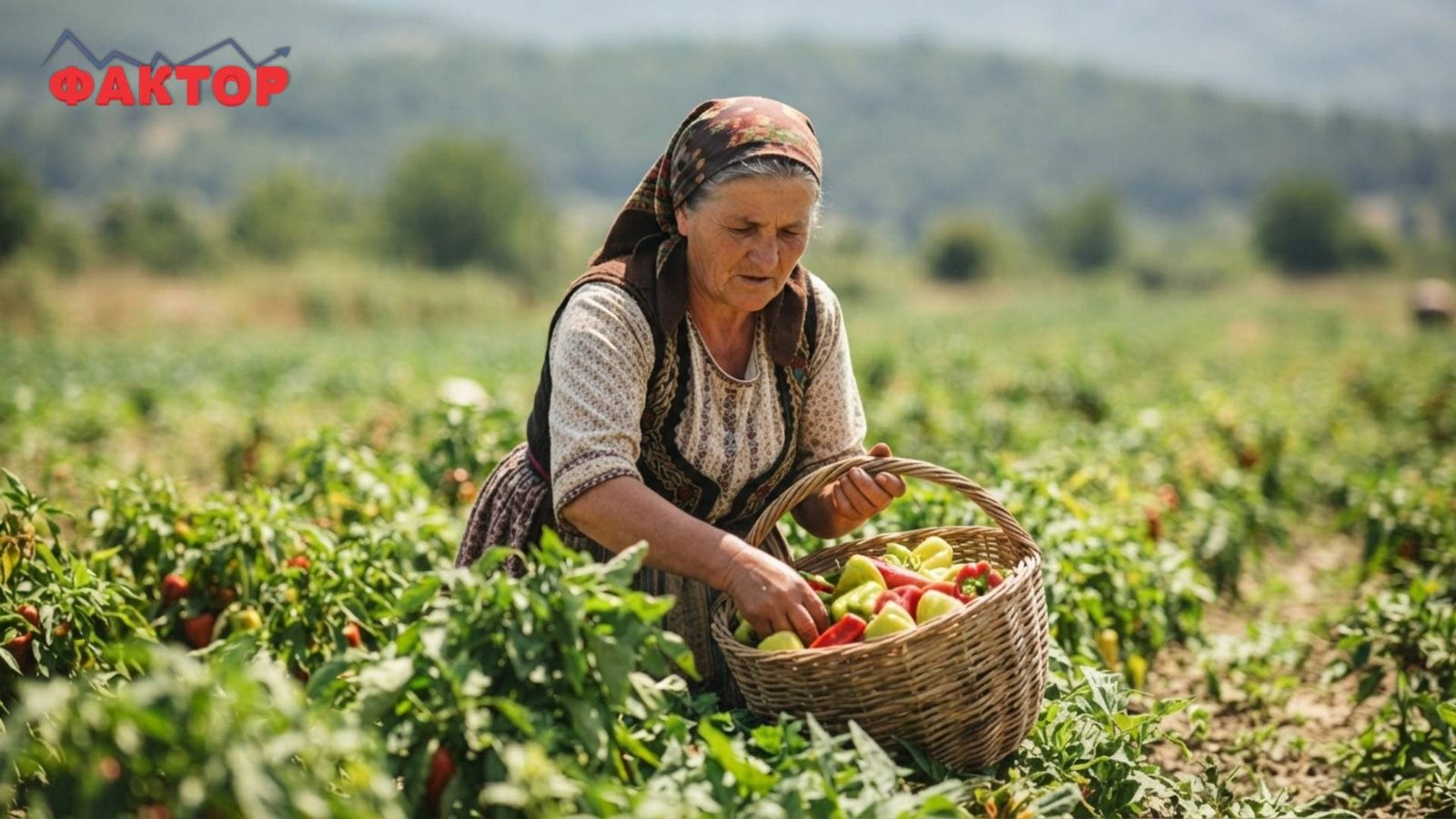
Climate change is usually discussed as a threat, but experts in North Macedonia say it can also bring limited local advantages alongside significant risks.
The Center for Climate Change Skopje warns that milder winters could reduce heating needs and that a longer period of temperatures suitable for plant growth may give some farmers more flexibility when choosing crops and sowing dates. Those potential gains, however, depend heavily on location, season and the extent of warming. The Intergovernmental Panel on Climate Change (IPCC) projects mostly negative outcomes for southern Europe — including water shortages, agricultural losses and higher demand for cooling.
Field findings and limits to short‑term gains
When it comes to agriculture, the center highlights that a longer growing season does not automatically mean higher yields. "The longer growing season may open opportunities for certain crops, but by itself it does not guarantee higher yields. According to the Fourth National Climate Change Report, in the period 1991–2020 the growing season in Gevgelija was 16 days longer, and in Berovo four days shorter, compared with the reference period. Projections in the same report show that the season can be extended in much of the country, with differences between regions and climate scenarios. This indicator is based on air temperature: it does not say whether there will be enough water for growth in those additional days, nor whether crops will be exposed to extreme heat," the Center for Climate Change Skopje said.
As a concrete example, researchers at the Faculty of Agricultural Sciences and Food at Ss. Cyril and Methodius University in Skopje analysed the Vranec grape variety at eight sites in the Tikves and Veles wine regions during the 2024 season. Their conference poster reported that the theoretically calculated yield was 6.4% lower in irrigated plots and 14.8% lower in unirrigated plots compared with the long‑term reference values for the variety. The center stresses this result refers to a single season and cannot be generalized for the whole sector, but it illustrates how extreme heat and water shortages can curtail yields even for a variety adapted to warm summers.
Experts also point out that reduced winter heating needs should be weighed against a growing need for cooling in summer. "According to modelling published by the World Bank, in central parts of Skopje the number of nights with temperatures remaining above 25 °C could increase from 16 to 31 per year by 2050 under the examined climate scenario. In the same scenario, the model indicator for potential cooling demand rises by about 52 percent. This is not a forecast for the same percentage rise in bills or electricity consumption. The figure shows how much cooling demand would increase because of higher temperatures. For households without adequate cooling, this can mean more nights in an overheated home and greater health risk," the Center for Climate Change Skopje explained.
On the national scale, the centre says any isolated benefits must be seen in the context of broader threats. The World Bank’s report on climate change and development estimates that, without adaptation investments, expected economic damages in 2050 could amount to around 4% of GDP; that figure is presented as a lower‑bound estimate and refers to damages in the year 2050, not the accumulated losses up to that year.
"For the Center for Climate Change the practical question is how to make use of opportunities where they exist while reducing losses. In agriculture, that means adapting crop choice and sowing dates to local conditions, especially water availability and drought risk. In cities, more shade and green space and better‑insulated buildings can help reduce heat exposure. A milder winter or longer growing season can be an advantage in certain circumstances. For the country as a whole, the priority remains to reduce emissions and to protect people, water resources and food production in time," the Center for Climate Change Skopje said.
Photo: press material from the event