EU's proposed enlargement model offers Macedonia faster gains but stricter checks
The Commission's plan mixes quicker, partial integration with tougher rule-of-law checks — leaving North Macedonia's formal negotiating status unchanged but raising new political questions.
EU Commissioner for Enlargement Marta Kos has outlined a package of changes to the accession process that could speed up certain benefits for candidate countries while introducing tougher checks on rule of law and democratic standards — a mix that carries clear implications for North Macedonia.
More access, more oversight
Kos told a conference of Croatian ambassadors in Zagreb that the European Commission wants to open discussion around four areas: internal EU reforms, stronger guarantees against democratic backsliding, gradual integration for candidates and transitional safeguards at accession. She said the Union may be approaching a new "Helsinki moment" similar to the lead-up to the 2004 enlargement.
For Skopje, however, the announcements do not change the formal status of the country's accession talks. North Macedonia held its first intergovernmental conference with the EU on 19 July 2022, and the screening of EU legislation was completed in December 2023. The Commission confirms screening reports for six clusters have been sent to the Council, but the first cluster, "Foundations", has not yet been opened.
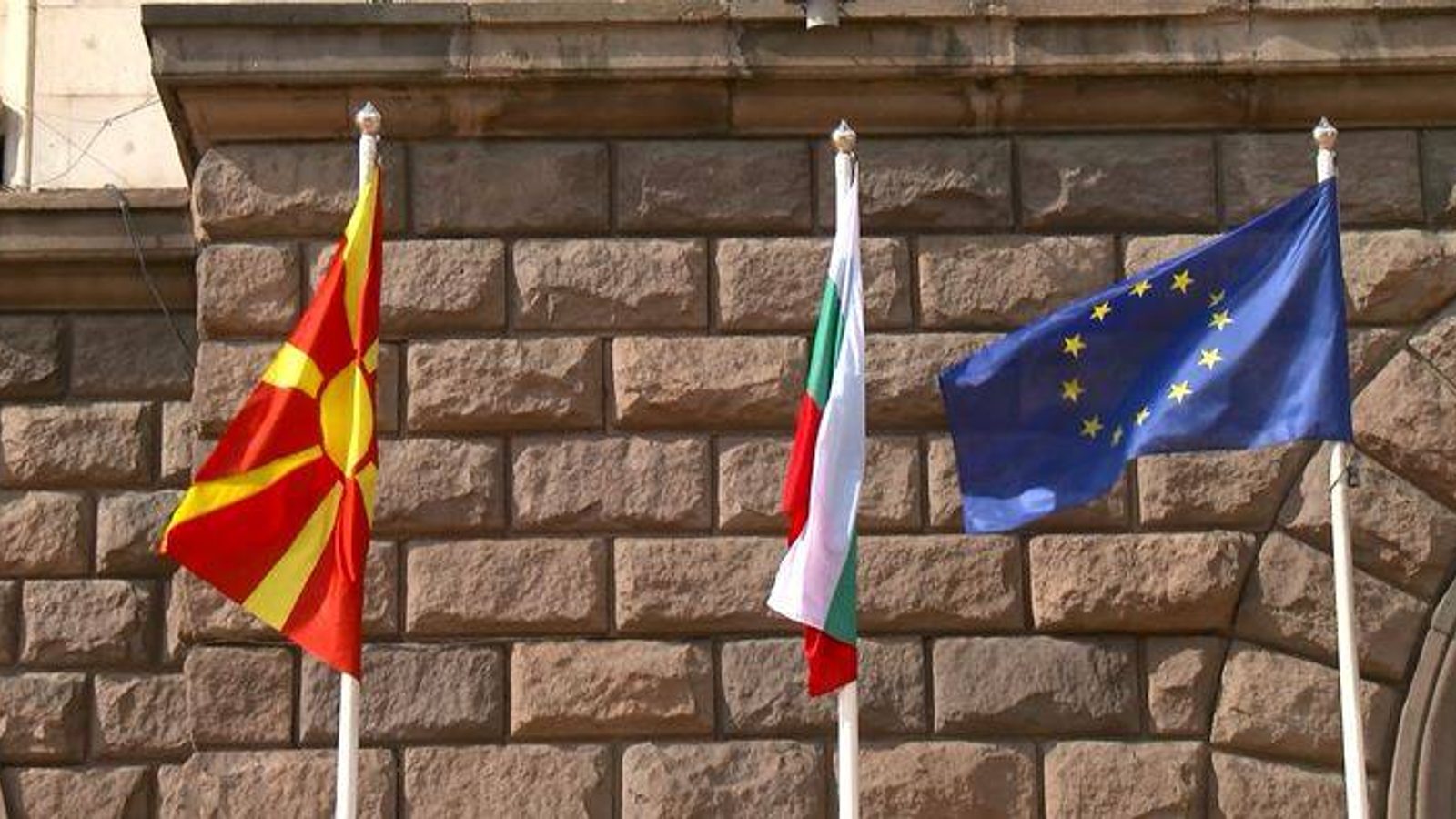
The Commission's most recent enlargement package reiterated that North Macedonia must satisfy the initial opening benchmarks for the first cluster and adopt the constitutional changes to include Bulgarians and other communities in the Constitution, in line with the Council conclusions of July 2022. It also called for further results on rule of law, judicial independence and integrity, and the fight against corruption. The same message was repeated at the Stabilisation and Association Committee meeting in Skopje in February 2026.
At the same time, some elements of Kos's proposal could limit the scope for a single member state to block EU decisions in future enlargement files. She argued for more flexible decision-making and a reduction of the number of policy areas where one member could prevent collective decisions — changes that, she said, might be possible without opening the EU's founding treaties. The Commission has not specified, however, that unanimity would be removed from the accession process itself.
Yet the other side of Kos's outline points toward stricter post-accession controls. As she put it, "We must ensure we do not let Trojan horses in." The Commission has already expanded deeper checks: since 2024 North Macedonia, together with Albania, Montenegro and Serbia, has been included in the annual Rule of Law report, and in July 2026 the Commission placed the four candidate countries under the same mechanism used for member states. Kos has described progress in these areas as a "basic condition" for accession, meaning formal compliance with laws will be only part of the test and proven practical results will be required.
There is also a proposal for gradual integration: candidates could win earlier access to parts of the single market, financial instruments and EU policies provided they keep delivering on reforms. North Macedonia has already received €142.1 million from the Reform and Growth Instrument under the Growth Plan for the Western Balkans; during her visit to Skopje on 8 July 2026 Kos discussed the idea of stepped integration with Macedonian authorities.
Domestic officials welcomed the tone of the proposals but stressed uncertainty. Minister for European Affairs Bekim Sali said institutional communication with the Commission is excellent and that any new criteria would still need to be defined after 2028. He told reporters: "We follow this closely and we are in constant communication about what the course will be. There is still no official, I would say, document or conversation about the new criteria and what the new phase would be. We are still working on the agenda we need to finish in 2028, so this is a period of sending messages and preparing all states that have aspirations for the European Union to integrate, that they must be ready for that process."
Opponents of changes to unanimity say they fear reduced rights for member states to defend national interests. Voices in the debate — including statements such as "There will be no European Union if every member state does not have the right to veto" — underline that any reform of decision-making rules will be politically sensitive and could prolong the path to membership for countries with outstanding bilateral disputes.
Photo: press material from the event