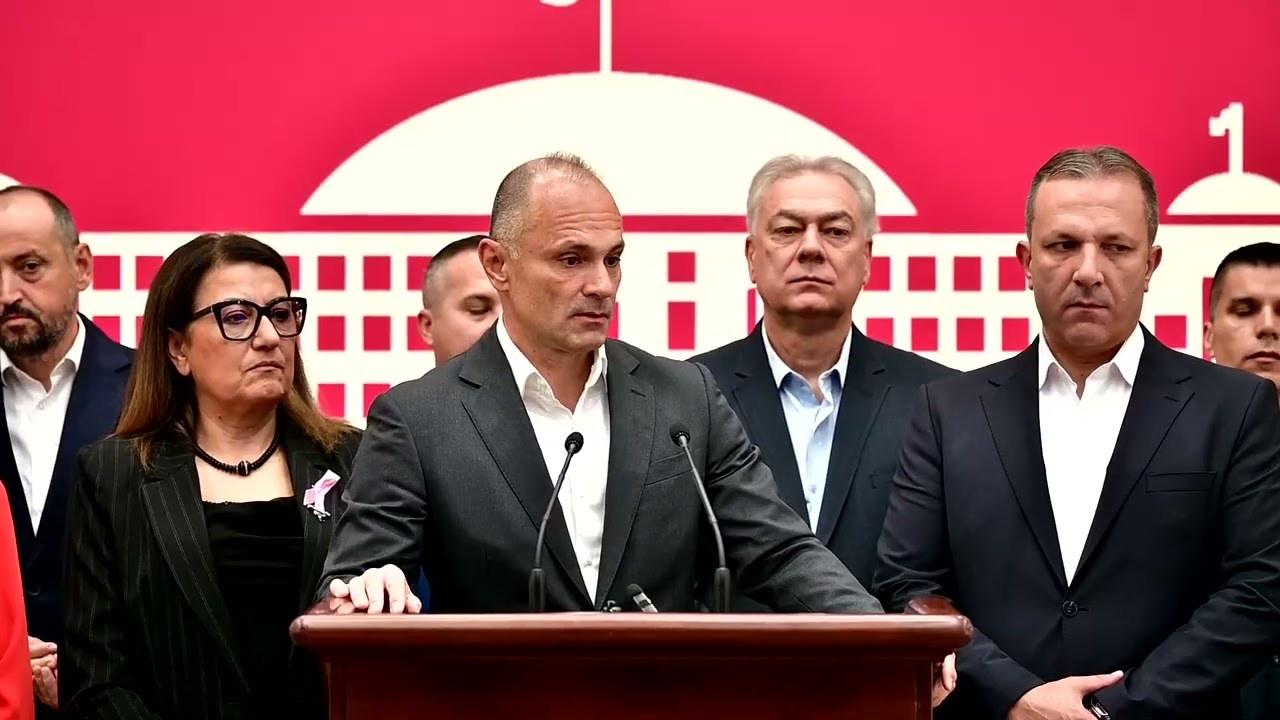
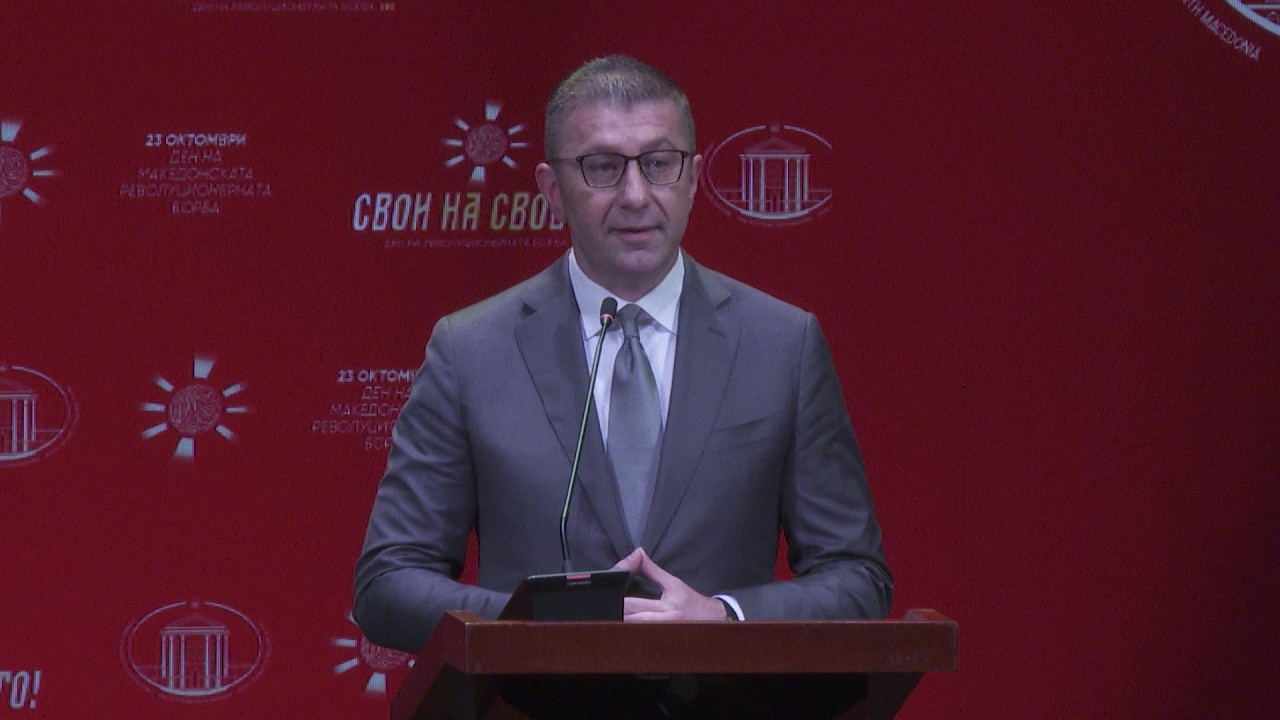
“I feel sorry for you”: Filipche to Mickoski – the mentors have fallen, the questions remain
In Parliament the SDSM leader confronted the Prime Minister with questions about Hungarian money, Alta Bank, an alleged transfer of money from Serbia and the mines. Mickoski hit back with remarks about childhood and the subconscious.
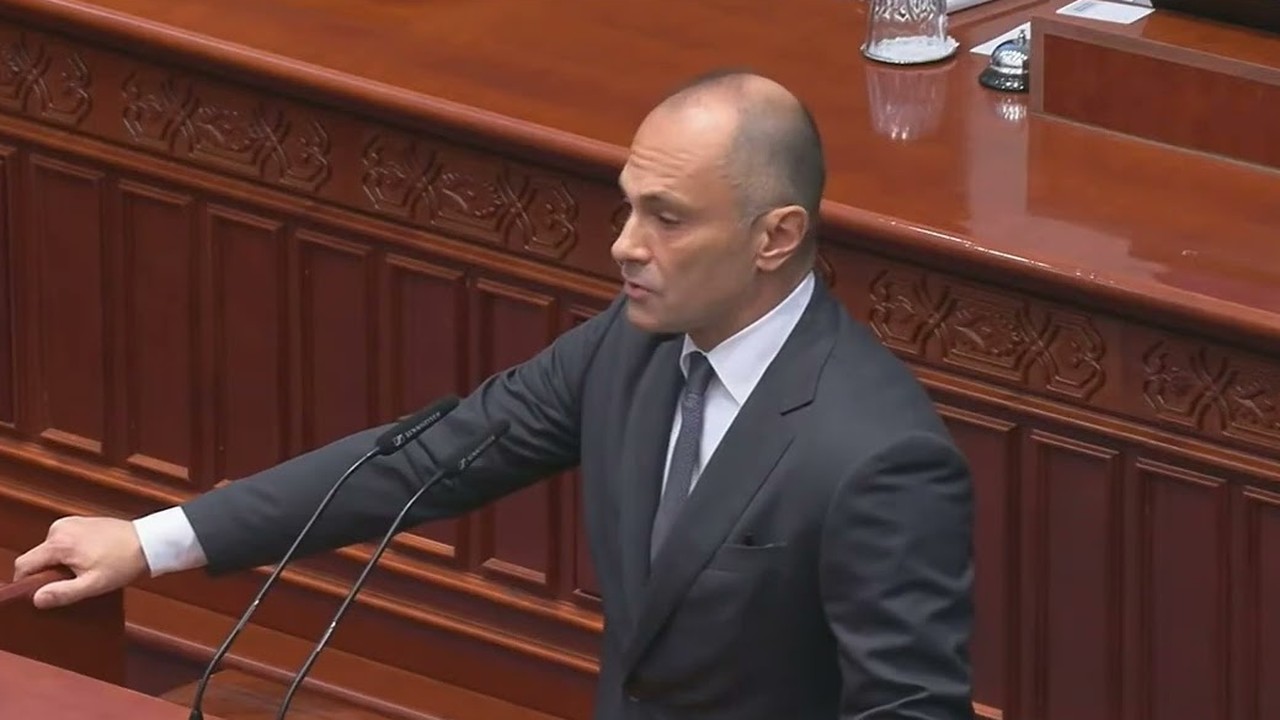
“I want to say respected Prime Minister, but I can’t.” With this sentence SDSM President Venko Filipche on Thursday opened his parliamentary question to Prime Minister Hristijan Mickoski – and started one of the sharpest duels in Parliament this autumn. “I respect the office, but, Prime Minister, not you personally, mostly because of the way you exercise power,” Filipche said, accusing the Prime Minister of using “all sorts of propaganda mechanisms, fake campaigns, smears, discreditation.”
The message that resonated most, however, came later. Speaking about the questions which, in his view, the Prime Minister will soon have to answer, Filipche said: “Questions will be opened about the Chinese money from Hungary, about Alta Bank, about whether there really is, as we have more and more information, a transfer of money from Serbia here. I saw some documents a few days ago. If that is really so, I feel, humanly, sorry for you, to tell you honestly, not politically, but you choose your own path.”
Filipche did not specify which documents he meant, and he framed his claim conditionally. But the message was clear: the time when the Prime Minister could lean on powerful friends abroad, according to the SDSM leader, is running out.
The second mentor is gone too
“I know it is not easy for you now, the second mentor is gone too. That support system from Serbia is slowly being lost and you will be left alone,” Filipche told Mickoski. “The question is, what will you do? You will probably have to answer questions not only here, but in some other places too.”
The context is fresh. On 25 October Serbian President Aleksandar Vučić conceded defeat in the parliamentary election to the Student List, which according to the BBC won about 52.7 percent against 39.2 percent for his Serbian Progressive Party (SNS). In April, in the Hungarian election, Viktor Orbán lost power and Péter Magyar became Prime Minister. Mickoski did not congratulate the Student List – Foreign Minister Timčo Mucunski did, Sloboden Pečat reports.
In his address to Parliament Filipche went a step further. He said he understands that the Prime Minister sometimes has to listen to “the controllers from the BIA” – Serbia’s Security Intelligence Agency – naming Stoilković and Latas, but that things are changing.
Hungarian money, Alta Bank and five tonnes of drugs
Filipche listed the questions on which, in his view, answers will be demanded: the Hungarian loan, Alta Bank and the alleged transfer of money from Serbia. As early as 26 October SDSM claimed that Alta Bank had been “rejected everywhere in Europe.” “You will probably answer questions about the transfer of drugs across the border too, and before those bodies there will be no more deflecting and giving false information,” Filipche said. He added that European Commission President Ursula von der Leyen had made it clear that “one will have to answer before Europe, before the European Public Prosecutor’s Office and the European prosecutor Laura Kövesi.”
The questions about the Hungarian money were not invented in Skopje. In July the new Hungarian government of Péter Magyar launched an investigation into the two loans Macedonia received through the state-owned Eximbank, totalling 988 million euros, and the interest compensation is estimated to cost the Hungarian budget more than 247 million euros, European Western Balkans reports.
The question about drugs has its context too. On 19 October the Serbian investigative portal KRIK reported that after the “Konjuh” operation, in which five tonnes of marijuana were seized, 15 Serbian police chiefs were moved from their posts, and 13 police officers complained of pressure in a letter to Prime Minister Đuro Macut. According to +info, the drugs were found in the house of an SNS councillor from Kruševac. SDSM claims the shipment came from Macedonia through the Tabanovce border crossing and that so far no one has given either names or answers.
The reply: the subconscious and childhood
The Prime Minister hit back sharply – and personally. “You accused me of transferring drugs, money, of being an idiot. I don’t stoop to that level. That is learned by the age of seven. It seems that period was filled with frustration for you; mine was happy, with two positive parents,” Mickoski told Filipche, noting that the opposition leader is “a medical professional” and knows that “the subconscious is a very interesting thing.”
On the Hungarian loan Mickoski said the State Audit Office had established that the money is intended for economic growth, for repaying a Eurobond and for supporting businesses. “So, in these six months there is not even a ‘c’ of crime,” he said, adding that European prosecutors “can deal even now” with his crime, “but they don’t, because there is none.” On the mentors and the Serbian election he said he would not comment and that time would answer the “lies.”
Filipche used his rejoinder to return the ball. “Well, at last, through Freud, we have learned what the reasons are,” he said, adding that he would not comment on childhood. He then reminded the Prime Minister of his own promises: “Here, Prime Minister, you have a chance, people are waiting for you to bring back the name. Bring back the name.” And: “They were waiting for you to annul the Prespa Agreement. Annul it.” He urged Mickoski to improve the agreement with Bulgaria and to deliver the promised change to the negotiating framework – “you promised a hundred times.”
Already in his question, Filipche had pointed out that President Gordana Siljanovska-Davkova and Ursula von der Leyen both say identity and language are protected. On 2 October in Skopje von der Leyen said the Union will welcome Macedonia “with its identity and language.”
The mines: a “human wall”
Filipche’s central question was about the mines. He argued that the Prime Minister is reaching for a sell-off of the country for mines and foreign business interests. According to him, the new spatial plan, now in public consultation, foresees the mines at Štuka, or Ilovica, and at Kazandol, the antimony mine in the Kriva Palanka area and, for the first time, exploration on Kožuf. Filipche said he had met citizens and farmers who fear for their water, soil and health, and asked the Prime Minister to say “clearly and unequivocally” before the whole public whether he supports those projects.
On this question at least, the Prime Minister answered directly. Mickoski said he is in favour of opening the antimony mine at Krstov Dol, in the village of Luke near Kriva Palanka, pointing out that the municipality’s mayor from SDSM holds the same position. He stressed that the Government had won a complete victory in the international arbitration over Kazandol, at no cost to the state. “We are bringing back what you sold off,” Mickoski told Filipche.
Filipche’s answer was a warning: if the procedures begin, the Government will face serious resistance from citizens. “We will lead that resistance or support it, and if necessary we will even form a human wall,” he said.
Finally, Filipche told the Prime Minister that “maybe you missed your calling. You would make a good editor of Informer or Kolegium” – a reference to the Serbian pro-government tabloid Informer – and added that, unfortunately, “they are slowly fading out now.”
Who is next
A few days before the session, after Vučić’s defeat, Filipche summed up his position in three sentences: “Orbán fell. Vučić fell. We all know who is next.” On Thursday, in Parliament, he said it straight to the Prime Minister’s face: the support system is being lost, while the questions – about the money, the bank, the border and the mines – remain. “You choose your own path,” Filipche told him. For now, Mickoski is leaving the answer to time.
Sources: SDSM (opening of the question), SDSM (the mentors and Europe), SDSM (“the controllers from the BIA”), SDSM (“I feel sorry for you”), SDSM (the rejoinder), SDSM (Alta Bank), Sloboden Pečat (Mickoski’s reply), Sloboden Pečat (the Serbian election), Nezavisen (Informer), TIME.mk (the mines and Kazandol), TIME.mk (the Konjuh case), BBC (the Serbian election), European Western Balkans (the Hungarian loans), Deutsche Welle (von der Leyen).
Photo: frame from the SDSM video of the parliamentary session, 29 October 2026