Mickoski in Dusseldorf: North Macedonia not in EU for 15 years due to 'artificial' demands
At a resilience summit in Dusseldorf, the prime minister said external demands reveal vulnerabilities in the EU and urged decisive action.
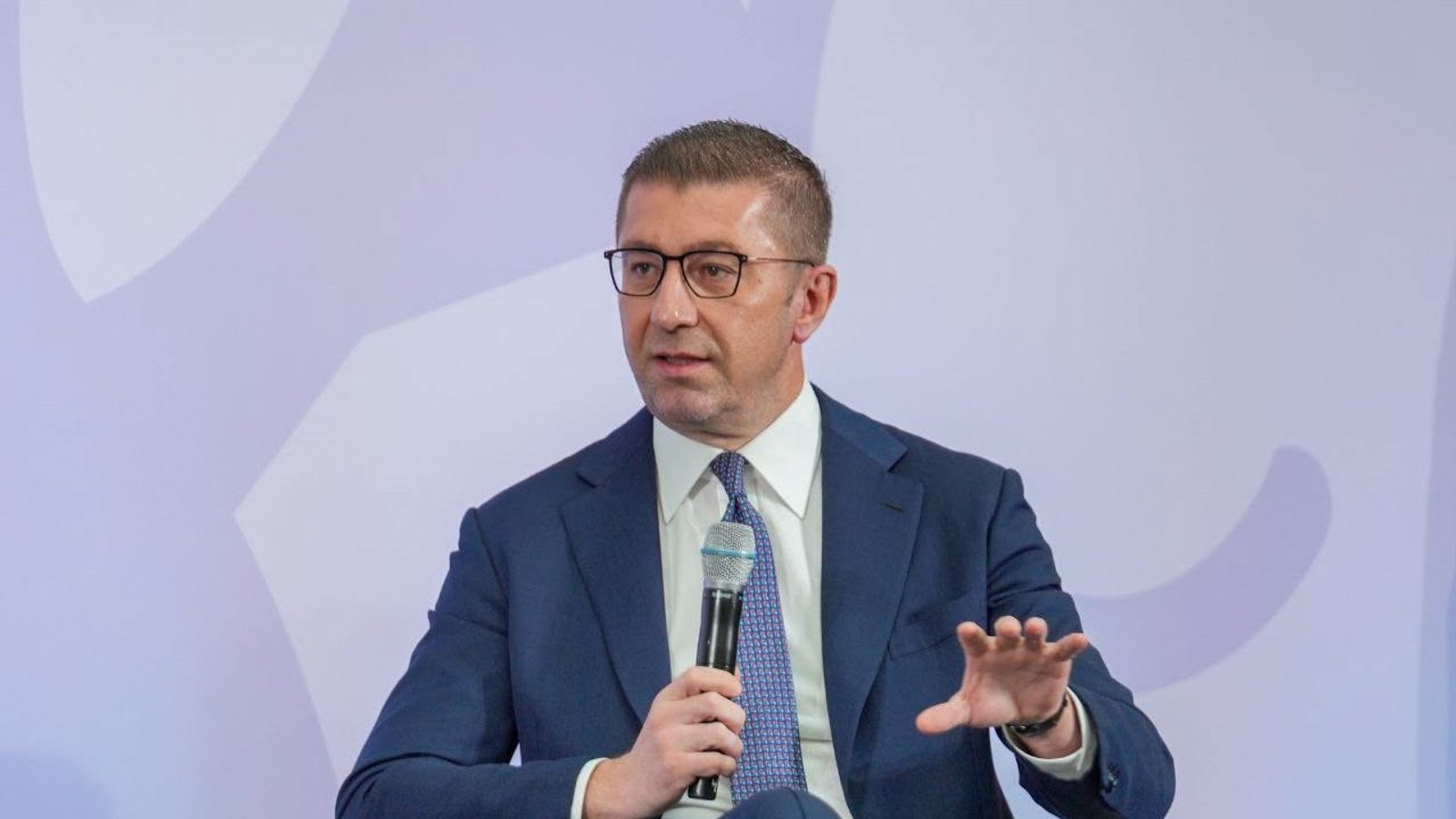
Prime Minister Hristijan Mickoski said at a resilience summit in Dusseldorf that North Macedonia has remained outside the European Union for 15 years because of what he described as artificial demands imposed by an EU member state. He warned that such practices expose vulnerabilities in the EU's system.
Mickoski links EU accession delay to external demands
Mickoski spoke on a panel titled "Resilience as an imperative for the whole society," held during a summit on resilience in North Rhine-Westphalia in Dusseldorf. He called for a robust response from the European Union when a candidate country faces century-old issues raised by a member state.
He said: "Now we are facing an artificial demand from an EU member state, and all of this can be seen as undermining the resilience of the EU. When there is such a gap in the system, then we are dealing with a vulnerability of the system. The destruction of a system is not always caused by weapons, but also by other resources."
Mickoski also stressed the country’s long track toward European integration. "We started 26 years ago, even before Croatia, which is now an EU member. We fight for our rights, we are part of NATO, fully aligned with the EU's foreign policy, we protect the EU from illegal migration from EU members, and we will continue to do so," he said.
He argued that EU membership should represent transformation that adds value to the candidate state rather than a change that erodes national identity. Mickoski urged the EU to act decisively when bilateral or historical disputes raised by a member state block a candidate’s path.
The prime minister framed the current blockage as not only a bilateral problem but as a test of the European Union's institutional resilience and consistency toward aspirant countries.
Photo: Fejsbuk