Ministry of Justice sends draft Criminal Code and Criminal Procedure Law to European Commission
Drafts incorporating EU directives were sent to Brussels as part of the Reform Agenda to modernize criminal law and procedure.
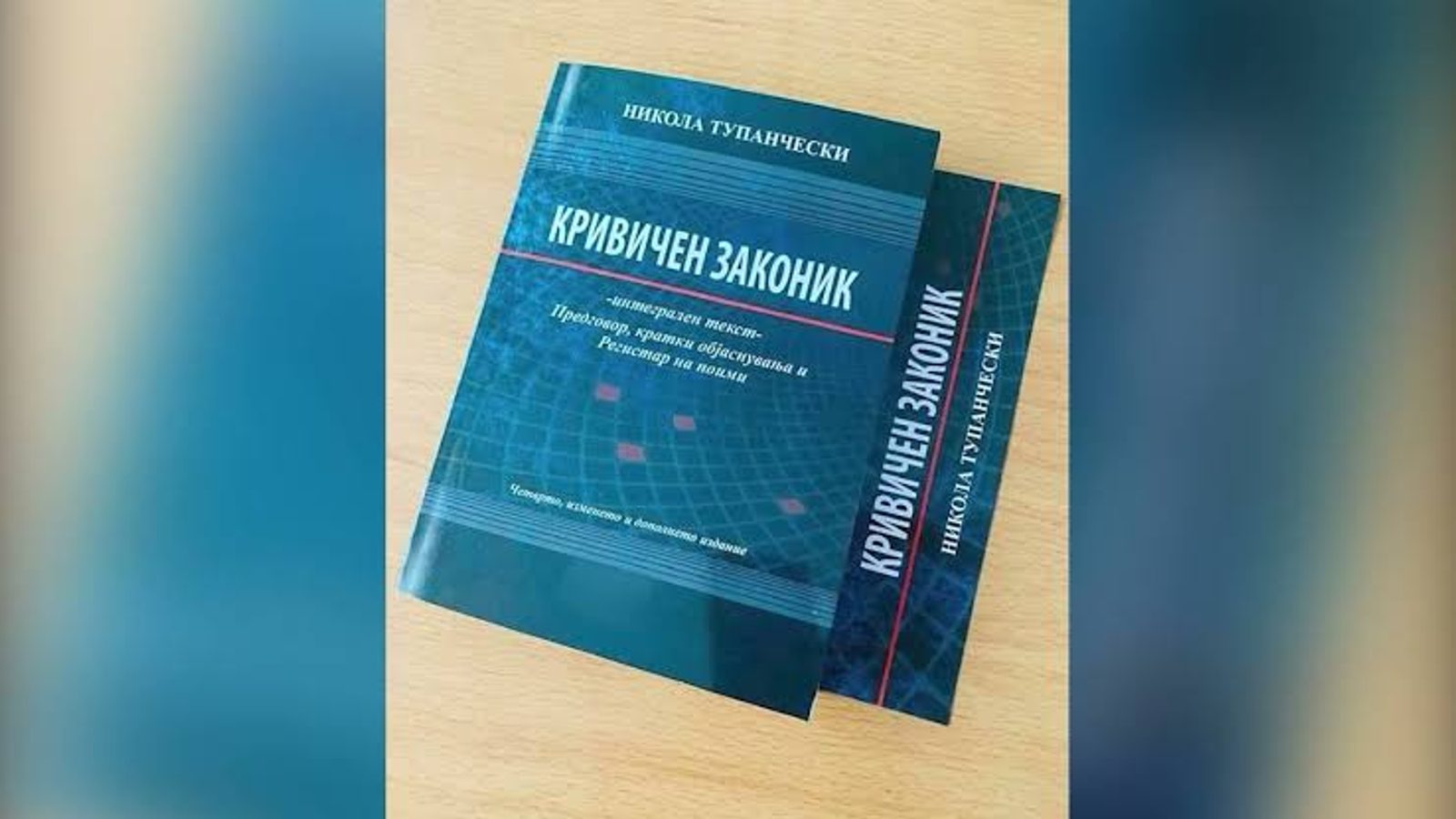
The Ministry of Justice has submitted the draft Criminal Code and the draft Criminal Procedure Law to the European Commission for an opinion, marking the next step in a wide-ranging overhaul of North Macedonia's criminal legislation.
The new Criminal Code — prepared after three decades — and the parallel Criminal Procedure Law are intended to strengthen the fight against crime and corruption, improve fairness in court proceedings, increase protection for victims and provide greater legal certainty for citizens.
Key elements and the preparatory process
Work on the new Criminal Code began in 2019. A working group led by academician Vlado Kambovski carried out broad consultations between 2020 and 2026 with judges, prosecutors, academics, relevant institutions and civil society. The draft incorporates 33 relevant European Union directives and reflects more than 50 opinions and proposals raised during the consultations.
At the same time an expert team chaired by Prof. Dr. Gordana Lazetic, made up of 25 members, completed the draft Criminal Procedure Law in October 2026. That proposal aligns with 25 relevant EU directives and standards and includes measures to modernize confiscation, financial investigations, electronic evidence, special investigative measures, victim protection and the option to hold hearings and present evidence remotely.
International partners — notably the OSCE Mission to Skopje — provided significant support during preparation. By sending both drafts to the European Commission, the Ministry of Justice says it is continuing to meet commitments under the Reform Agenda and to harmonize domestic law with European law.
Officials stress that the reform's real test will be in implementation: the aim is to create a legal framework that enables effective investigations, fair trials and equal application of the law, producing tangible improvements citizens can feel.
Photo: press material from the event