Macedonian Orthodox Church commemorates Saints Cyprian and Justina; faithful recite prayer against evil
The Ohrid Archbishopric marks the feast of Saints Cyprian and Justina; their story is invoked in prayers to repel unclean spirits.
Today, on October 15, 2026, the Macedonian Orthodox Church – Ohrid Archbishopric and the faithful commemorate Saints Cyprian and Justina, figures whose story is often invoked in prayers against unclean spirits and temptation.
Lives that became a prayer
According to the tradition kept by the Church, Justina grew up in Antioch with her parents Edessius and Cleodonia; Edessius was a pagan priest. When Justina began attending Christian services she embraced the faith and later converted her parents. All three received baptism from Bishop Optatus.
Cyprian, originally from Carthagena, had been a sorcerer who worked with unclean spirits. A pagan young man named Aglaid, inflamed by Justina's beauty, sought to force her into sin and turned to Cyprian for help. Cyprian summoned spirits against Justina to inflame her passions for Aglaid, but she drove them off by the sign of the Cross and prayer.
Impressed by the power of the Cross, Cyprian converted, was baptized, and later became a presbyter and bishop. Pagan opponents accused both Cyprian and Justina; they were tried in Damascus, then tortured and killed by the sword in Nicomedia at the end of the 3rd century.
Troparion: "God, who searches the hearts, found you worthy of higher wisdom, O holy martyrs Cyprian and Justina. Saint Cyprian led him to the knowledge of true salvation, drawing him out of the demonic lie for earthly life; the virgin Justina armed her with the grace of the precious Cross, showing that the Name of Christ is a Divine Name.
Pray for us, you who were once foolish for this world, that you may make us wise before God to belong to Him, and we hope in your prayers.
Christ became your Life, and Life brought you wreaths, O you most pure lamb of God Justina: one — the wreath of truth, which destroyed the demonic falsehood; the other — the wreath of martyrdom, which you left as testimony to the flock of Christ. Remember us, beauty of Love, before the throne of Him Whom you glorify."
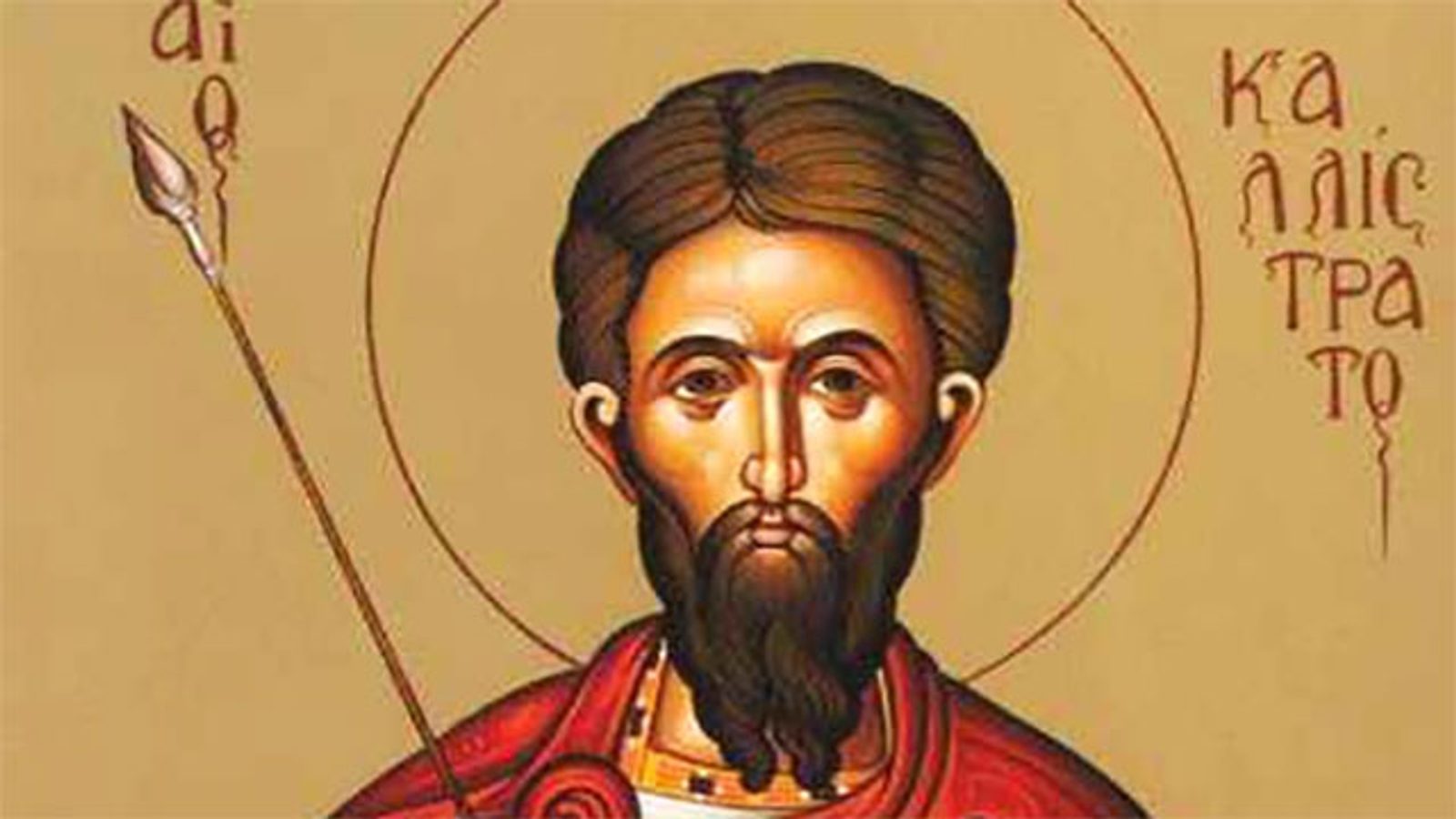
The same liturgical day also honours Saint Andrew the Fool for Christ, a Slavic-born ascetic who—according to Church accounts—was bought as a slave by a wealthy man named Theognost in Constantinople during the reign of Emperor Leo the Wise, son of Basil the Macedonian. Andrew, described as devoted and prayerful, embraced the ascetic path of holy foolishness: during the day he feigned madness and at night he prayed, lived in severe poverty, gave alms to beggars and rebuked them so they would not thank him.
Church tradition holds that Andrew was gifted with spiritual insight: he perceived angels and demons, expelled demons from people, corrected sinners, and received visions of Paradise and Christ. He reposed in 911 and is venerated for his radical ascetic witness.
Troparion: "Hearing the voice of your apostle Paul—'we are fools for Christ'—your servant Andrew was a fool on earth for Your sake, Christ God. Therefore now, celebrating his memory, we pray to You, Lord, save our souls."
Photo: press material from the event