Ministry of Interior defends €17.5 million "catering services" tender
The Ministry says retail comparisons are misleading and lists investments, guarantees and 24/7 operational obligations that fall on the contractor.
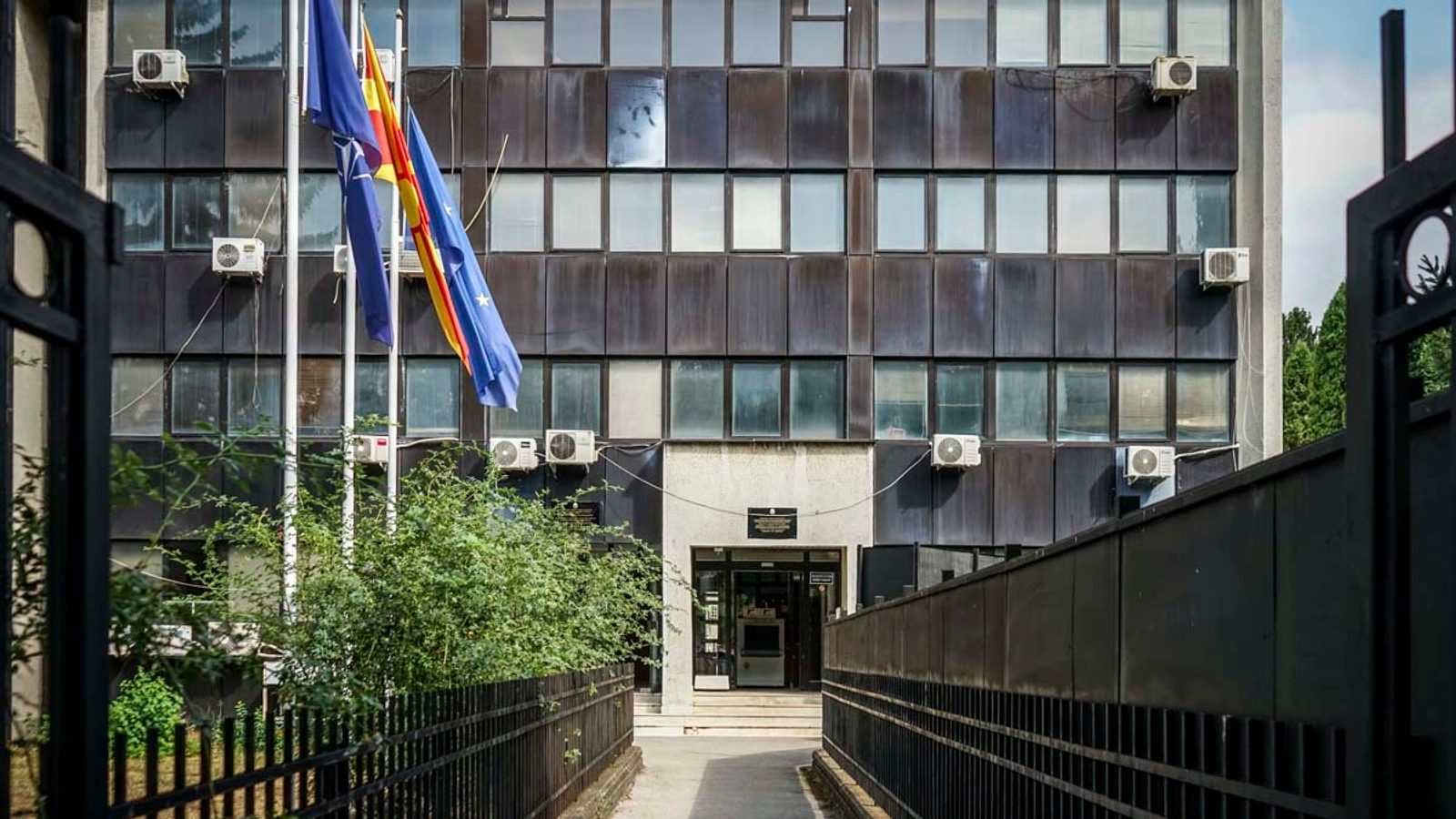
Journalists sent questions on 22 September 2026 at 12:14 about a public procurement (no. 06481/2026) for "catering services" valued at €17.5 million; the Ministry of Interior replied on 28 September 2026 at 14:26, four days after the request.
The Ministry rejects direct comparisons between retail prices and the contract rates, saying the procurement is not for single shop items but for a long‑term, complex catering service covering three lots: the Police Centre at the former Gjorche Petrov barracks (Lot 1), the Training Centre (Lot 2) and the Ilinden barracks canteen (Lot 3). According to the reply, evaluation was made on the total price per lot, not on individual product lines.
Ministry lists obligations and risks borne by the contractor
To explain why some unit prices in the technical and financial offer appear higher than store prices, the Ministry outlines a long list of obligations that the selected operator must assume at its own cost. These include capital investments in permanent kitchen equipment that will remain the property of the Ministry after the agreement, full outfitting of an empty canteen at Lot 3, and minimum supplies such as at least 210 professional tables, 840 reinforced chairs (capacity up to 150 kg) and a minimum of 2,600 sets of cutlery and porcelain serviceware for dining rooms totaling more than 1,150 m².
The Ministry also stressed operational conditions: a three‑year framework agreement with limited price‑correction mechanisms tied to official catering price indices; a requirement that operators respond to emergency oral requests within three hours at any time; the obligation to serve 500 people within 60 minutes; 24/7/365 readiness with penalties up to contract termination; and deferred payment terms of 60 days, which the Ministry says obliges operators to finance procurement and payroll in advance.
Additional costs listed include logistics, laboratory and microbiological food testing, HACCP implementation and verification, an IT voucher‑card system (quarterly), regular staff sanitary checks, pest control, temperature‑controlled transport and bank guarantees: a 5% performance guarantee per contract and a €100,000 annual indemnity guarantee per location in case of food incidents.
On competition, journalists had noted three formal bids with one allegedly non‑compliant and another disqualified. The Ministry insists the procedure was an open, transparent and lawful auction through the Electronic System for Public Procurement and says it applied strict cumulative economic, financial and technical‑professional criteria, including a licence from the Food and Veterinary Agency.
The Ministry argues the overall price must be read as the total planned cost for all meals across three years, not as standalone retail prices for individual items. The ministry's written reply was submitted after the programme's deadline; the Ministry offered a camera statement if possible but provided the written response instead.
Photo: press material from the event