Cormorant Numbers Decline on Golem Grad Due to Jackdaw Attacks
The Ecological Society noted that jackdaw attacks on cormorant nests affect their population in Prespa Lake.
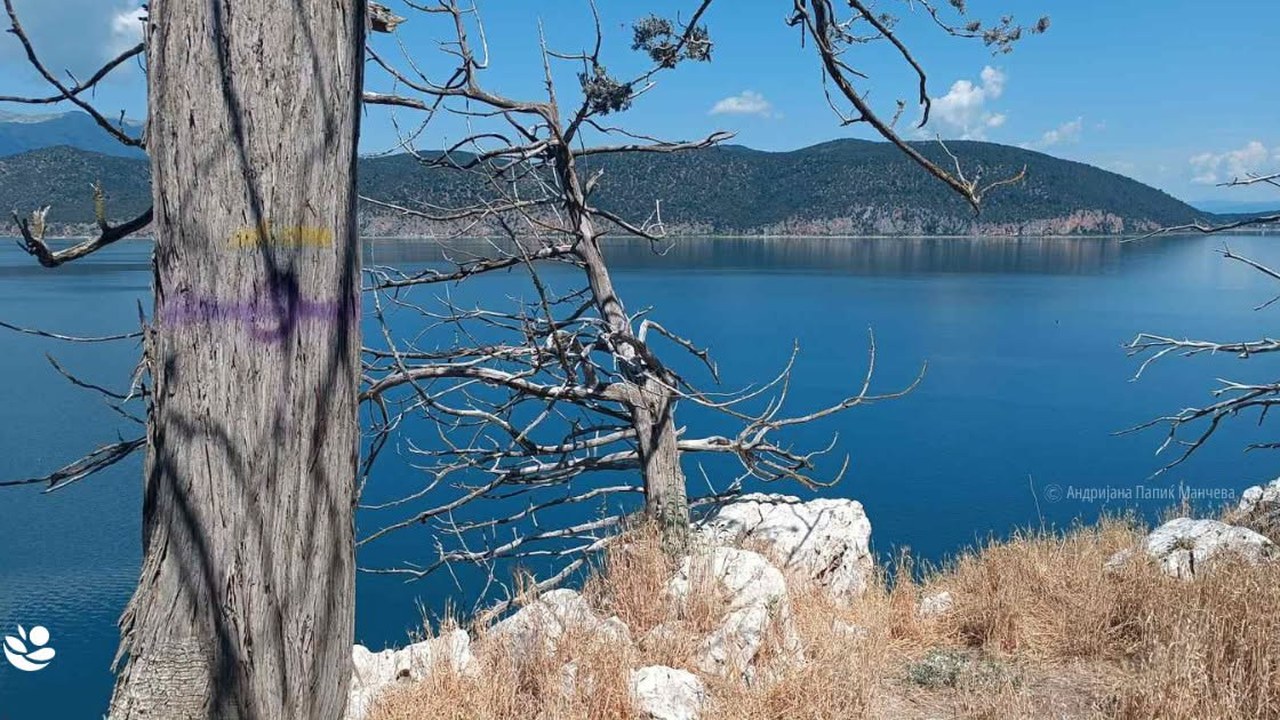
The Macedonian Ecological Society (MES), in cooperation with the National Park “Galičica,” conducted a census of bird nests on the island of Golem Grad in Prespa Lake. A total of 1,044 active nests were recorded, mostly belonging to cormorants (Phalacrocorax carbo) with 865 nests, while 126 belonged to grey herons (Ardea cinerea), and about 50 to little egrets (Egretta garzetta).
Decrease in Cormorant Numbers
According to MES, in the past two years there has been a decline in the number of cormorant nests and an increase in nests of the two heron species. Additionally, ecologists in the field observed the presence of a jackdaw colony attacking and destroying eggs in cormorant nests, especially when the parents left the nests, which directly affects the number of cormorants.
"Moreover, we have noticed trees where nests previously existed but are now absent, probably as a result of storms. These natural factors represent population control of the cormorants, which we will monitor annually," emphasize the Macedonian Ecological Society.
The Importance of Golem Grad
The island of Golem Grad has been declared a natural reserve due to its arrangement, diverse flora and fauna, and rich historical past. Cormorants play a key role in regulating the island’s ecosystem and are an important component of its biological diversity.
The census of nesting colonies is part of continuous monitoring of the largest cormorant breeding colony in Macedonia, as well as other colonial breeders inhabiting the island.