Osmani: Delays in EU integration are an existential threat; accession must be treated as national security
At a panel hosted by the Abdilakim Ademi Institute, Osmani warned that slow accession fuels emigration and geopolitical vulnerability.
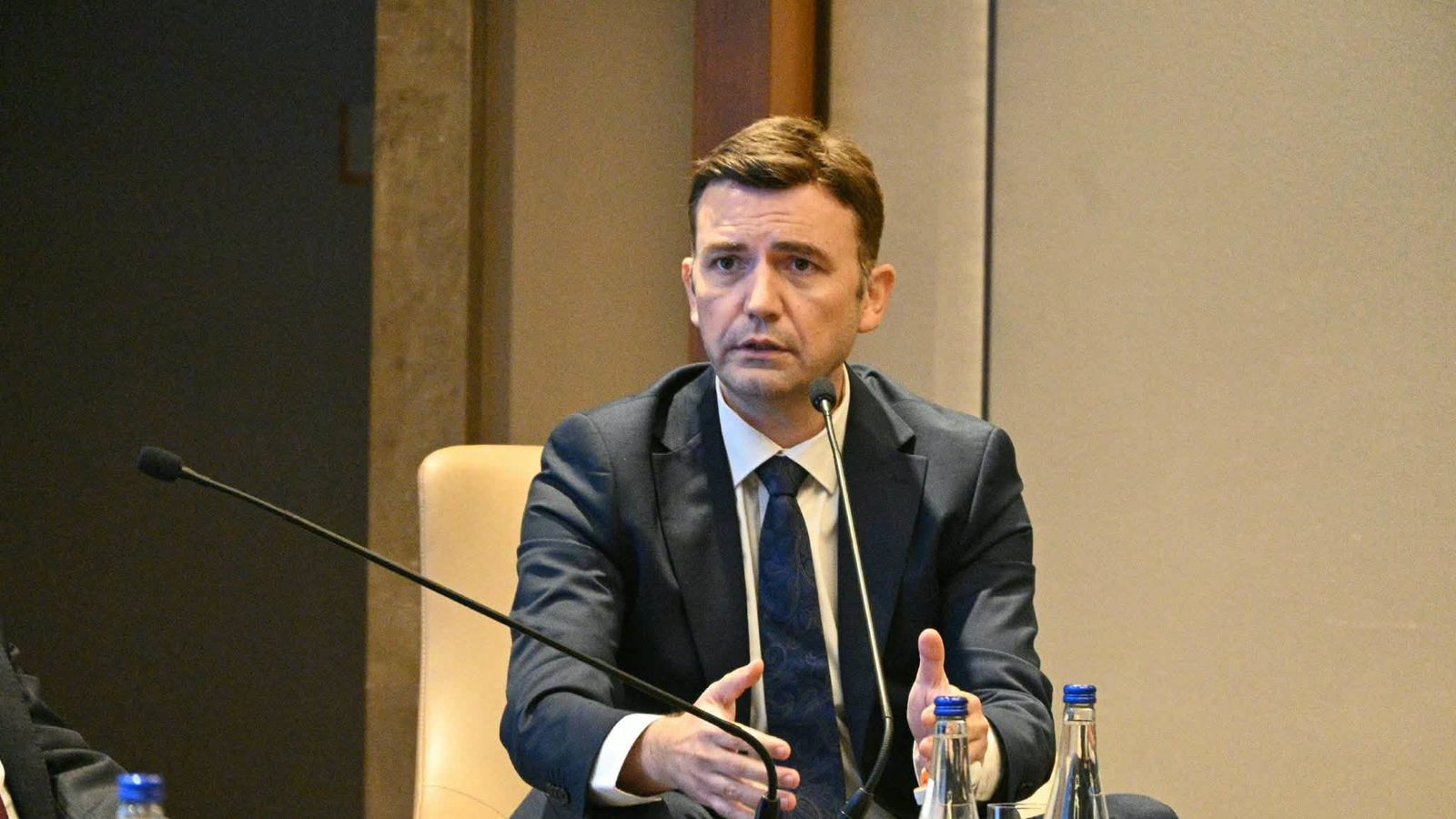
Bujar Osmani warned that continued postponement of European Union integration is turning into an existential threat for North Macedonia and urged that accession be raised to the level of national security during a panel hosted by the Abdilakim Ademi Institute.
Demographic and geopolitical stakes
Osmani said that speeding up the EU accession process and closing the development gap with the bloc are no longer only questions of living standards but also of the country’s demographic survival. He cited international projections to underline the urgency.
“The UN's pessimistic scenario predicts that by 2100 our country could be left with only 524,000 inhabitants. The larger the development gap between us and the EU, the stronger the pressure to emigrate,” Osmani said.
Beyond demography, he highlighted rising geopolitical risks in a context where discussions about a new great-power settlement — sometimes referred to as “Yalta 2” — are becoming more frequent. Osmani warned that the Western Balkans must not be allowed to remain in Europe’s grey zone.
“History has taught us that when great powers negotiate spheres of influence, small states risk becoming subjects of deals, rather than actors in decision-making,” he said, arguing that strategic priorities should be reassessed through the prism of EU accession.
“We risk simultaneously losing two things: our people through emigration and our future through geopolitical uncertainty. Time is becoming our greatest threat,” Osmani added, calling on authorities to treat EU membership as a top national priority and to stop losing time.
Photo: press material from the event