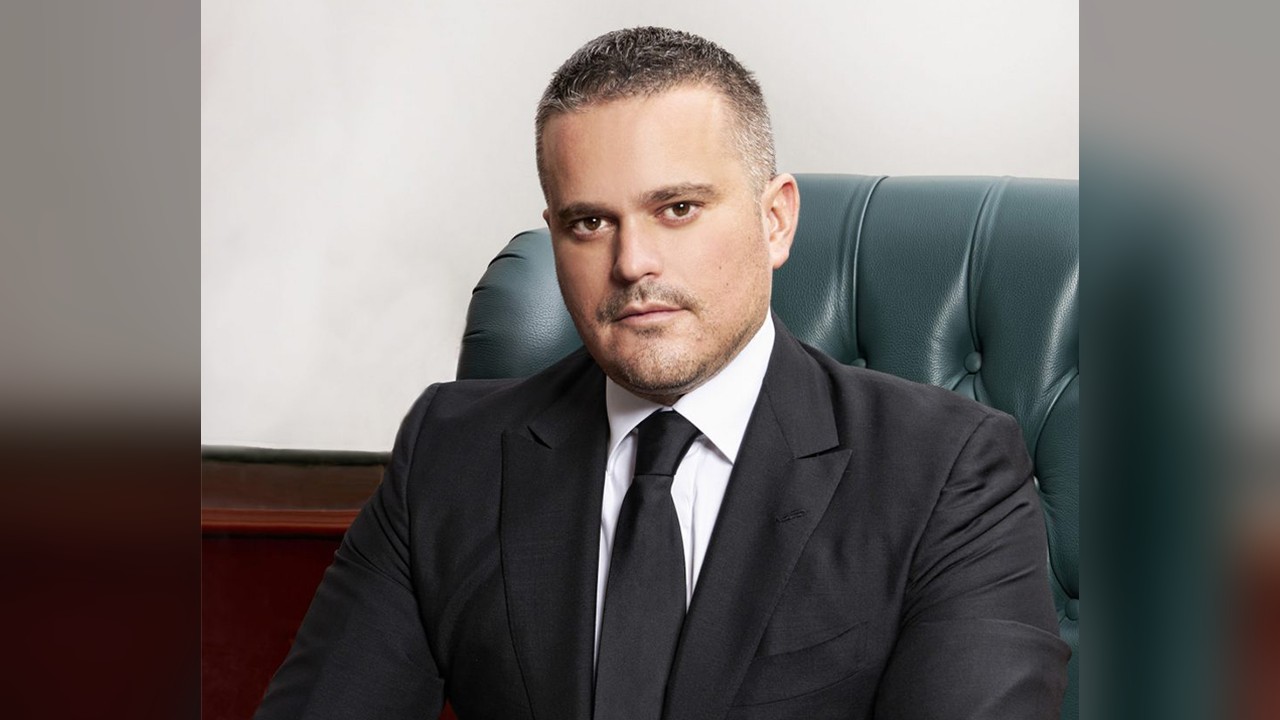
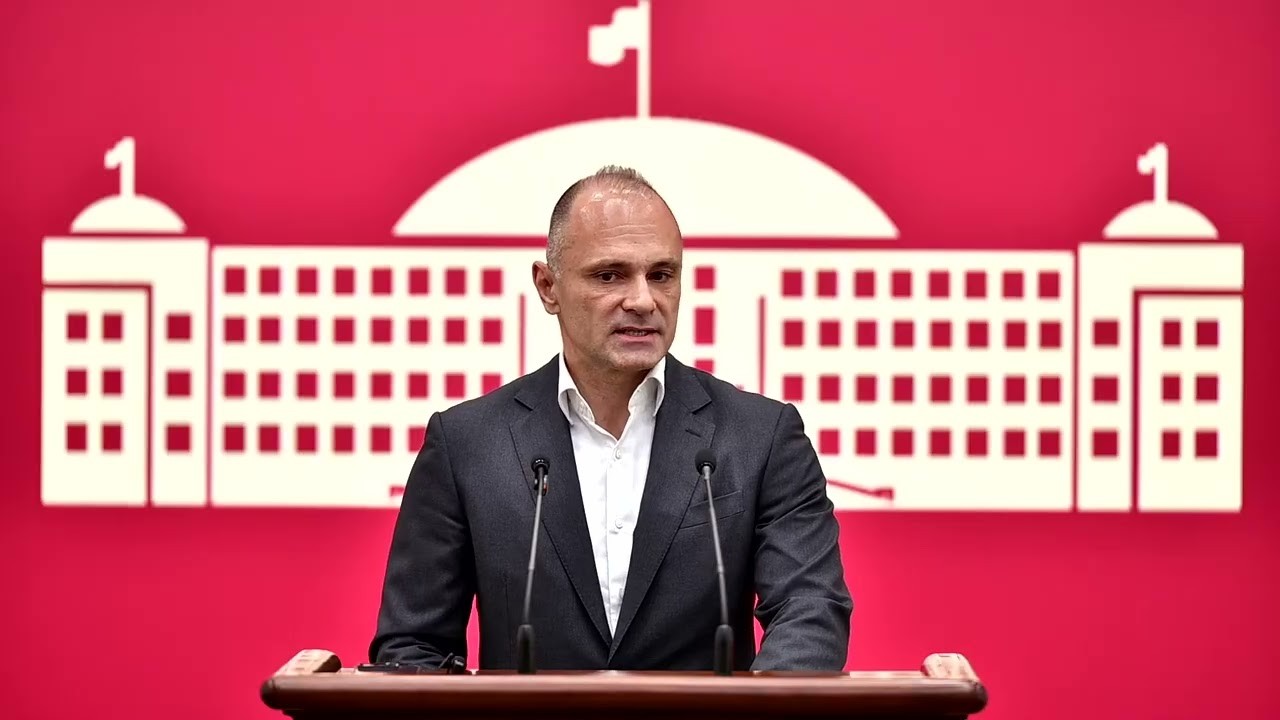
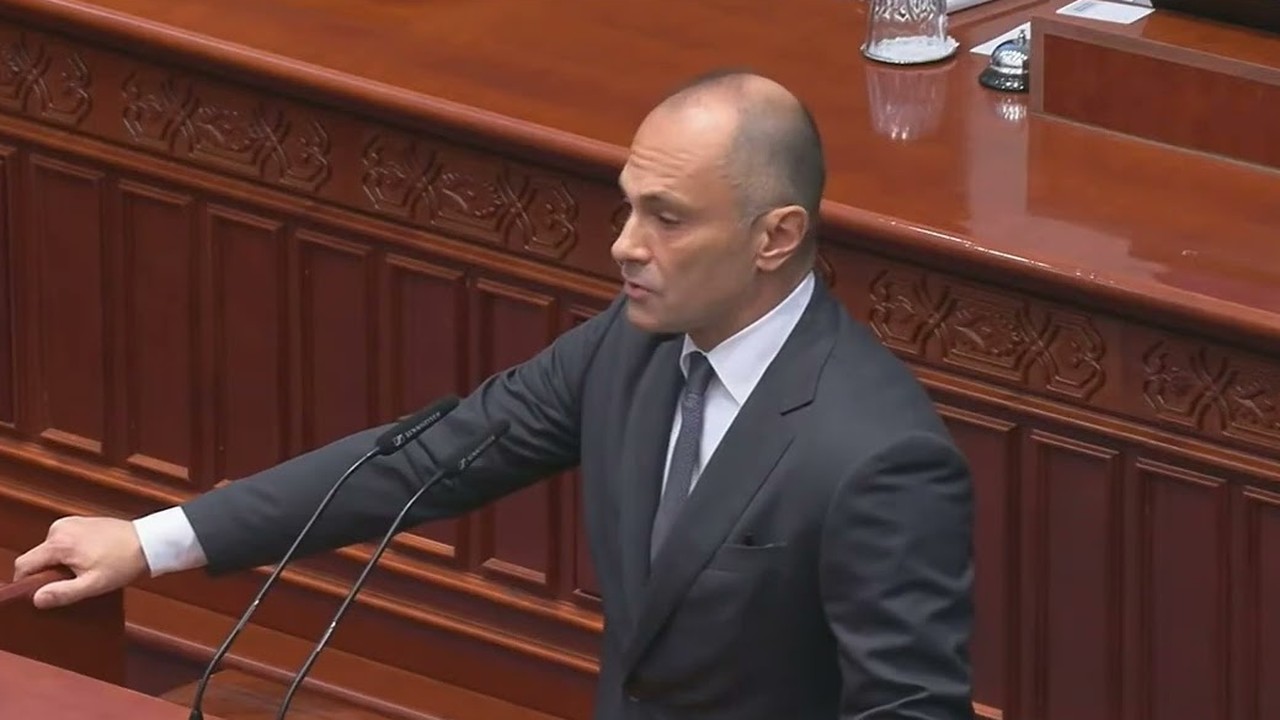
“The money is with Mickoski and his gang”: Filipče – the gang will answer for it
SDSM leader Venko Filipče starts from IMF data placing Macedonia 41st of 48 European economies, links prices, debt, the new procurement law and the Alta Bank affair, and warns: the gang will answer for it. VMRO-DPMNE replies with growth figures and inherited debts.
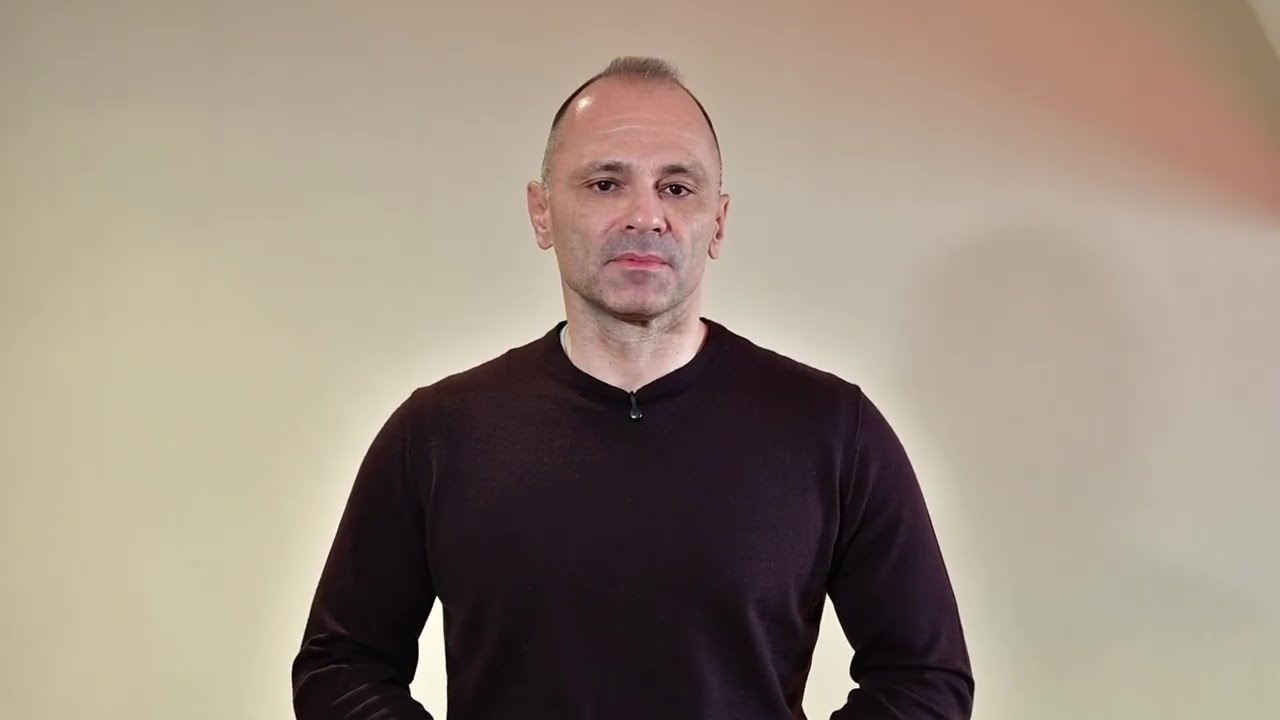
SDSM leader Venko Filipče, in a video address published on 14 November, brought together the numbers citizens feel every day – and delivered one of his harshest lines yet against Prime Minister Hristijan Mickoski: “There is no money in the budget, there is no money for the citizens. But we know where there is – with Mickoski and his gang.”
Filipče claims that the prime minister “fights only for his criminal tenders and his profit, as the boss of the organised criminal group” which, he says, has been impoverishing the country over the past two years, and he warns that the reckoning is still to come: “The truth is now out in the open – both with Alta Bank and with his criminal ties to Vučić. There will be accountability for all of this. The gang will answer for it.”
“What third economy?”
Filipče starts from the latest projections of the International Monetary Fund (IMF). According to a Visual Capitalist ranking based on the Fund’s October projections, Macedonia is 41st among 48 European economies, with projected GDP per capita of $11,762 for 2026. Ahead of it are Serbia ($17,126), Montenegro ($16,211) and Albania ($13,968), while in the region Macedonia is ahead only of Bosnia and Herzegovina, which is 43rd with $10,845. Germany, at $65,699 per capita, is more than five times above the Macedonian level.
“What third economy? Macedonia is at the bottom in Europe,” Filipče said. “This is the real state of the Macedonian economy. Not Hristijan Mickoski’s fairy tales about the third economy in Europe, not the lies about the fastest growth in wages and pensions. Everything we have been saying over the past year has now been confirmed by the IMF as well.”
The basket, electricity and heating
“Prices have risen to the ceiling, while wages stagnate. The basket is 90,000 denars. Not even three salaries are enough to cover monthly costs,” Filipče said. In its written statement, SDSM specified that the 90,000-denar figure refers to the basket “with housing”, that is, including housing costs.
The trade unions’ figures confirm the trend. According to the Federation of Trade Unions of Macedonia (SSM), the minimum union basket for a family of four reached 70,358 denars in October, 3,945 denars more than in January. Food and drinks alone require 26,170 denars – 124 denars more than the entire minimum wage of 26,046 denars.
Filipče also warned of “the expected rise in the price of electricity and heating”. In October, MEPSO asked the Energy Regulatory Commission (ERC) to raise the electricity transmission tariff by 97.68 per cent from 1 January 2027, while the four heating companies sought a new correction of the heating price because of more expensive gas. If approved, it would be the third heating price rise this year. The final word rests with the ERC. “The reality is that there is no increase in the minimum wage – only fairy tales,” Filipče said.
Four billion euros of new debt
“The reality is that there are four billion euros of new borrowing in two years. The reality is that people live worse,” the SDSM leader said. According to data published by DW, public debt at the end of the second quarter of 2026 reached €10.73 billion, or 58.8 per cent of GDP – close to the 60 per cent threshold that some economists regard as a serious warning sign.
Tenders without a tender
Filipče’s gravest accusation – that the prime minister fights “for his criminal tenders” – came a day after the parliamentary majority, with 63 votes in favour and 20 against, passed amendments to the Law on Public Procurement. The vote followed Parliament’s deletion of Article 13, over which President Gordana Siljanovska-Davkova had earlier refused to sign the decree promulgating the law.
According to SDSM and the DOM party, the amendments raise the ceiling for purchases without a public notice to €25,000 for goods and €120,000 for construction works, delete the 2019 requirement for prior consent from the Public Procurement Bureau for negotiated procedures without prior publication, and increase the appeal fee from €200 to €600. The Center for Civil Communications warned that the changes were adopted without public consultation and carry corruption risks. SDSM tabled more than 2,000 amendments to the law.
Mickoski defends the changes. “We have law firms and companies that profit by knowingly colluding and bringing down public procurements,” the prime minister said. “That can no longer happen.” He says the international community was also consulted on the law.
Alta Bank and the Belgrade connection
The second pillar of the accusation is Alta Bank. Serbia’s Prosecutor’s Office for Organised Crime suspects the owner, Davor Macura, of taking around 45 billion dinars – almost €383 million – out of the vault of Alta Bank in Belgrade. The National Bank placed Alta Bank AD Bitola under temporary administration on 1 November, and clients are still limited to 15,000 denars a week by card, or 20,000 denars over two weeks for those without a card. From Monday, 16 November, the branch office in Prilep will also open.
At the parliamentary oversight hearing on 11 November, Mickoski claimed that it was the SDSM–DUI government, on the proposal of then minister Fatmir Besimi, that brought Macedonia into business dealings with Macura’s Alta Bank. Filipče responded with the minutes of the government session of 24 October 2023, under which the then government engaged the State Attorney’s Office to protect the state interest, and recalled that the bank entered the market while Mickoski was prime minister and Trajko Slaveski was governor. Slaveski maintains that the National Bank followed all legal procedures and that “the near future will show that the National Bank acted correctly”.
State Public Prosecutor Nenad Saveski told the hearing that he could not say at that moment whether there was a pre-investigation, but stated: “Anyone who has committed a criminal offence should answer before the law. The laws apply equally to everyone.”
As for Vučić, Mickoski and Aleksandar Vučić met in New York on 24 September, and after the meeting Vučić said the talk had been “good and open”. Filipče’s reference to “criminal ties” is a political accusation by SDSM – no institution has so far established any criminal link between the prime minister, Vučić and Alta Bank. On the same day, SDSM Executive Board member Nataša Popović said Mickoski was “in total panic over Alta Bank” and accused him of trying, on Vučić’s model, to silence the opposition with threats and pressure.
VMRO-DPMNE’s reply
VMRO-DPMNE replied that Filipče had shown ignorance of basic economics and that all economic indicators should be looked at together, not individually. “Macedonia has the highest gross domestic product growth rate in the region and the lowest inflation. Inflation in Macedonia is 25 per cent lower than the European average, while economic growth in the second quarter of this year reached 4.3 per cent,” the party said. On debt, VMRO-DPMNE argues that it is an inherited burden: in 2027 loans worth €2.3 billion must be refinanced or repaid, and obligations of €2.7 billion are due in 2028. The reaction ends with the message: “That is why, when Filipče does not know something better, he should keep quiet.”
Prime Minister Mickoski, for his part, stressed that industrial production in the third quarter was positive and that industrial turnover was “just over 5.5% higher compared with the third quarter of last year”.
The questions the government does not answer
Filipče’s claims of an “organised criminal group” and a “gang” are political accusations: no court has established any such thing, and no indictment against the prime minister is publicly known. But the questions he raises remain open: who will receive contracts without a tender worth up to €120,000, and why was the Public Procurement Bureau’s control abolished; what did the Government and the National Bank know about Macura before they opened the door of the Macedonian banking system to him; where has every euro of the new borrowing gone; and will the ERC raise citizens’ bills before winter?
For SDSM, the answer is both political and legal. “There will be accountability for all of this,” Filipče says. “The gang will answer for it.”
Sources: SDSM (the “gang” statement), SDSM (the IMF statement), SDSM (the Public Procurement Law), SDSM (Nataša Popović), Makfax (VMRO-DPMNE’s reply), Telma (the IMF and Mickoski’s statement), DW (the GDP ranking), DW (the union basket), Večer (electricity and heating), DW (public debt), Telma (the parliamentary vote), Telma (the defence of the law), Telma (DOM’s reaction), Blic (the suspicion against Macura), Telma (the Alta Bank limits), Telma (the oversight hearing), Tanjug (the New York meeting).
Photo: frame from Venko Filipče’s video address, SDSM, 14 November 2026