Five Years of Promises, Two Years in Power, Zero Results: The Bill VMRO-DPMNE Refuses to Pay
They promised to bring back the name, a "third economy in Europe," a fast track to the EU and the eradication of corruption. Two years later, the numbers tell a very different story — one most loudly told by citizens' empty refrigerators.
Editorial commentary
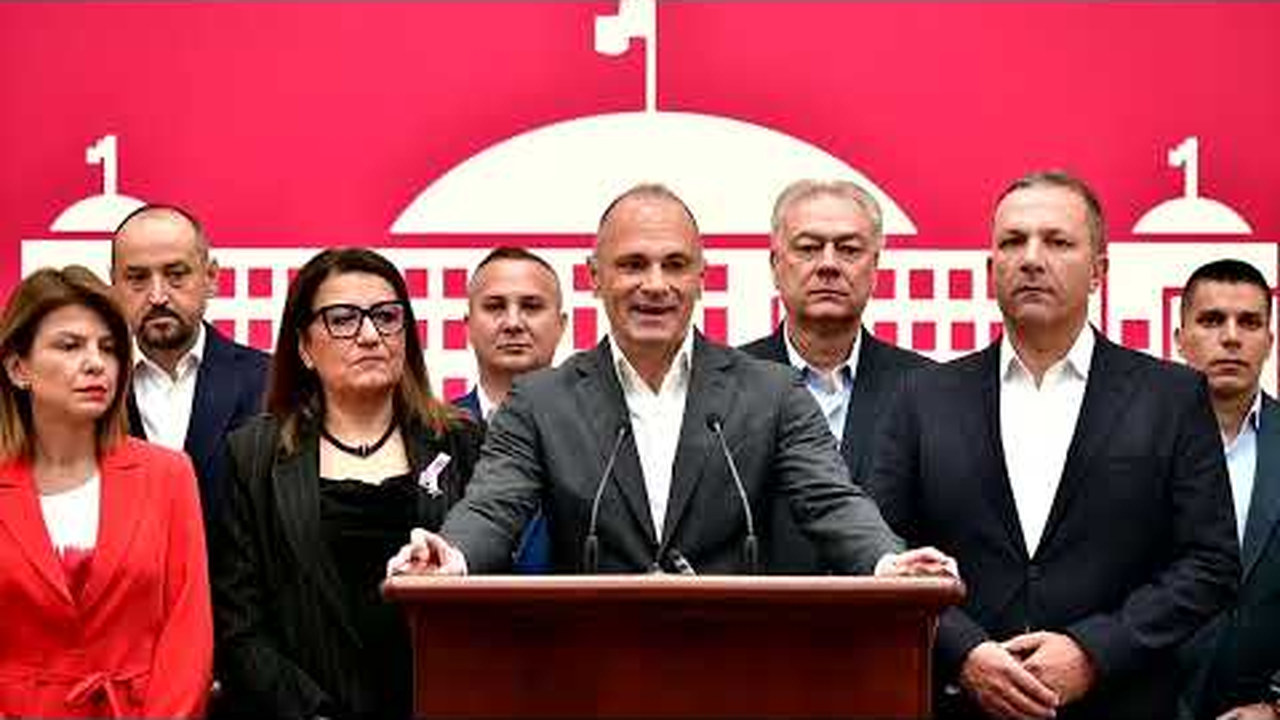
There is a simple test for any government: compare what it promised with what it delivered. Not competing interpretations, not ideological crossfire — just the promises, in black and white, against reality. Apply that test to VMRO-DPMNE — from the opposition wave of the 2021 local elections, through the triumph of May 2024, to today — and the result is damning. According to the detailed audit of the "Platform #1198" program presented by SDSM leader Venko Filipche on the government's second anniversary, fully 90 percent of Hristijan Mickoski's promises remain unfulfilled. This is not a partisan slogan. It is a checklist that can be verified, point by point.
The name that never "came back"
Start with the foundation of their campaign. For years VMRO-DPMNE built its political identity on the claim that the Prespa Agreement was a "capitulation" and that with them, dignity — and by implication the name — would return. Mickoski demonstratively called the state only "Macedonia," and his MPs loudly promised a turning point. Two years after taking full power, the constitutional name is unchanged, the Prespa Agreement is untouched, and NATO membership — which depends on it directly — has quietly closed off any real debate. What remains is the rhetoric: the flags, the declamations, the symbolic gestures. The promise of "returning the name" proved to be exactly what the opposition always said it was — expired pre-election merchandise, sold to voters who sincerely believed.
A "third economy in Europe" where 73 percent earn below the average wage
The economy was the second pillar of the promised revival. Citizens were given a slogan — "third economy in Europe by growth" — and they got what slogans usually deliver: statistical fog. The reality, documented by the Public Revenue Office's data for 2025, is this: 73 percent of workers earn below the official average wage, and half of all citizens survive on monthly incomes between 24,000 and 36,000 denars. Across the whole of 2025, literally only 46 salary payments in the country matched the official average wage — a figure that by itself shows how much of a fiction the "average" is for the vast majority.
Meanwhile, the minimum consumer basket has risen by around 10,000 denars in two years, reaching nearly 70,000 denars in June — excluding rent. Foreign investment, according to the opposition's analyses, has fallen by 60 percent, while public debt has grown by more than 2.5 billion euros. On top of that, as Filipche warned in May, the state will pay an additional 20 million euros in interest because of borrowing on worse terms — money that could have been schools, hospitals, roads. Against all this, the government rejects targeted relief measures, rejects a 600-euro minimum wage, and offers instead a new, "more average" consumer basket, tailored to its own liking. Filipche put it more simply and more precisely than any economic study could: empty refrigerators are the best rebuttal of government propaganda.
The Europe we see only on other people's flags
The third great promise was Europe — faster, more dignified, without humiliations. The result after two years: accession negotiations with the EU have not even formally opened. The European Commission's November 2025 report is a document every citizen should read: "no progress" in the key Chapter 23 on judiciary and fundamental rights, "limited progress" in Chapter 24. While Albania, Montenegro and other neighbours accelerate — or, as Filipche recently reminded, "four countries are advancing toward the EU while Macedonia stands still" — Skopje sinks into deeper isolation, garnished with ever-warmer embraces with Budapest and Belgrade and billion-euro loans of murky origin.
Mickoski says he is ready to "pay the price" for refusing the constitutional amendments. The question the opposition rightly asks is: who exactly pays that price? Not the prime minister, not the ministers, not the party directors of public enterprises. The price is paid by citizens — in lost investment, in closed European funds, in children who emigrate. That is why Filipche's call for a referendum is not a political trick but a democratic minimum: if the government is convinced its course reflects the people's will, let it ask the people. Refusing to do so says more than all its press releases combined.
The corruption that was to be eradicated — and settled in instead
And the fourth promise — the fight against corruption — ended like the previous three. "They promised to eradicate corruption; they produced tender scandals worth 150 million euros," Filipche calculates. The European Commission, in the same report, demands an intensified fight against corruption and protection of judicial independence — the very areas that were the weakest point of previous VMRO-DPMNE governments, in the years when the state slid toward authoritarianism. Today's attacks on the courts and the Public Prosecutor's Office, the dismissals in commissions and institutions, are a disturbing déjà vu for anyone who remembers the decade before 2016.
The bill is coming
What this government has learned best is that a promise costs nothing — others pay for it, later. But political gravity is unforgiving. The hard autumn months ahead, with electricity prices unknown and new price rises looming, will be the moment the bill arrives. And then no slogan, no flag, no government-tailored consumer basket will help. Citizens already know the truth, because they live it every day: they were promised a better life, and they got a more expensive basket, a longer debt and a more distant Europe. Five years of promises. Two years of full power. Zero key results. That is not an interpretation — that is the balance sheet.