PET–CT scanner resumes operations after isotope shipment from Istanbul
After a month-long halt, Health Minister Sasho Klekovski says authorities are exploring deliveries from Sofia to enable weekend scanning.
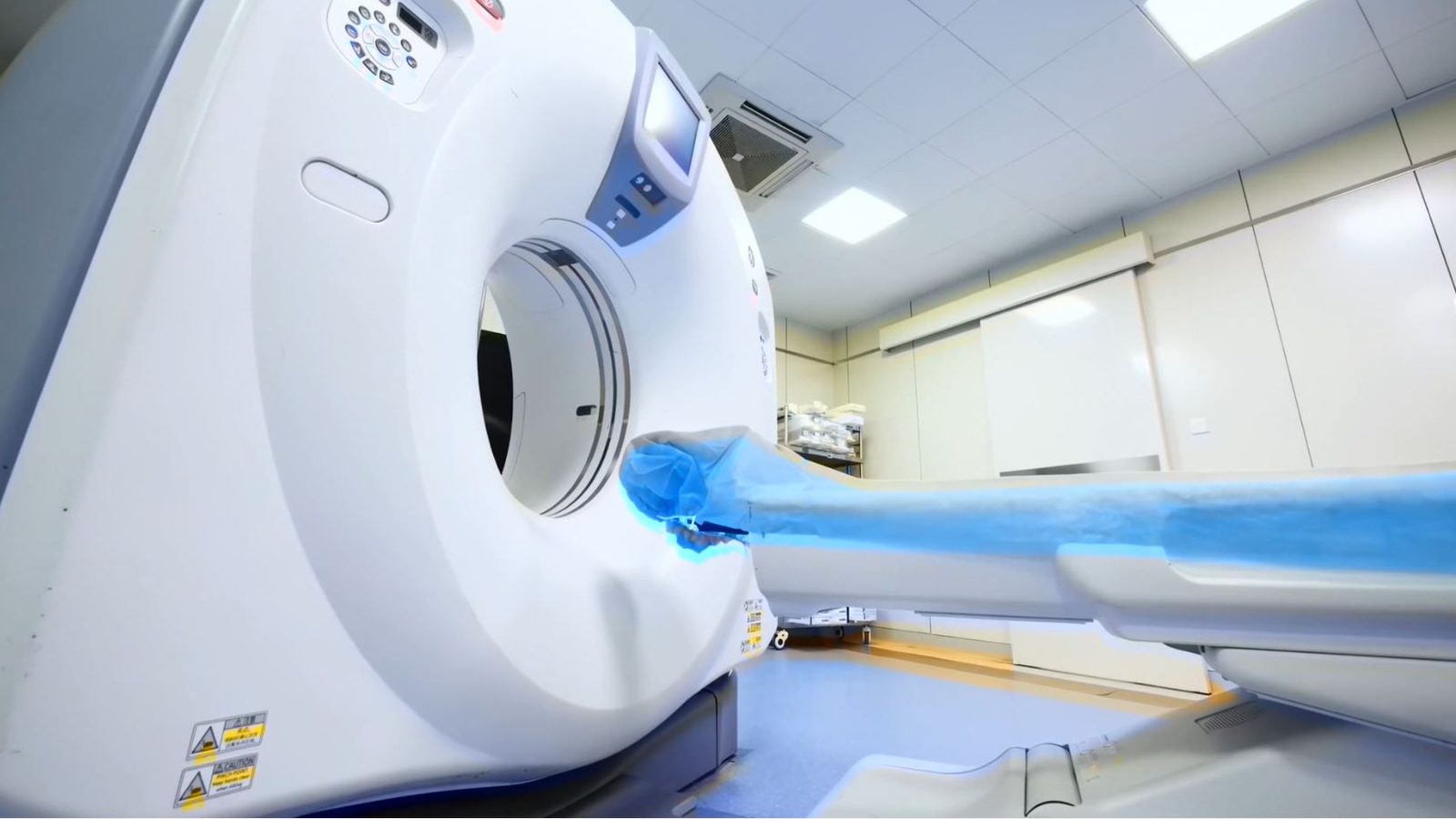
The state PET/CT scanner has resumed operations after a one-month interruption, following the arrival of the required radioisotope from Istanbul, Health Minister Sasho Klekovski announced on Friday.
Klekovski said authorities are also in talks with suppliers in Sofia to create redundancy and extend the service to weekends. "We are also communicating with Sofia because Istanbul operates only from Monday to Thursday, and we want to secure an alternative so the PET scanner can operate on Saturdays," he said.
According to the minister, the scanner performed between 2,100 and 2,200 examinations per year in previous years, while a record 2,700 scans were completed in 2025. He added that, based on reference-country statistics, the service should target five to six thousand scans annually because PET imaging is needed not only by oncology and hematology patients but also by those in neurology.
Maintenance, cyclotron limits and audit findings
The shutdown this month coincided with scheduled maintenance during which technicians detected problems with the cyclotron—the facility that produces the isotope used for PET imaging. The short half-life of the radioisotope complicates supply logistics and limits options for distant deliveries.
The opposition SDSM criticized the interruption, accusing the authorities of an "amateur approach" to the only public PET diagnostic service in the country. Last year the State Audit Office reported that the cyclotron's production capacity had not been fully utilized. Between 2021 and 2023 a total of 6,457 PET scans were performed, the audit noted, and auditors said the number could have been higher given the machine's production potential.
Klekovski acknowledged the need for a long-term strategy to avoid repeated disruptions: "Oncologists have other methods available to monitor disease. We must find a mechanism since there is of course regular servicing every year and determine which methodology to adopt finally. We are trying to bridge Saturdays because the center in Istanbul cannot deliver; the isotope has a short half-life," he said, adding that efforts will continue to secure more reliable supply lines.
Photo: press material from the event