Judiciary Under Control, Media Under Pressure: Filipche Opens the Government's "Black Book" in Front of the EU Ambassador
Facing Brussels' envoy, the head of the Euro-integration Council listed the heaviest findings: open influence over the courts from the highest levels of power, a weak fight against corruption, and pressure on journalists.
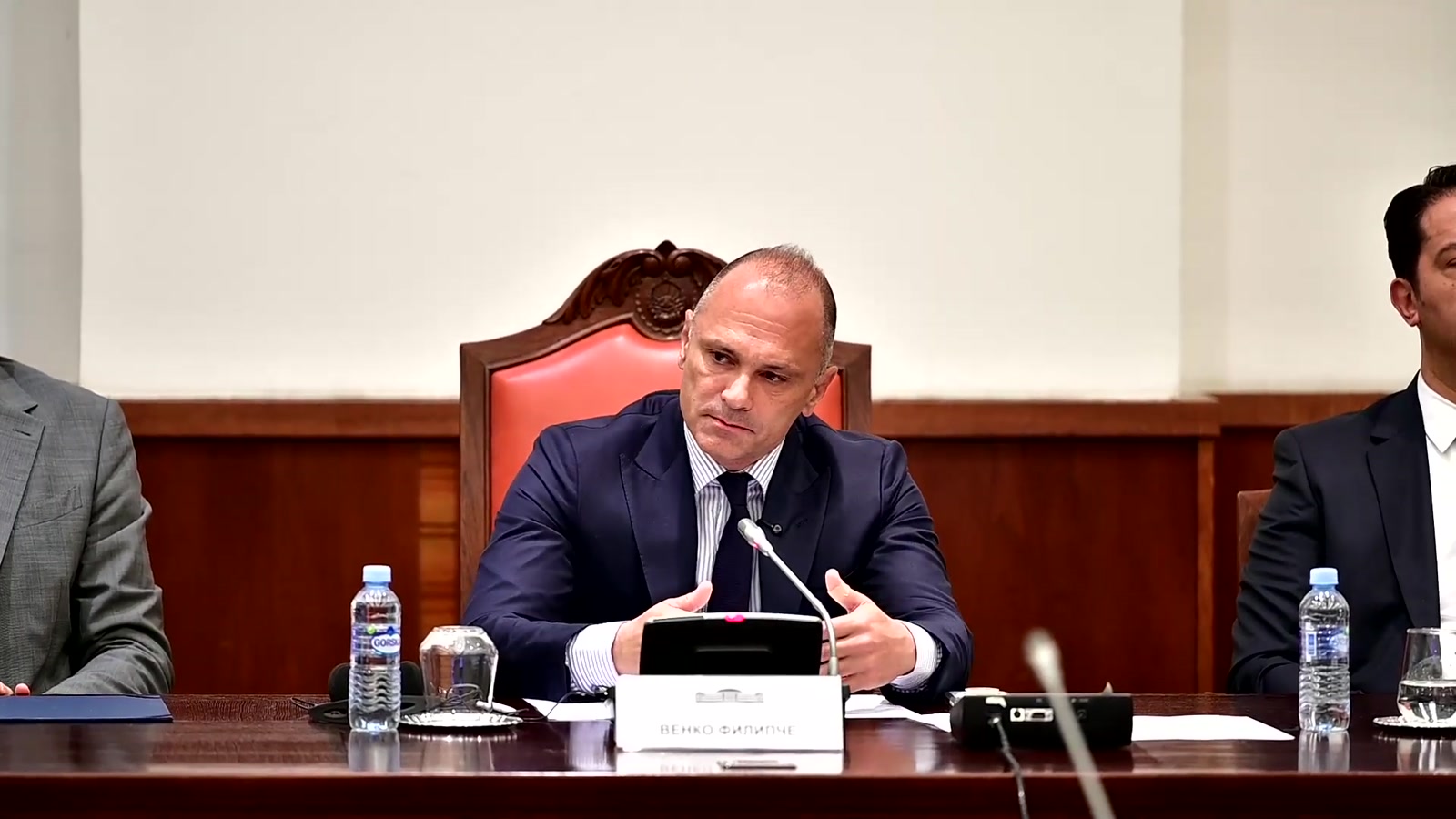
In front of European Union Ambassador Michalis Rokas and the members of the National Council for European Integration, Council President Venko Filipche delivered a series of damning assessments of the state of the institutions, citing directly from the European Commission's latest reports.
"With regret I can state that the latest reports from the European Commission are bad," Filipche began, before locating the core of the problem: "the influence of this government over the judiciary, over the independence of the judiciary — open influence from the highest levels of power."
The accusation that the top of the government openly influences the courts is, he stressed, not opposition rhetoric but a finding recorded in black and white in Brussels' official documents.
Filipche did not stop there. As a second critical point he singled out the fight against corruption, which the European Commission assesses as weak: "The poor performance in the fight against corruption," he quoted from the report.
The third blow concerned media freedom. "Furthermore, the control of the media, the pressure on journalists — also noted in the European Union's reports," Filipche stated, emphasizing that this is a systemic problem, not a matter of isolated cases.
In his view, all of this is "completely contradictory to the government's announcements that we want to move toward Europe, while the step forward that needs to be taken is not being taken." In other words — the government's pro-European rhetoric and the reality on the ground are two different worlds.
The findings, presented before the EU's top diplomat in the country, further increase the pressure on the government to show concrete results rather than merely declarative commitment to the European agenda.