Complaint against Macura names Moscow and Skopje: the questions about the money, Mickoski and Vučić
Serbian prosecutors suspect the Alta Bank owner of taking €383 million from the vault. A private criminal complaint claims that after the election money flowed to Moscow and Skopje. The National Bank in Skopje says: no millions. VESNIK compared the documents.
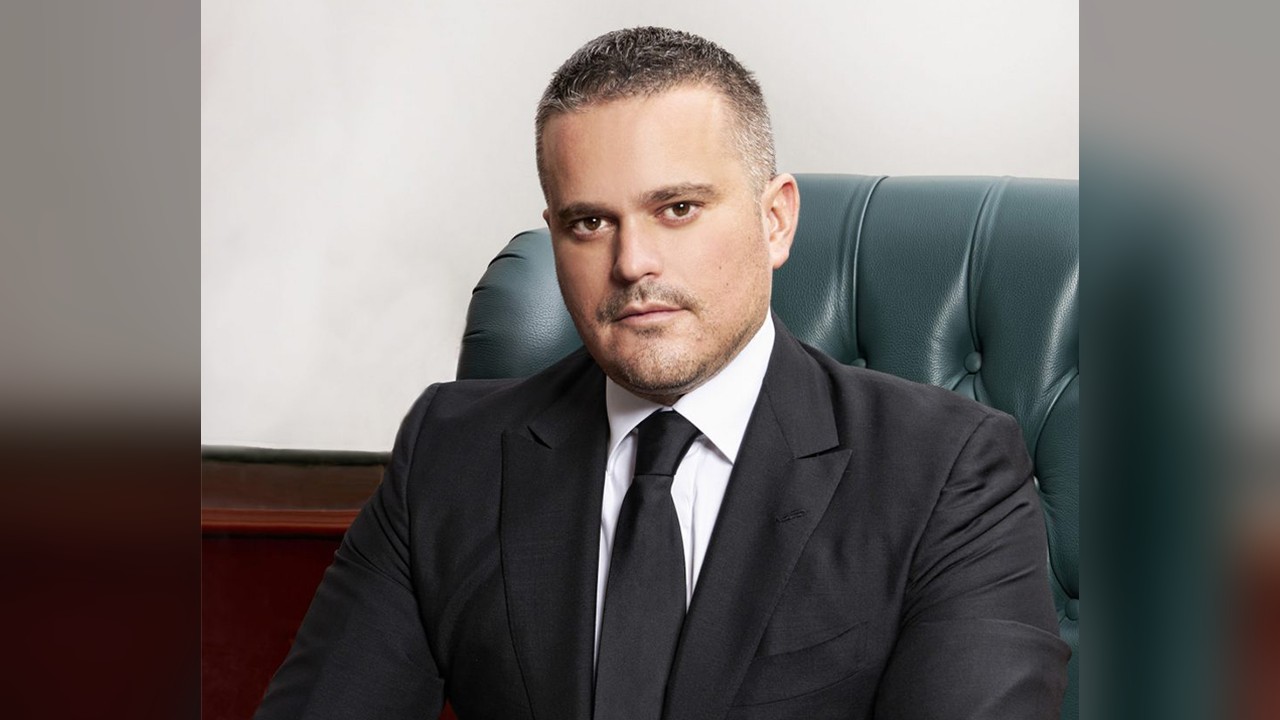
On Tuesday at 7 p.m., Davor Macura was scheduled to be questioned by Serbia’s Public Prosecutor’s Office for Organized Crime. The owner of Belgrade’s Alta Bank is suspected of abusing his position as a responsible person to take around 45 billion dinars – almost €383 million – out of the bank’s vault. But for Macedonia, the most important document in this case is not the prosecution’s statement. It is the criminal complaint filed by Belgrade lawyer Ivan Ninić, in which one word is written in black and white: Skopje.
VESNIK compared the official statements of the Serbian prosecution, the text of the criminal complaint, the responses of both central banks and the public records of Macura’s ownership in Macedonia. The picture that emerges is not proof of a crime in Skopje. But it shows that the question of whether Macura’s money reached Macedonia is entirely legitimate, and that the answers offered by the authorities are, so far, incomplete.
Two different things: the prosecution and the complaint
The official suspicion of the Serbian prosecution is precise. According to its statement, Macura, “in the previous period, up to and including 31 October 2026”, exceeded his authority and removed cash from the vault without authorization. The head of the Treasury and Cash Management Department, G. M., and a treasury operations associate, I. P., were also detained on suspicion of helping him. Macura’s hearing was confirmed by his lawyer, Isa Spahović. At the time of publication, no court decision on detention had been announced.
The claims about Moscow and Skopje are not part of that statement. They are in the complaint that lawyer Ninić filed with the same prosecution against Macura, nine members of the bank’s management bodies and unnamed responsible officials at the National Bank of Serbia. According to the text of the complaint, published by the Serbian portal Nova, from the morning of 26 October – the day after the election in Serbia – “a process of intensive and accelerated transfer of funds abroad was initiated, specifically to accounts and legal entities located in Moscow (Russian Federation) and Skopje (North Macedonia), where the named bank or persons related to it own ownership interests in the banking and insurance sectors”.
Ninić says he obtained “operational information” about the disputed transactions through his sources in Serbia’s Administration for the Prevention of Money Laundering. He asked the prosecution to open pre-investigation and investigation proceedings, to propose detention, to seize the suspects’ passports and to obtain all SWIFT reports and international transfer orders from 26 October onwards. Precision matters here: this is not a prosecution proposal, nor an indictment. It is a complaint by a private lawyer, and no institution has so far confirmed the claims about Skopje.
On 28 October, the National Bank of Serbia called those claims “unverified assertions that express unjustified concerns” and said the transfers had been made “through regular payment channels, in accordance with applicable regulations”. Three days later, in the early hours of 31 October, the same central bank revoked Alta Bank’s operating licence over a significant deterioration in its financial condition and filed its own criminal complaint against the bank and several of its responsible officials.
The prosecution asked for data on foreign transfers as early as 27 October
Although it does not mention Moscow or Skopje, the Serbian prosecution is officially following precisely the money that went abroad. According to its statement of 31 October, on 27 October it had already asked the National Bank of Serbia for data on all of Alta Bank’s transactions abroad from 27 September onwards. The central bank delivered data from quarterly reports only up to 20 September and said the report for the requested period could be delivered “after 4 November”.
On 29 October, the prosecution sent a new request concerning the conversion and outflow of funds from Alta Bank’s accounts abroad. On 30 October, it asked the police to examine the bank’s operations, as well as the responsible officials at the National Bank of Serbia, “in connection with possible outflows from Alta Bank’s accounts and transfers of funds abroad”. In other words, the answer to the question of where the money went exists – in documents that Belgrade has yet to compile and verify.
What Macura owns in Macedonia
The wording of the complaint – ownership interests “in the banking and insurance sectors” – matches the two Macedonian entities controlled by Macura’s group. The first is Alta Bank AD Bitola, the former Stopanska Banka Bitola. The National Bank gave prior consent for the acquisition of a qualifying holding on 1 September 2025, the Securities and Exchange Commission approved the takeover bid on 10 September 2025, and since 12 December 2025 the bank has carried the Alta name. More than 95 percent of its shares are owned by Alta Bank of Belgrade, and according to the Central Registry, Macura sits on its Supervisory Board.
The second is the insurer ZOIL Makedonija, 100 percent of whose shares the Alta group bought in April 2026 through a block trade on the Macedonian Stock Exchange for around 104.9 million denars, or about €1.7 million. The company was then renamed Alta Osiguruvanje AD Skopje (Alta Insurance), and its headquarters moved from Bitola to Skopje. In August 2026, the group also registered a real estate company in Macedonia. The bank is supervised by the National Bank, while the insurer is supervised by the Insurance Supervision Agency (ISA).
The National Bank: €180,000 went out, €16,000 came in
Governor Trajko Slaveski insists there have been no suspicious inflows. On Telma’s programme Top Tema, he gave figures: after the election in Serbia, €180,000 left Alta Bank Bitola for Serbia, while only €16,000 came into Macedonia from Serbia. “These are verified transactions. They concern some small businesses in Macedonia that import goods and make payments,” Slaveski said. “No millions, no transfers, no laundering and so on.”
On 1 November, the National Bank placed Alta Bank Bitola under temporary administration and limited citizens to 10,000 denars a week through payment cards, explaining that the measure was linked solely to developments concerning the qualifying shareholder and that the bank is “highly capitalized, liquid” and meets all supervisory standards. According to Telma, all the competent authorities, including the Financial Intelligence Office, deny any transfer of money so far. Finance Minister Gordana Dimitrieska-Kochoska said: “I trust the National Bank a great deal.”
Where the numbers do not match
The problem is that the governor’s figures answer a different question from the one the complaint raises. Slaveski is talking about payments through Alta Bank Bitola. The complaint speaks of “accounts and legal entities” linked to the group – without specifying which bank holds those accounts. Is €16,000 everything that arrived from the entire Alta group at all banks in Macedonia, or only at one bank? The public does not know yet.
The gap between the claims is enormous. SDSM International Secretary Andrej Zhernovski claimed that, “according to information coming from Serbia”, more than €50 million had been transferred from the Belgrade headquarters to the bank in Macedonia. Serbian investigative journalist Vuk Cvijić told Telma that “the branch in Skopje is also under suspicion, as is an insurance company”, and that “the second leg went towards Moscow”. None of these claims has been publicly documented. But the governor’s assertion that there were no transfers at all also rests, for now, on his word rather than on published documents.
The question of the insurer also remains open. VESNIK found no public statement from the Insurance Supervision Agency on any transactions by Alta Osiguruvanje after 26 October. On Tuesday, SDSM asked whether “citizens’ insurance policies” are at risk and whether the Agency “is taking any action”. The Public Prosecutor’s Office in Skopje, for its part, did not answer Telma’s question on whether it had opened a case. Levica, meanwhile, pointed out that the budget revision cuts funding for the Financial Intelligence Office from 55.4 to 53.7 million denars.
Vučić, Mickoski and the bank of a “close” businessman
Macura is no ordinary banker. The Associated Press reports that Alta Bank rose to prominence under the rule of Aleksandar Vučić’s Serbian Progressive Party (SNS), and the bank handled electricity payments for millions of users in Belgrade. Serbian media often describe Macura as close to the SNS, although it has not been confirmed that he is a party member. The bank collapsed a few days after the SNS lost the election on 25 October. Vučić said what was happening with Alta Bank was “very strange” and asked why it had not been possible to wait “another seven or eight days”.
Prime Minister Hristijan Mickoski met Vučić in New York on 24 September; after the meeting, Vučić said that the conversation had been “good and open” and that Serbia wants “the best relations” with North Macedonia, especially in the economy, energy and infrastructure. After the Serbian election, analyst Georgi Gotev of the EUalive portal assessed that a Belgrade less aligned with Vučić’s policies would complicate the positions of leaders who had benefited from his regional posture, naming Milorad Dodik, the circle of Andrija Mandić and Hristijan Mickoski.
The opposition goes much further. “Vučić’s banker also became Mickoski’s banker in Macedonia,” claims SDSM spokesperson Bogdanka Kuzeska, and in a statement on Tuesday SDSM claimed that Mickoski and Slaveski “allowed criminal capital to enter Macedonia”. VMRO-DPMNE responds that “the situation with the banking system and the banks in the neighbourhood has nothing to do with the banking system in Macedonia” and recalls the collapse of Eurostandard Bank and the TAT savings house. In an interview broadcast on 29 October, Mickoski said he did not know “whether everything is in order”, but that there are controls by the National Bank.
To keep the picture fair: there is no public evidence that the Government, VMRO-DPMNE or any Macedonian official received money from Alta or took part in any transfers. But that is precisely why the answers must be documents – not insults and calls not to spread panic.
Seven questions that must be answered
1. To the Serbian prosecution and the National Bank of Serbia: To which accounts and which legal entities did funds from Alta Bank go after 26 October, and are any of them in North Macedonia? The report for that period is expected after 4 November.
2. To the National Bank in Skopje: Do the figures of €180,000 and €16,000 cover only payments through Alta Bank Bitola, or all transfers from the Alta group to all banks in Macedonia, including the accounts of related companies?
3. To the Insurance Supervision Agency: Did Alta Osiguruvanje receive or send funds to related parties after 26 October, and has the Agency taken any supervisory measures?
4. To the National Bank and the Securities and Exchange Commission: What checks on the origin of the capital were carried out in 2025, when the takeover of Stopanska Banka Bitola was approved – even though, according to the Financial Times, the European Central Bank had doubted as early as 2024 whether the group could verify the origin of its deposits?
5. To the Public Prosecutor’s Office in Skopje: Has a case been opened, and will it request data from the Serbian authorities through international legal assistance?
6. To the Financial Intelligence Office: Has it received suspicious transaction reports related to Alta entities, and has it exchanged data with Serbia’s Administration for the Prevention of Money Laundering?
7. To Prime Minister Mickoski: Did he or members of the Government ever discuss Alta’s entry into the Macedonian market with Vučić or with Macura? And did Macura stay in Macedonia in recent days, as SDSM leader Venko Filipche asked?
Belgrade investigates, Skopje reassures
In Serbia, less than a week after the political change, the prosecution requested data, the police searched the bank and the central bank revoked its licence. In Macedonia, the regulator says everything is in order, the ruling party claims there is no connection whatsoever, and the prosecution has yet to say whether it has a case. So far, the government and the opposition have agreed on at least one thing: parliament’s Finance and Budget Committee decided to schedule an oversight hearing. That is where the documents should be put on the table.
If Macura’s money did not reach Skopje, the best answer is the document that proves it. If it did, citizens have the right to know whose money it is, where it is and who allowed it to come.
Sources: 021.rs (the prosecution’s statement of 31 October), Blic (the suspicion against Macura), Insajder / FoNet (the hearing), Vijesti / Nova (Ninić’s criminal complaint), Associated Press, Trn (ownership in Macedonia), 4news (Slaveski’s statement), Telma (the oversight hearing), DW (the temporary administration), Fokus (Zhernovski), Fokus (Levica), Libertas (SDSM on the insurer), Denesen / MIA (Kuzeska), Tanjug (the Vučić – Mickoski meeting), EUalive, GRID.mk (Mickoski’s statement), SDK (the Financial Times and the ECB).
Photo: Alta Group, press photo