Michalis Rokas: Protocols with Bulgaria are referenced in the EU Negotiating Framework
The EU ambassador says the Negotiating Framework mentions protocols and that bilateral agreements must be implemented "in good faith" as accession talks progress.
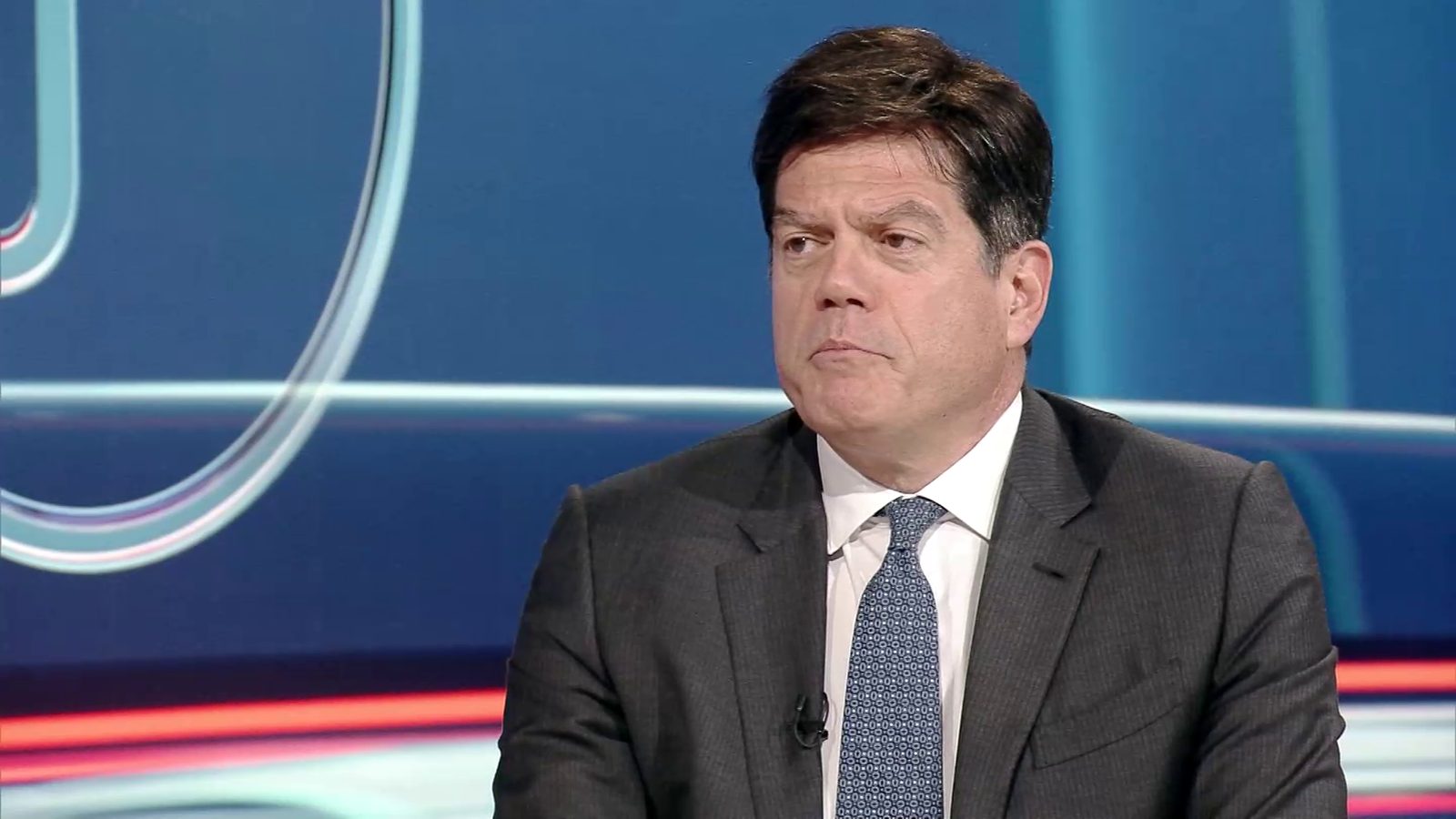
EU Ambassador Michalis Rokas said protocols connected to the 2017 Treaty with Bulgaria are explicitly mentioned in North Macedonia’s Negotiating Framework and that the expectation is for all sides to implement agreements "in good faith." He underlined that the Framework and completed screening set clear rules for how the country should progress in accession talks.
Rokas told reporters that the reference to protocols in the Negotiating Framework means the EU expects treaties to be carried out in good faith. He listed the 2017 Treaty of Friendship, Good‑neighbourliness and Cooperation with Bulgaria and the Prespa Agreement as examples of instruments covered by that approach and said their importance is obvious.
"In the Negotiating Framework the protocols are mentioned, and what is required is to go forward with implementing the agreements in good faith. The key phrase here is 'in good faith'. What we strive for are good‑neighbourly relations. Their importance is obvious. They relate to all candidate countries, and they also apply to those that are EU members today. There is no difference here, because we are talking about agreements. These include the Treaty of Friendship with Bulgaria from 2017, the Prespa Agreement and so on," Rokas said.
What if the joint historical commission cannot agree?
Asked what would happen if the joint historical commission failed to reach agreement on contested topics such as how to describe Goce Delchev or the Ohrid Archbishopric, Rokas avoided speculating about how an EU member state might react. He said his role is to represent the European Union, not to predict positions individual capitals could take in the enlargement process.
"I represent the European Union and I cannot comment on what position a member state might take in the enlargement process. But I think we should again return to good‑neighbourly relations and to implementing agreements in good faith. That is essential, that is key. That is the most important and such a practice should be established. We can always leave history to the historians. Among current EU members we have examples of countries that continue to discuss such issues even after joining," he said.
On whether the EU could prevent a unilateral veto by a member state, Rokas pointed to recent tensions in the region as an illustration that surprises can occur during accession negotiations. He declined to speculate, saying the example of issues between Croatia and Montenegro shows how member states may raise bilateral matters.
"You are again asking me to comment, to speculate what a member state of the EU could or could not do. We know that in accession negotiations a member state can surprise us with something we did not foresee. We already see what is happening between Croatia and Montenegro. The issues they discuss are known to the public. Therefore I really would not like to use this appearance to speculate," Rokas said.
Rokas also stressed that progress depends on how the bilateral commissions work and on concrete effort from both sides. He argued that if North Macedonia advances on rule‑of‑law reforms, anti‑corruption measures and other accession benchmarks while maintaining good‑neighbourly relations and active commissions, the country will build the momentum needed for its EU path.
"It is important what I am saying, because commissions do not exist just to discuss and formally note that something has been done. It is important to put in the effort, because that effort can be assessed as a significant step forward. I am personally convinced that if there is progress on the important issues for alignment with the EU, in the fight against corruption, in the rule of law and in reforms, and if we have the accession negotiations open, then we will have the necessary momentum. If at the same time good‑neighbourly relations are nurtured and the envisaged commissions work clearly, decisively, dedicatedly and constructively, I personally believe there is nothing to fear," he said.
Speaking in the wider political context, Rokas reminded that every step in the accession process requires unanimity among EU member states, and therefore the Union can offer clarity and predictability by following an inclusive, merit‑based enlargement process in line with EU rules.
"In a process where, as you know, unanimity of member states is required for every step, the only thing we can offer is clarity. The EU offers predictability by making clear how progress is made — in an inclusive process, on merits and according to the EU enlargement rules," he added.
Photo: press material from the event