Macedonian Stock Exchange CEO urges new instruments and activation of domestic capital
CEO Ivan Shteriev proposes investment accounts and a regional ETF as turnover falls and block trades rise
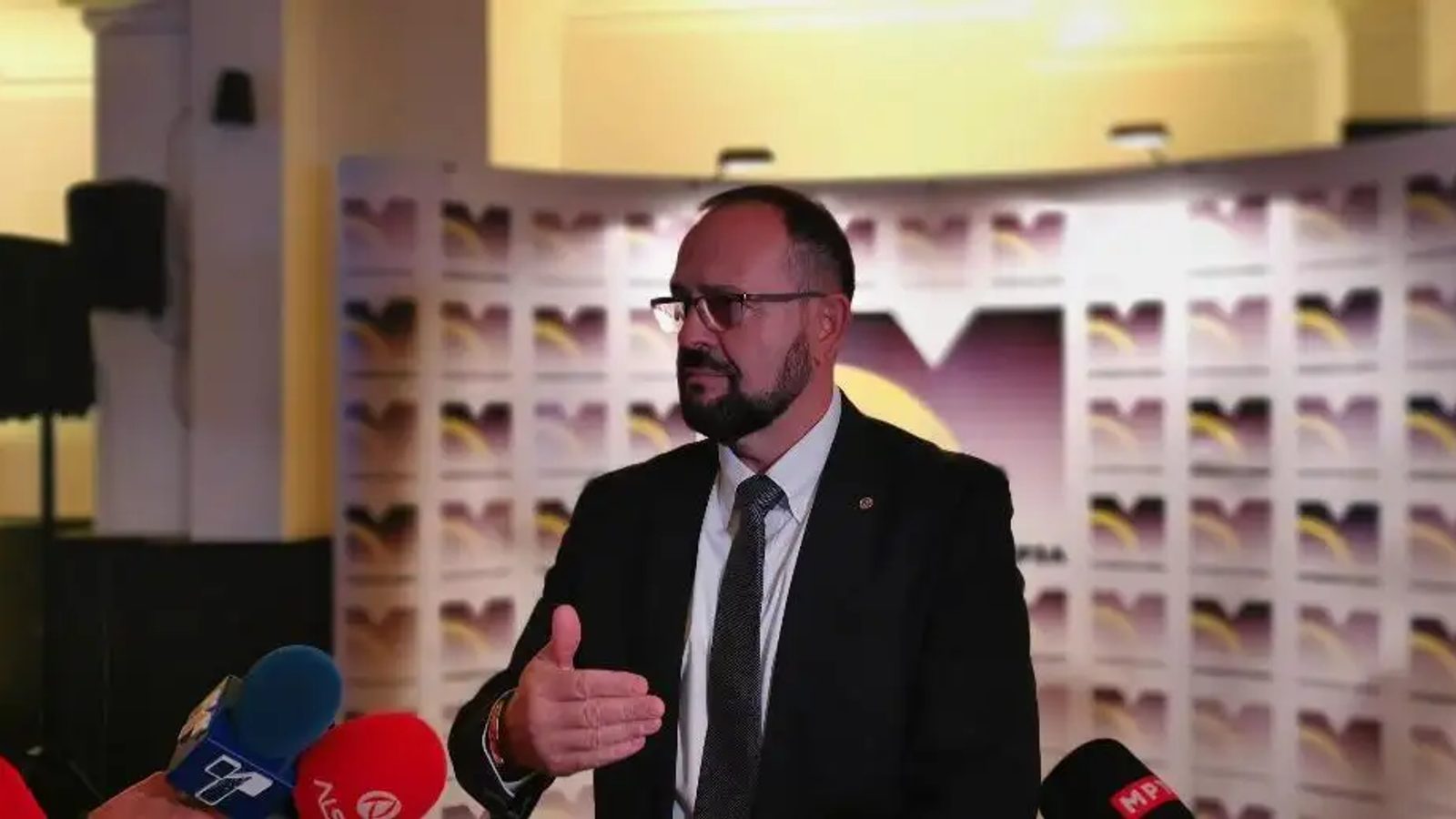
Ivan Shteriev, CEO of the Macedonian Stock Exchange, urged a wider range of financial instruments and stronger mobilisation of domestic capital as the exchange marked its 30th anniversary during the 25th annual conference in Ohrid.
Shteriev reported that total turnover on the exchange stood at about 89.8 million euros through September 15, roughly 8 percent below the same period a year earlier. He added that traditional trading had fallen by 27 percent while block trades rose by about 159 percent.
He also noted that the MBI10 index was at 9,151 points on September 15, representing an 8.9 percent decline compared with the end of 2025. "In a shallow market like ours, with a small number of active participants, relatively small shifts in sentiment can be felt significantly," he said.
New instruments, investment accounts and regional ETF
One of the central challenges, Shteriev said, is the limited supply of instruments and a constrained inflow of new investors, as domestic savers increasingly look to foreign exchanges. As a measure to boost long-term participation, he proposed discussing the introduction of Macedonian investment accounts to encourage citizens to invest on the capital market.
Shteriev outlined a pilot project with the European Bank for Reconstruction and Development (EBRD) to prepare local companies for market financing. "More than 20 companies applied for ten places. The final selection will be made soon. We can only hope that from this first group a company will emerge that will say: we are ready to open the door to the capital market," he said.
He added that the Macedonian Stock Exchange, together with seven regional exchanges, is preparing a regional ETF that will include Macedonian shares, with a planned launch in the second half of 2027.
Chair of the Commission for Securities, Bujare Abazi, stressed that trust is the market's most important capital and that passive savings of households and firms must be mobilised. "The capital market should not be seen as a competitor to bank lending, but as its complement, especially for financing riskier and innovative projects," she said. She also argued that EU-aligned rules must be proportionate and clearer, not a source of additional administrative burden.
Both speakers warned that domestic investors have lately preferred foreign markets: last year cross-border turnover executed through domestic members exceeded 110 million euros, and in the first six months of this year it surpassed 89 million euros. Their message was clear — expanding the supply of instruments, updating regulation and attracting savers back to the domestic market are necessary to foster growth.
Photo: MIA