Štip archaeologists to request support to resume Grncharica excavations where 9,000‑year skeleton was found
The team will ask the Ministry of Culture and Tourism and other institutions to support further work at Grncharica, where bones and a metal-smelting furnace were discovered in 2008.
Archaeologists from Štip will formally ask the Ministry of Culture and Tourism and other relevant institutions to fund the next phase of excavations at the Grncharica site, located near the Vancho Prke railway station by the village of Krupishte. The team says the area, first worked in 2008, still likely hides significant finds from multiple periods.
Finds from 2008 and where they are now
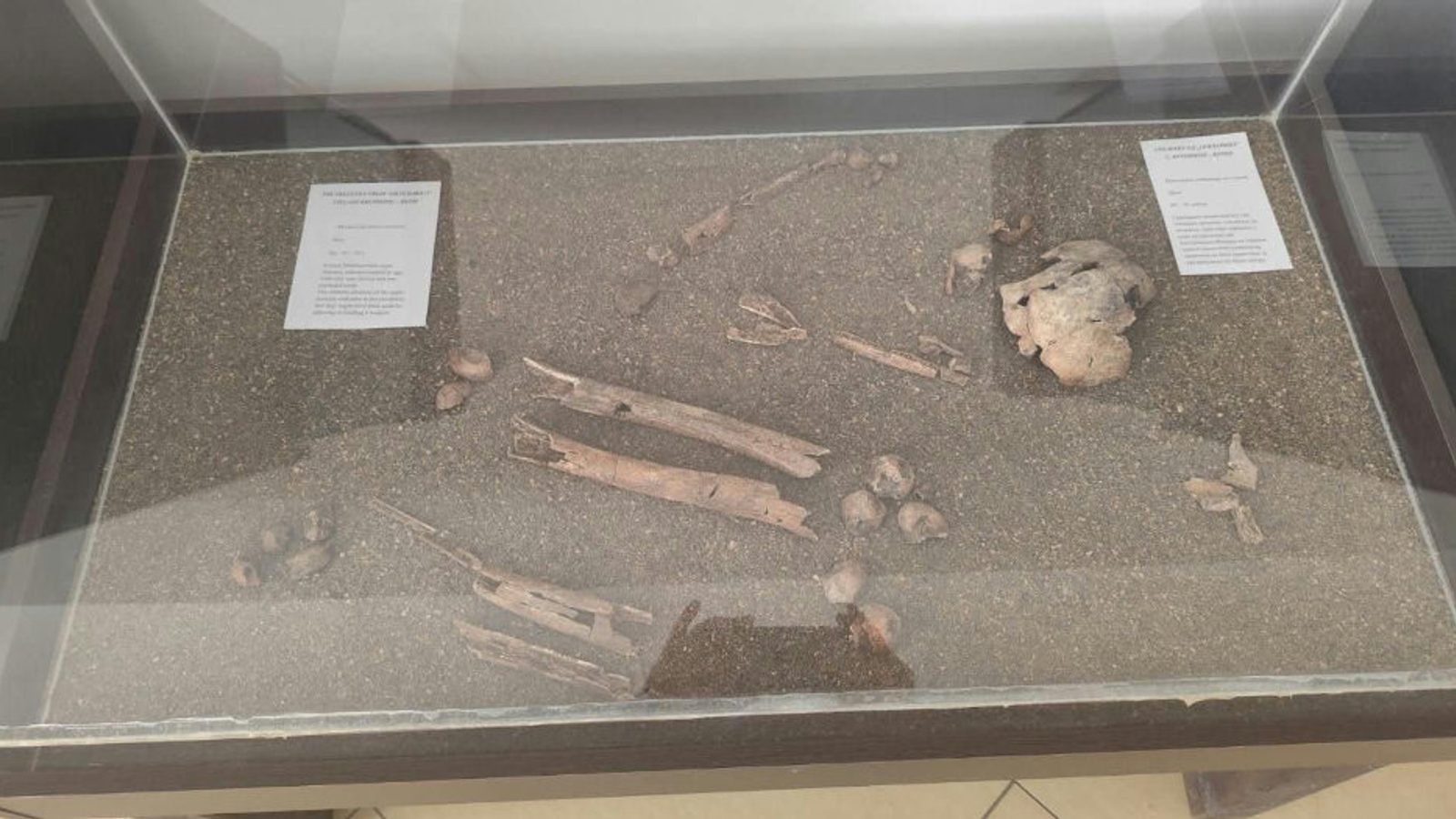
On 21 March 2008 investigators uncovered human bone fragments from a skeleton and a clay furnace used for metal smelting at Grncharica. Archaeologists from Štip were joined in the fieldwork by colleagues from Veles. According to museum staff, the furnace was transferred to the museum in Skopje for further examination, while the human bones are on display in a dedicated case at the Štip Museum and remain available to visitors.
Samples from the discovery were sent for laboratory analysis to specialists in Glasgow, Scotland. The results, supported later by expert correspondence from Italian archaeological institutes in 2012, established that the remains date to the Neolithic period. A certificate accompanying the analyses places the skeleton at 6740 BCE — roughly 9,000 years old — and the find has become known locally as the skeleton of Slave Makedonski.
Zoran Chitkushev, then director of the Štip Museum, described how foreign laboratories became involved and confirmed the dating. He said the international collaboration unfolded after an incidental meeting and an offer by visiting Glasgow experts to run tests at no charge; subsequent DNA and related analyses produced the results now cited by the museum.
The Štip team now intends to present a detailed proposal and request support for renewed fieldwork, arguing that the discovery of the furnace and the Neolithic skeleton indicate a high potential for additional archaeological material in and around Grncharica.
Photo: SDK.MK)