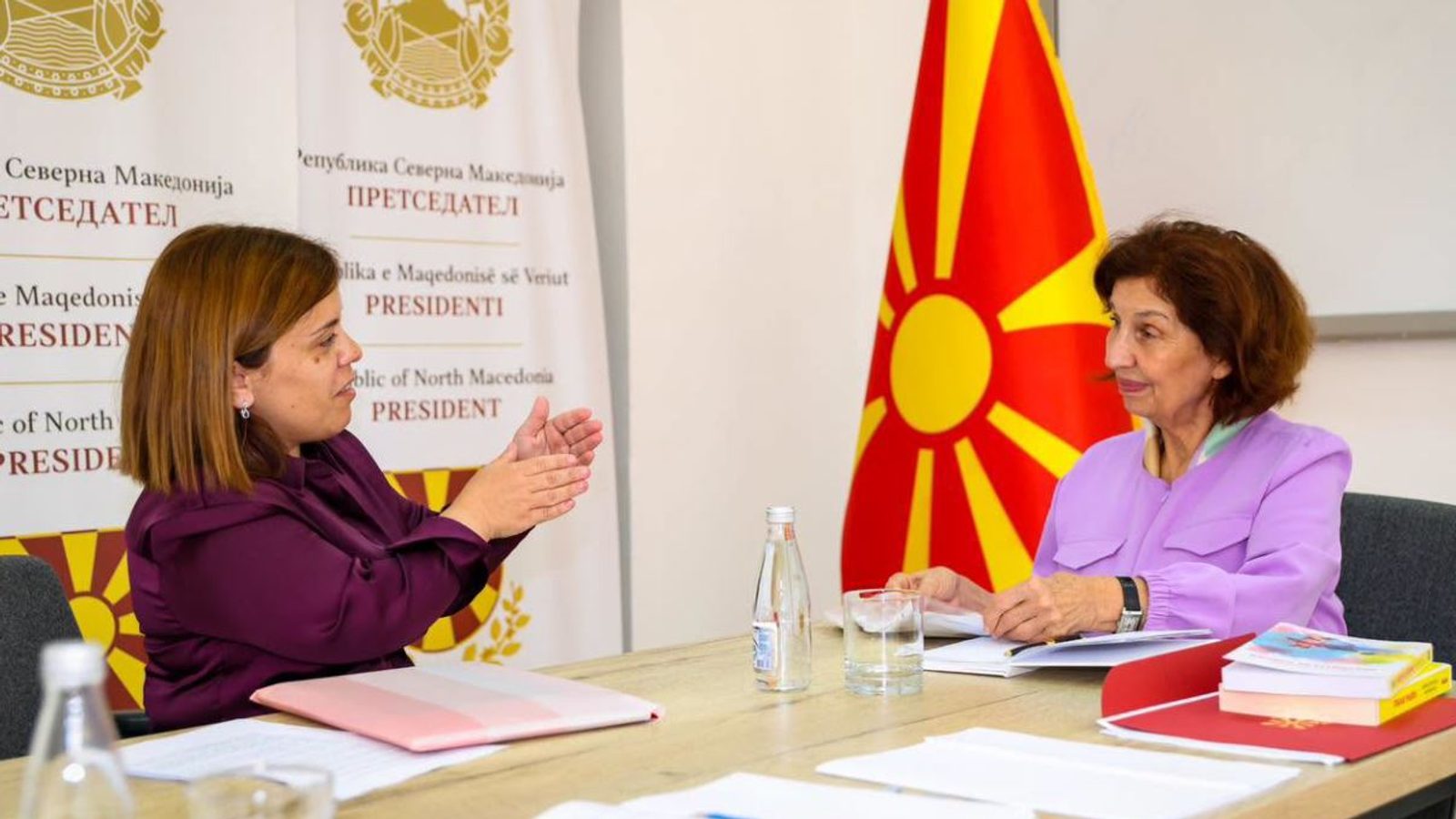
Siljanovska‑Davkova distances herself from Kiro Todorovski’s posting to Vienna
President’s office says appointments are made by the Agency for Intelligence; reports say Todorovski was convicted in the “Titanik” case and then posted to Vienna.

President Gordana Siljanovska‑Davkova has publicly distanced herself from the appointment of intelligence officer Kiro Todorovski as the Agency for Intelligence’s representative in Vienna, after reports surfaced that court records show he was convicted in the “Titanik” case.
The President’s Office told the press that the Agency for Intelligence is an independent state body and that appointments of its representatives are signed by the Agency’s director, Gabriela Jakovleva, while the foreign minister only issues the formal decision to send the person abroad.
Agency rules and classified procedures
In a written response the Cabinet argued that the appointment process falls under the internal authority of the Agency and cited the law on the Agency for Intelligence. The response stated that staffing, organisational and operational decisions are made within the Agency’s statutory powers and that the director — not the president — signs the decision for the Agency’s representative to a diplomatic or consular post, on the basis of which the foreign minister issues a dispatch decision and the envoy later presents credentials to the host country.
The appointment was revealed after a whistleblower sent reports to the State Commission for Prevention of Corruption (SCPC), contesting Todorovski’s reinstatement at the Agency, his receipt of a security certificate for access to state secrets and his subsequent posting to Vienna. The whistleblower submitted a document from the Criminal Court that records Todorovski’s suspended sentence in the “Titanik” case.
The SCPC halted a related procedure concerning the Agency’s deputy director after receiving eight reports in total and forwarding one report to the Prosecutor’s Office. Political party Levica publicly accused that Todorovski was sent abroad under the political patronage of President Siljanovska‑Davkova and VMRO‑DPMNE, saying: "Under the patronage of Siljanovska and VMRO‑DPMNE, a convicted cadre received a 'state secret' and diplomatic luxury."
Questions remain over how Todorovski passed the security vetting by the Agency for National Security (ANB) and how the Directorate for Security of Classified Information issued a security certificate despite the court record. The Directorate and the ANB replied that their records on processed requests and issued certificates are marked "for restricted use" and are not openly accessible. So far there has been no accountability or clear explanation as to how a person with a final sentence in the "Titanik" case obtained access to classified information and a diplomatic posting.
Photo: Levica