Saint Thecla: October 7 feast and traditions for women and healing
October 7 marks the commemoration of Saint Thecla, venerated for chastity, miracles and healing, especially of skin ailments.
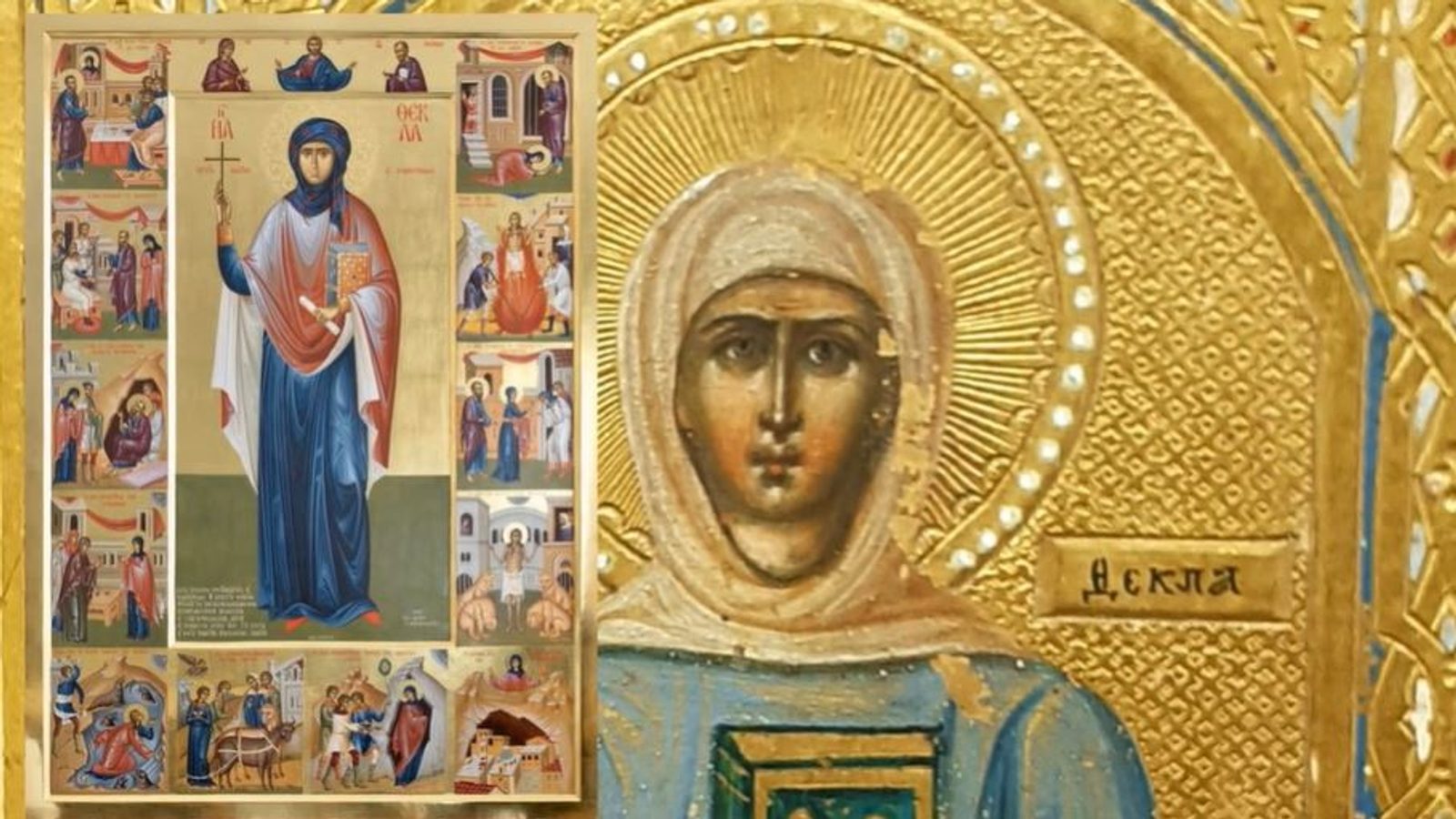
On October 7 the Orthodox Christian calendar commemorates Saint Thecla, an early and influential female figure whose life became a model of spiritual firmness, chastity and fidelity to Christ.
Life, trials and miracles
According to tradition, Thecla was born in Iconium into a respected pagan family and was engaged at the age of eighteen. When the Apostle Paul arrived in the city, she listened to his preaching for three days and three nights and, convinced by the message, vowed to live a life of virginity. Saint John Chrysostom described her image this way: "I seem to behold this blessed maiden offering to the Lord with one hand her virginity and with the other her martyrdom."
Her decision enraged her mother, who first tried to persuade her otherwise, then abused her with hunger and finally handed her over to the civil authorities seeking her death by fire. By divine providence the flames did not harm her.
Later Thecla followed Paul to Antioch. Because of her beauty and her refusal to yield to worldly passions she was denounced as a Christian and condemned to be killed by wild beasts. No beast touched her; when the governor asked what power protected her, she answered, "I am a servant of the living God." After being released she continued to preach the Gospel and led many to the faith.
In the final years of her life she withdrew to a solitary place near Seleucia, where she lived an ascetic life and was known for healing the sick. When attackers tried to violate her, she prayed and a rock split open to shelter her — the same rock serving as her refuge and, according to the tradition, her tomb.
Thecla is venerated as the patroness of women and girls. Believers ask for her intercession for healing from serious illnesses, especially skin diseases and burns, recalling her miraculous preservation from fire. Folk customs for her feast include beginning winter handcrafts and weaving; households avoid quarrels and coarse language, keeping the day for prayer, mercy and inner peace.
Photo: press material from the event