VMRO‑DPMNE proposes converting contracts for services into permanent jobs in some institutions
MP Bojan Stojanoski outlined a phased plan: institutions must adopt hiring decisions within 90 days and finish conversions by December 31, 2027.
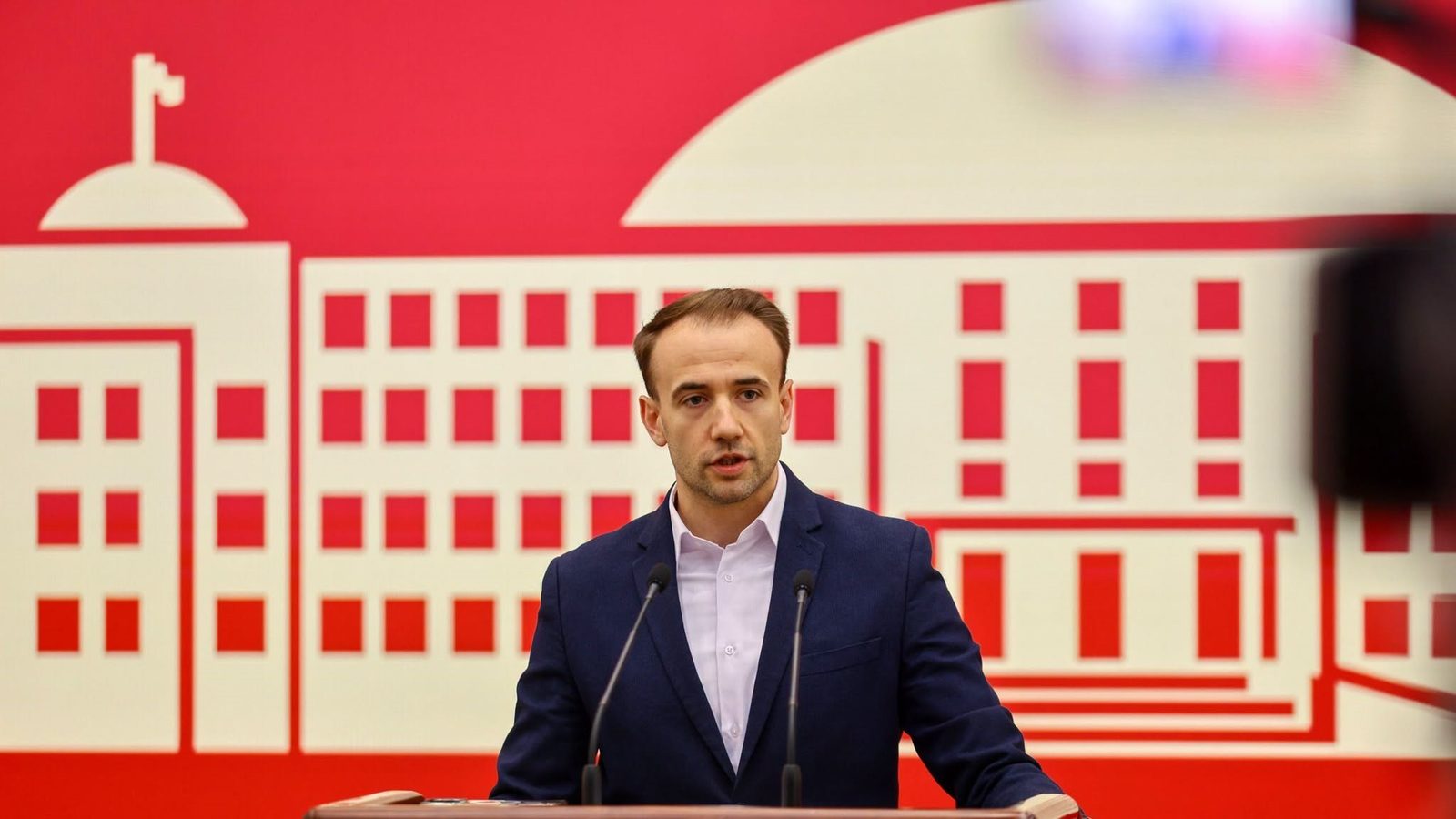
VMRO‑DPMNE has presented a draft law that would convert certain fixed‑term and contract‑for‑services engagements in a number of public institutions into open‑ended employment, the party's MP Bojan Stojanoski explained at a press briefing in the Assembly.
The proposal targets people who currently work under contracts for services, author contracts, through temporary employment agencies or other fixed‑term arrangements but who perform ongoing duties within institutions. Those with valid contracts on the day the law enters into force would be eligible for conversion.
Phased rollout, concrete deadlines
Under the draft, institutions would be obliged to sign employment contracts or adopt hiring decisions within 90 days from the law's entry into force. The transformation would take place in phases: up to 50 percent of covered staff would become permanent employees immediately upon signing or decision, while the remainder must be converted no later than December 31, 2027. Where needed, institutions would have 14 days from the law's entry into force to harmonize job classification acts.
Stojanoski said the law also foresees protections while the procedure is underway — institutions may not terminate the contracts of covered persons until their employment decisions take effect, except in cases of breach of contractual obligations as provided by law. In his words: "In other words, we are establishing a mechanism so that people do not lose their jobs while they wait for their transformation to be carried out."
From January 1, 2028, institutions covered by the law would face limits on how many people they can engage with contracts for services: at most 10 percent of the total number of employees at the end of the previous year, with exceptions allowed (including a possible four‑month exceedance in a fiscal year subject to prior financial consent). The draft lists further exemptions — one‑off project staff, project units financed from foreign sources, external lawyers engaged for legal assistance and representation, certified accountants and certain specialised expert engagements.
Sanctions are foreseen for managers who ignore the limits: a fine of €250 to €500 (denar equivalent) for the responsible official in an institution. The Ministry of Finance would play a key supervisory role by issuing consents for secured funds and could withhold consent if legal conditions are unmet or if the conversion is incompatible with available budget resources. As Stojanoski put it: "So, we are not offering unsustainable promises, but a legal mechanism with concrete deadlines, obligations and rules."
Stojanoski further emphasised that some categories are excluded from the measure: joint‑stock companies, military and civilian personnel serving in the Army under the Ministry of Defence, primary and secondary schools, student dormitories, higher‑education and scientific institutions and several security agencies. "I emphasise this because we want citizens to have accurate information about the law's scope, without ambiguities and without creating false expectations," he said.
Photo: Arhiva