Ohrid places unique Byzantine mosaic icon from 14th century on public display
A rare portable Byzantine mosaic — the only example in North Macedonia — has been transferred from the depot to the Gallery of Icons in Ohrid.
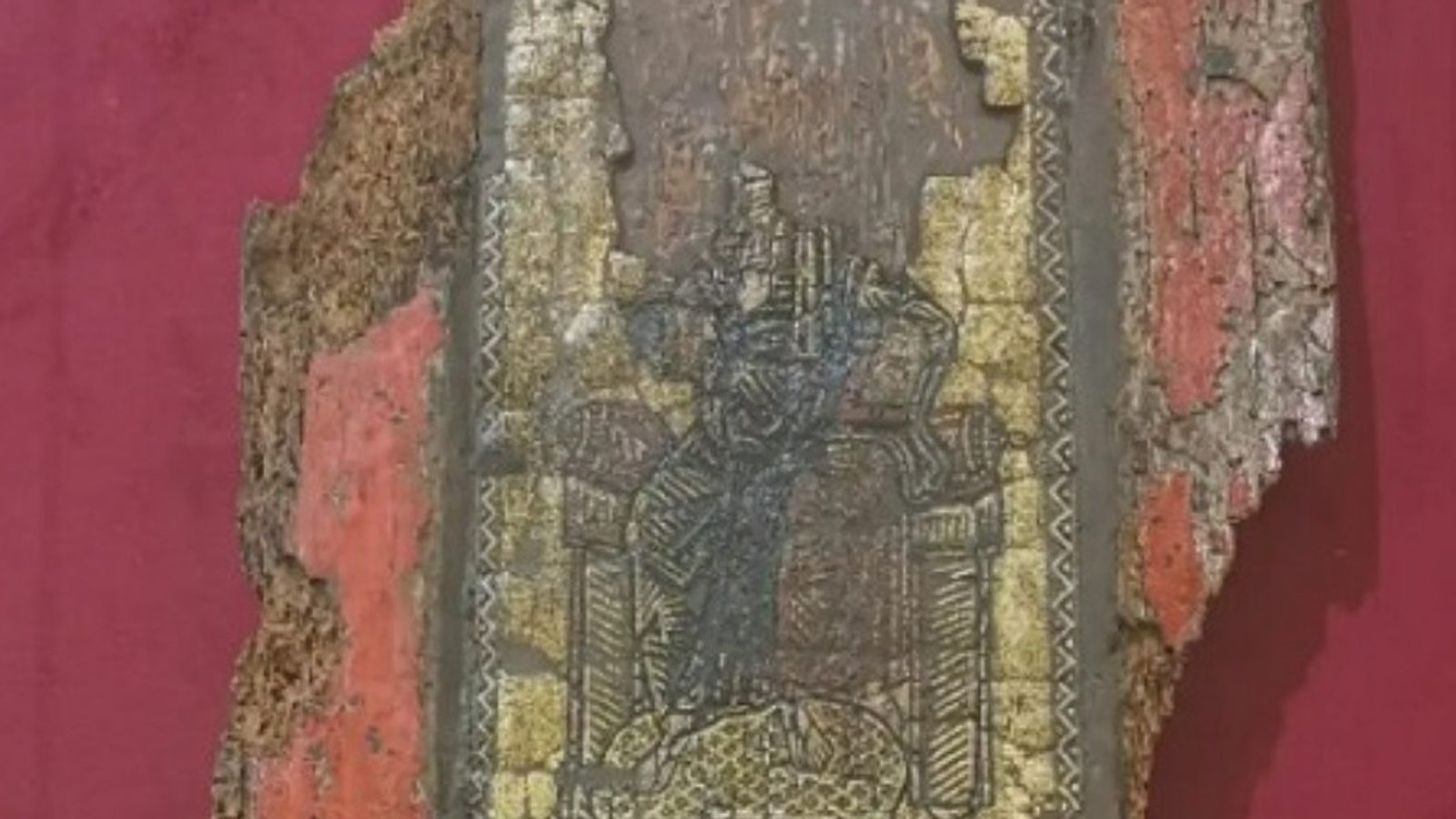
The only preserved example of its kind in North Macedonia — a portable Byzantine mosaic icon titled "Christ Enthroned" — has been placed on display in Ohrid's Gallery of Icons as part of this year's museum anniversary programme.
Small format, complex technique
Made in the 14th century and measuring 28.5 × 21 × 2.5 centimetres, the icon is one of roughly thirty surviving portable Byzantine mosaic icons in the world. Its surface is composed of tiny coloured stones, glass cubes and gold tesserae that catch and refract light in ways that change with the viewer’s position.
“For the difference from a painted icon, where light is produced by colour, in the mosaic icon the light is an integral part of the material itself,” explained Katerina Velkoska, curator and art historian at the Institute and Museum – Ohrid.
Velkoska notes that although mosaic technique is often associated with large church decorations, a parallel tradition developed for small, portable mosaics requiring extreme precision and expensive materials. These works were produced in limited numbers and typically connected with elite circles and important ecclesiastical centres.
The Ohrid example was discovered in 1960 during an inventory of icons in the Church of St. Mary Perivlepta, in the southern chapel together with other icons, and was dated to the 14th century; experts say an older origin is also possible. The piece belongs to the Palaiologan Renaissance, a period of renewed artistic flourishing in Byzantine art when Ohrid was a notable spiritual and cultural centre on the Balkans.
Similar small mosaic icons are preserved in major museums worldwide, including the Louvre in Paris, the Metropolitan Museum of Art in New York, the Bode Museum in Berlin and the Byzantine and Christian Museum in Athens.
Goran Patchev, director of the Institute and Museum – Ohrid, said the decision to move the icon from the museum depot into the permanent display coincides with celebrations marking 75 years of organised museum activity in Ohrid.
"This is a wonderful occasion at the institution's anniversary to present part of the treasures we hold in our depot, for which there is scarcely a place to present them," Patchev said.
Photo: SDK.MK)