Vucic skipped Skopje: Will Hristijan Mickoski say — does the Government stand with Serbia on Mladic?
The Serbian president named Sarajevo, Pristina, Zagreb and Podgorica as centers of condemnation after the funeral of the finally convicted war criminal, but not Skopje. This omission is not proof of an alliance, yet after the silence over a post from the party of Minister Ivan Stoiljkovic it is reason enough for the Prime Minister to publicly state where North Macedonia stands.
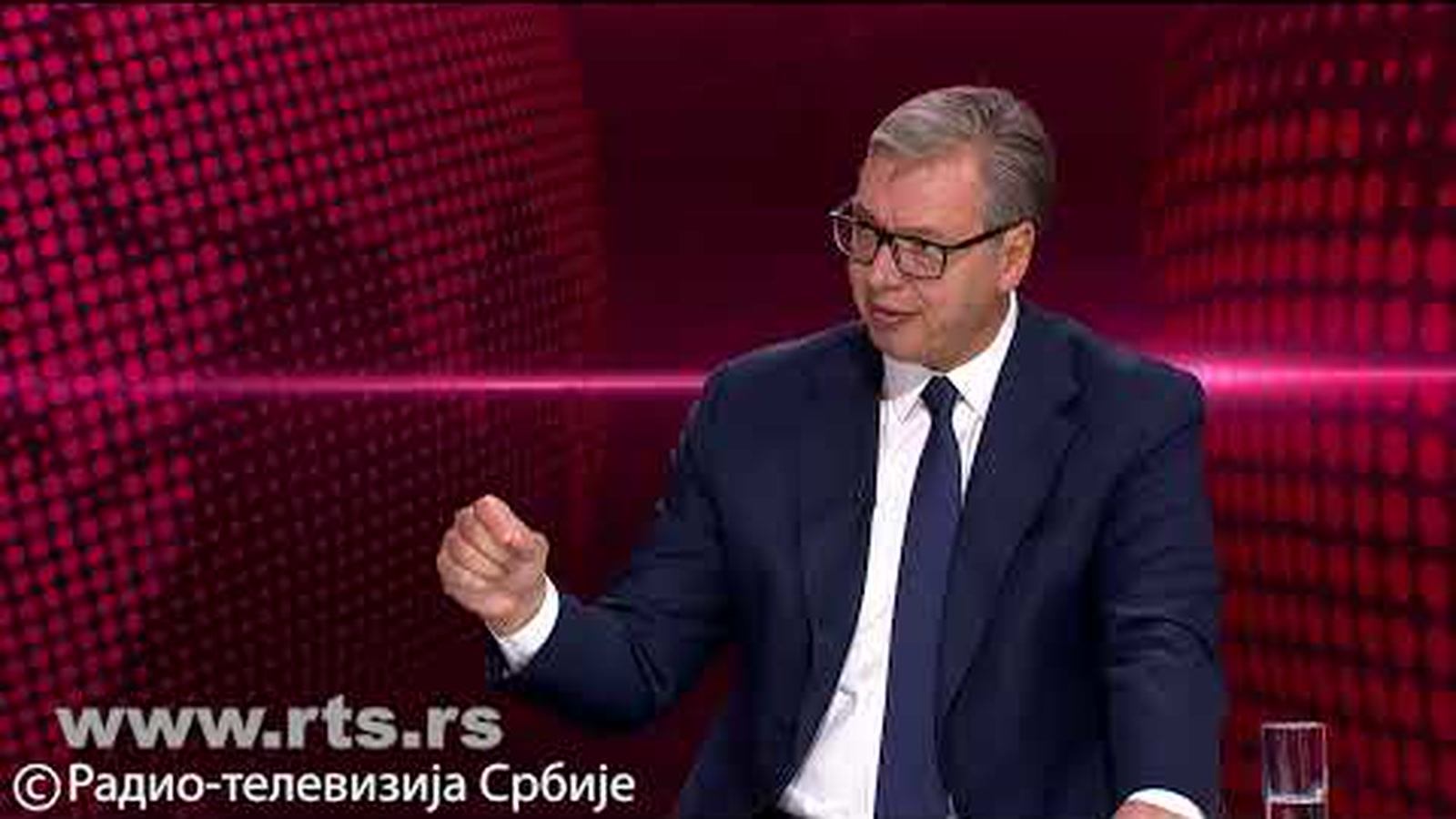
When Aleksandar Vucic listed the capitals from which, in his view, a “hysterical avalanche” of reactions came after the funeral of Ratko Mladic, he put Sarajevo, Pristina, Zagreb and Podgorica on the list. He did not mention Skopje. That omission by itself does not prove that the Government of North Macedonia stands behind Belgrade’s policy, but it raises a question Hristijan Mickoski can no longer avoid: does North Macedonia clearly distance itself from the glorification of a finally convicted war criminal, or does silence leave it on Vucic’s side?
In his appearance on Radio Television Serbia on 9 September, Vucic said he had expected a “flood” and a “hysterical avalanche” of attacks that had come from Sarajevo, Pristina, especially Zagreb, and from Podgorica. The enumeration was precise. It did not include Skopje or North Macedonia.
"What we saw, that flood, that hysterical avalanche of attacks from literally everyone that came from Sarajevo, Pristina, especially from Zagreb, Podgorica... I expected all of that," Vucic said.
A single omission cannot honestly be taken as proof of an agreement between Belgrade and Skopje over Mladic. It is possible that Vucic simply named the places from which the sharpest official reactions came. However, the political context in North Macedonia makes the omission significant: on the Facebook page of the Democratic Party of Serbs, whose president Ivan Stoiljkovic is a minister in the Government, a positive piece about Mladic was published, and the public did not receive an unequivocal political answer from the Prime Minister on the responsibility of the coalition partner.
Mladic is not a “historical nuance”, but a finally convicted war criminal
The facts about Ratko Mladic do not depend on daily politics. The International Residual Mechanism for Criminal Tribunals confirmed a life sentence for genocide in Srebrenica, crimes against humanity and violations of the laws and customs of war. The 2021 appeals judgment is final.
After Mladic’s death in The Hague, Serbia organised a funeral in Belgrade with military honours. Serbian soldiers carried the flag-draped coffin, high state officials attended, and among those present were the Russian ambassador to Serbia and Milorad Dodik. Vucic did not attend the funeral, but his son was present. The Serbian president described the day as emotional and characterised regional reactions as exaggerated and hostile.
At the same time, Vucic did not completely break communication with the leadership of the European Union. In the same interview he said there was nothing wrong in speaking well of European Commission President Ursula von der Leyen and European Council President Antonio Costa and that both had treated Serbia correctly. For that reason the story cannot be reduced to a slogan: Belgrade is trying to keep its European path while politically protecting the narrative about Mladic at home.
The European message was clear
Von der Leyen and Costa judged that the scenes from the funeral were shocking, that the elements of official support and the presence of high Serbian officials were deeply worrying, and that such conduct runs counter to the values on which Serbia’s path to the European Union is based. EU Commissioner for Enlargement Marta Kos earlier cancelled a planned visit to Serbia and said that the glorification of Mladic is incompatible with European values.
Not every European leader reacted, and there is no formal decision that legally closes Serbia’s path to the European Union. But the reaction came from the Union’s institutional top and directly opened the dilemma of whether Serbia is ready for membership. After years of democratic backsliding and stalled negotiations, a funeral with official elements has further narrowed the political path for Belgrade toward Brussels.
In other words, Vucic may not have legally closed the door to the European Union, but by choosing to relativise the condemnation and present it as hatred against Serbia he risks politically shutting it. A candidate country cannot at the same time seek European solidarity and portray the glorification of a person convicted of genocide as a matter of national dignity.
Why is Skopje not on the list?
Here the Macedonian question begins. Was Skopje not mentioned because the Government clearly objected and Vucic omitted it? Or because Hristijan Mickoski did not issue a political reaction that Belgrade would recognise as distancing? Or does the coalition link with Ivan Stoiljkovic turn the topic into something the Government prefers to keep quiet?
None of these possibilities is proven by Vucic’s sentence alone. That is why an answer is needed, not a premature verdict. Prime Minister Mickoski should publicly and unambiguously state: does the Government accept the final international judgment on Mladic; does it condemn his glorification; does it distance itself from the positive post on the page of his minister’s party; and do European values take precedence over coalition arithmetic?
The Government reacted in a separate case with director Dalibor Kitanovic, who deleted a controversial post and apologised to the Prime Minister. But the public still does not have an equally clear answer regarding the party of Minister Ivan Stoiljkovic. The different yardstick creates suspicion that political weight within the coalition determines where principles end up.
Will North Macedonia follow the European line or Belgrade’s silence?
North Macedonia has for years paid the price of blockages, delays and political calculations on its European path. The last thing it needs is additional moral and diplomatic distance from the European Union on an issue that leaves no room for ambiguity: genocide and war crimes are established by final judgments, and their glorification is incompatible with European political culture.
Serbia today faces condemnation from leading European institutions and new doubts about its own candidacy. If Vucic, through his policies, risks distancing Serbia from the Union, it is legitimate to ask whether the Government’s silence in Skopje is taking North Macedonia in the same direction.
The question to Mickoski is therefore simple: does North Macedonia stand with the final judgments, with the victims and with the European line — or will it allow Vucic to count it as the quiet side in the dispute over Ratko Mladic?
Photo: frame from Aleksandar Vucic's appearance on RTS